
Reviewed · GIZA PYRAMIDS & SPHINX TOURS
8 Hours Full day tour to Giza Pyramids, Memphis, Sakkara & Dahshur
The most rewarding part of this Cairo day is the contrast between Giza’s famous monuments and the quieter pyramid fields south of the city. You see Khufu, Khafre, Menkaure, and the Sphinx, then trace pyramid design through Saqqara and Dahshur before finishing at ancient Memphis.
I like the private air-conditioned transport, which removes a major Cairo headache, and I like the chance to see the Bent and Red Pyramids rather than spending the whole day at Giza. The drawback is pace: with so many sites, plus shopping stops, this is a long day, and you need to confirm exactly which entrance fees are covered.
Key points at a glance
- Four major pyramid areas in one day: Giza, Dahshur, Saqqara, and Memphis.
- Private door-to-door transport: Hotel and port pickup are offered in a private air-conditioned vehicle.
- Best historical sequence: Saqqara’s Step Pyramid shows an early stage in pyramid building, while Dahshur has two of Egypt’s oldest large pyramids.
- Optional extras cost more: Lunch, entry inside the pyramids, and camel rides are not part of the basic experience.
- Expect shopping stops: The day may include visits to perfume, cotton, papyrus, and carpet workshops.
- Strong guide feedback: Hesham Michael is specifically praised by name for making the day comfortable and helpful.
Four pyramid fields, one long Cairo day
At $65 per person, this is an appealing price for a private tour that includes a guide, transfers, hotel or port pickup, and bottled water. You are paying for convenience as much as sightseeing. Cairo’s pyramid sites are spread across the western edge of the Nile Valley, so having one vehicle and one guide saves time and bargaining.
The tour lasts about nine hours, beginning at 8:00 am. The schedule includes roughly two hours at Giza, an hour at Dahshur, an hour at Saqqara, and an hour at Memphis, with shorter visits at individual monuments. That is a full day, not a relaxed single-site outing.
The information about entrance fees needs careful attention. Some parts describe admission tickets as extra, while the inclusions say entry fees are covered and later clarify that the basic area is included. Before paying, ask for a written breakdown covering Giza, the Sphinx area, Dahshur, Saqqara, Memphis, and entry inside any pyramid. That small check can prevent an awkward surprise at the ticket office.
Other ways to see the pyramids from Cairo:
- Cairo: Pyramids & Great Sphinx Private Tour with Camel Ride
★ 4.9 · 6,335 reviews - Tour to Giza Pyramids and The Egyptian Museum
★ 5.0 · 6,016 reviews - VIP All inclusive Best of the best Giza Pyramids,Sakkara,Memphis
★ 5.0 · 3,164 reviews
Giza: the essential first look at Khufu, Khafre, and Menkaure
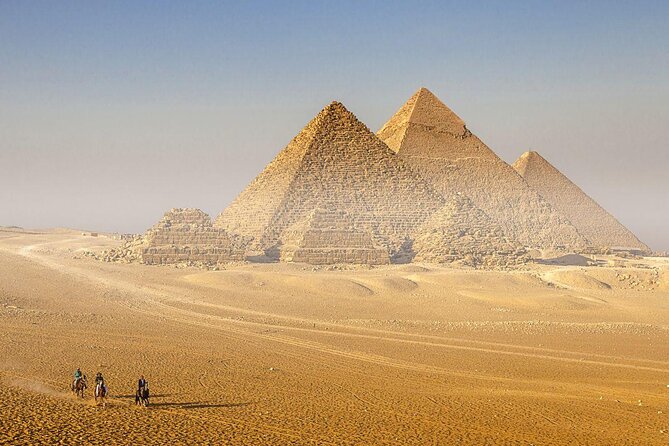
The Giza Plateau gives you Egypt’s famous trio in one broad setting. Khufu, also called Cheops, is the largest. Khafre, also called Chephren, is the pyramid that often appears tallest because it sits on higher ground and still keeps some casing stones near its top. Menkaure is smaller, but its complex adds another chapter to the royal burial story.
You get time at the three main pyramids, with about 30 minutes listed for each of Khufu, Khafre, and Menkaure. That is enough for an explanation, photographs, and a look at the surrounding plateau, but it is not much time for a long interior visit. If you want to enter one of the pyramids, arrange it early with your guide and confirm the extra charge.
The Great Pyramid of Khufu is the central prize. The surviving evidence about its king is surprisingly limited. A small ivory figure found at Abydos is the only fully preserved portrait associated with him, while much of what is known comes from inscriptions and later documents. Your guide can help turn that dry fact into a sense of the gap between the enormous monument and the scarce personal record of its ruler.
Khafre’s complex includes a valley temple, causeway, mortuary temple, and pyramid. Several statues of Khafre were found in a well beneath the valley temple, including the famous seated images that help give the otherwise massive site a human focus.
Menkaure’s complex once included its own valley temple, causeway, and mortuary temple. Statues found there offer clues about how royal buildings were used and decorated. I like this stop because it keeps Giza from becoming a single-photo experience centered only on the largest pyramid.
The Sphinx and Valley Temple
The Sphinx is included in the Giza visit and has no separate admission charge listed. Its lion body and royal head represent the guardian image of the funerary complex, traditionally linked with Khafre.
The nearby Valley Temple is especially useful because it is not just another photo point. It was connected with the preparation of the king’s body, and the tour description identifies it as the place where priests mummified Khafre’s body. The hard stone construction and enclosed rooms feel different from the open pyramid plateau.
You should give the Sphinx a little patience. The best experience comes from looking at its relation to the temple and pyramids, not only from taking the familiar frontal photograph. The listed timing allows about 30 minutes, so ask your guide where to pause and what can be seen from each viewing area.
The Giza Plateau itself also contains cemeteries, a workers’ village, and an industrial area. You may not explore all of these in detail during this day, but they matter because the pyramids were part of a working royal complex, not isolated monuments dropped in the desert.
Dahshur’s Bent Pyramid and Red Pyramid
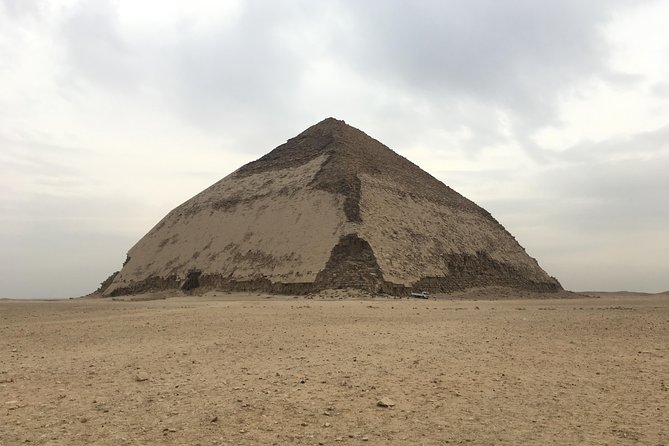
Dahshur changes the mood. It is a royal necropolis about 40 kilometers south of Cairo, with wide desert surroundings and two pyramids that are among Egypt’s oldest, largest, and best-preserved examples.
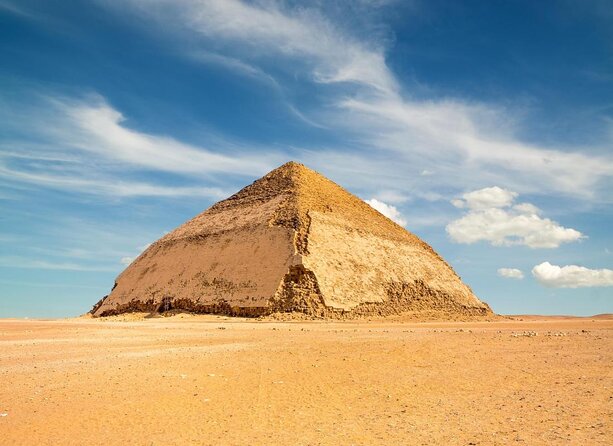
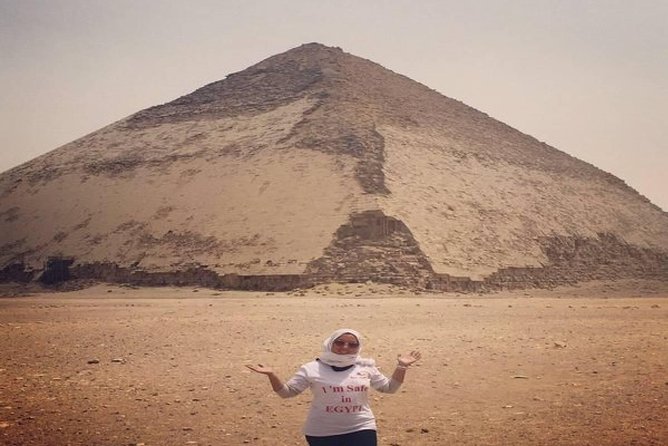
The Bent Pyramid is the great architectural lesson. Its lower section rises at a steep angle, then changes slope partway up. The altered profile is usually read as evidence of builders adjusting their plan during construction. You can see the experiment in the shape itself, without needing a long museum lecture.
The Red Pyramid is a smoother and more settled design. Together, the two monuments show the development of the true pyramid form. I consider Dahshur one of the most valuable parts of the day because it gives you context for Giza. You are not simply seeing famous pyramids. You are seeing how Egyptian builders worked toward the form that later became iconic.
About an hour is assigned to Dahshur. That may be enough for exterior views and a short explanation, but it can feel tight if you want to enter a pyramid. Interior access is specifically not part of the basic package, and any additional charge should be settled before you begin.
Other older-pyramid days out of Cairo:
- From Cairo: Pyramids of Giza, Sphinx, Saqqara & Memphis Tour
★ 4.7 · 3,110 reviews - Cairo: Pyramids, Sakkara & Memphis Tour with Lunch
★ 4.6 · 2,493 reviews - Private Day Tour Giza Pyramids, Sphinx, Memphis, and Saqqara
★ 4.5 · 904 reviews - Private tour: GIza Pyramids, Memphis City & Sakkara Pyramid
★ 5.0 · 637 reviews
Saqqara and the Step Pyramid of Djoser
Saqqara lies about 27 kilometers southwest of Cairo and covers a large area of Egypt’s ancient cemetery zone. Its main sight here is the Step Pyramid, built for King Djoser.
The Step Pyramid matters because it marks an important stage in pyramid construction. Earlier royal tombs used the mastaba form, a low rectangular structure. Djoser’s monument stacks those levels upward, creating the stepped shape that points toward later smooth-sided pyramids.
You have about an hour at Saqqara, so stay close to your guide’s planned route. The site includes more than one monument, and the day also allows time for the Mastaba of Ti, the Pyramid of Unas, and the Pyramid of Teti. You will not have unlimited time at each one.
The Mastaba of Ti is particularly worthwhile for its scenes of daily life. Its walls show ordinary work and activity rather than only royal ceremony, giving you a glimpse of farming, craft, and household life in ancient Egypt. The tomb has two serdabs, small enclosed chambers associated with statues.
The Pyramid of Unas is listed as a 30-minute stop. The supplied description includes an odd reference to a modern replica, so I would ask your guide what part of the actual ancient monument is open during your visit. The Pyramid of Teti is another important stop because it is a smooth-sided pyramid containing pyramid texts, and it offers a different experience from Djoser’s stepped structure.
Memphis and the colossal statue of Ramses II
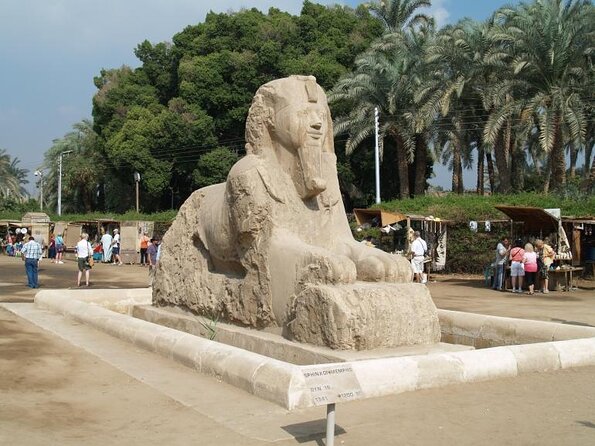
Memphis was Egypt’s ancient capital, dating to about 3100 BC. The stop centers on a colossal statue of Ramses II and a large alabaster sphinx.
The Memphis visit lasts about an hour. It is shorter and more museum-like than Giza or Dahshur, but it completes the story well. You have seen the development of pyramid architecture and the royal cemetery zones. Memphis shows the city that supported the kingship behind those monuments.
The colossal Ramses II statue is the main draw. The alabaster sphinx provides a useful contrast with the limestone Sphinx at Giza. I would use this stop to ask your guide about Memphis as a capital and religious center, rather than treating it as a final quick photograph.
Lunch, shopping stops, and the real pace of the day
Lunch at a local restaurant is optional and costs extra. Koshari is specifically offered, a filling Egyptian dish made with pasta, rice, lentils, chickpeas, tomato sauce, and fried onions. If you want the meal, confirm the price and timing before the day begins.
The schedule also includes approximately 20-minute stops at several commercial workshops. These may include natural oils and Egyptian cotton at Paradise Perfumes and Flower Cotton, papyrus making and traditional artwork at Key of Life Papyrus, and hand-woven rugs at a local school called Handmade Carpets.
These stops can be useful if you want souvenirs or a closer look at local crafts. They also reduce the time available at the archaeological sites. I would tell your guide clearly if your priority is monuments rather than shopping. The description presents these as government stops where quality souvenirs are available, but you should still feel free to ask about prices and avoid buying anything under pressure.
Private transport and guide support
Pickup begins at 8:00 am from your Cairo or Giza hotel, and port pickup is also offered. The vehicle is described as a private, air-conditioned, newer-model car, with transfers back to your hotel at the end.
That setup is a major part of the tour’s value. You do not need to arrange separate taxis between Giza, Dahshur, Saqqara, and Memphis, and your own group controls the vehicle rather than sharing it with strangers. Most participants can take part, and the tour is near public transportation, though the private pickup makes public transit less relevant for this particular day.
A guide named Hesham Michael is specifically praised for being welcoming, comfortable to work with, and willing to help with questions or problems. Since guide assignment can vary, treat that as a useful name to request rather than a guarantee. A good guide matters here because the monuments are spread out and the day contains several similar-sounding royal names.
Bottled water is included. Bring sun protection and shoes suitable for uneven ground, but the supplied details do not promise shade or a slower pace. The day involves repeated stops, short walks, and time outdoors.
What costs extra and what to confirm
The $65 price is strong if it truly includes the listed basic-area entrance fees and private transport. It becomes less of a bargain once you add lunch, pyramid interiors, camel rides, or other optional purchases.
Before departure, confirm these points:
- Which standard admission tickets are included
- Whether the Giza interior areas require separate payment
- The cost of entering Khufu, Khafre, or another pyramid
- The price of camel rides, if wanted
- The cost of the optional koshari lunch
- How much time will be spent at workshops
- The exact pickup point and return arrangement
Camel rides and trips inside the pyramids can be arranged for an additional charge. Do not assume that an advertised option is included in the per-person price.
Free cancellation is available if you cancel at least 24 hours before the 8:00 am start time. Changes made within that 24-hour window are not accepted, and the local time in Egypt controls the cutoff.
Who should book this Cairo pyramid tour?
I would choose this tour if you have one full day for the pyramid fields and want private transport, a guide, and a broad introduction rather than a slow visit to one site. It suits first-time visitors, families who value door-to-door service, and small groups that can share the vehicle and benefit from group discounts.
I would choose something shorter if you want long interior visits, detailed photography time, or a quiet archaeological day without commercial stops. The route covers a lot, and the 8:00 am start plus roughly nine-hour duration demands energy.
Should you book it?
Book this tour if your priority is seeing Giza, Dahshur, Saqqara, and Memphis in one organized day for a relatively low price. The Bent Pyramid, Red Pyramid, and Step Pyramid add real value beyond the standard Giza visit, while private transfers make the route far easier than arranging separate rides.
Book only after confirming the entrance-fee details and shopping schedule. If you want a broad first look at Egypt’s royal monuments, this is a practical choice. If you want depth, silence, and plenty of time inside each site, narrow your plans to fewer monuments.
FAQ
What time does the tour start?
Pickup starts at 8:00 am from your hotel in Cairo or Giza. Port pickup is also offered.
How long does the tour last?
The experience lasts approximately nine hours. The title describes it as an eight-hour full-day tour, so confirm the expected return time when booking.
Is lunch included?
No. Lunch at a local restaurant, including optional koshari, costs extra.
Are pyramid entrance tickets included?
The tour information says entry fees are included but also specifies that the basic area is covered and lists several stops with admission not included. Confirm the exact ticket coverage before departure, especially for interior access.
Can I enter one of the pyramids?
Yes, your guide can arrange trips inside the pyramids for an additional charge. Interior entry is not included in the basic experience.
Is this a private tour?
Yes. Only your group participates, and transfers use a private air-conditioned vehicle.
Just added in Cairo
- White Desert Overnight Camping Sharing Tour in Egypt★ 5.0 · 15 reviews
- Cairo Best 2Days tour Pyramids, Saqqara & Old Cairo★ 5.0 · 15 reviews
- Giza Pyramids with (GEM) Grand Egyptian Museum★ 5.0 · 42 reviews
- visit the pyramids of Giza + the necropolis of Saqqara + the Memphis site.★ 4.5 · 20 reviews
- Tour to Giza pyramids Memphis Sakkara and Felucca on the Nile★ 5.0 · 16 reviews
- Private Giza pyramid,sphinx, Mummification temple& inside pyramid★ 5.0 · 32 reviews
- Monastery St Simon with Cave Church and Garbage City Private Tour★ 5.0 · 15 reviews
- sunset at Giza pyramids by camels★ 5.0 · 31 reviews
Giza Pyramids & Sphinx Tours, compared.
Pyramids & Great Sphinx Private Tour with Camel Ride
Read our review →
Tour to Giza Pyramids and The Egyptian Museum
Read our review →
VIP All inclusive Best of the best Giza Pyramids,Sakkara,Memphis
Read our review →
Pyramids of Giza, Sphinx, Saqqara & Memphis Tour
Read our review →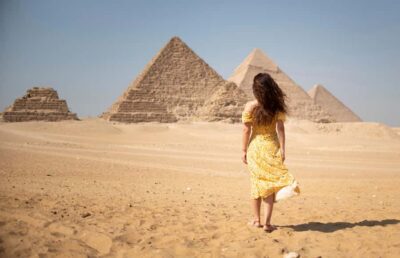
Half-Day Tour to Pyramids of Giza and the Sphinx
Read our review →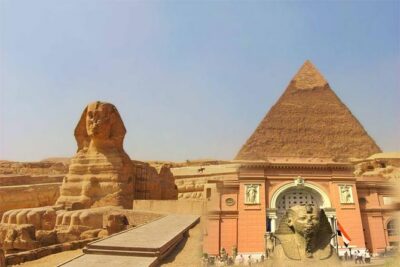
Private ViP all-inclusive Giza Pyramids,Sphinx,Inside Pyramid
Read our review →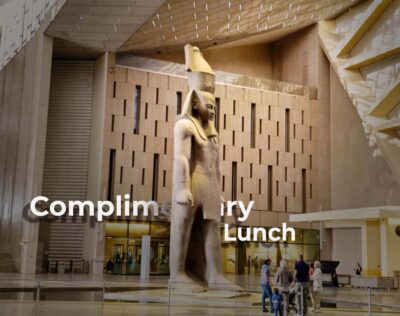
Grand Egyptian Museum, Pyramids, Sphinx Tour & Lunch
Read our review →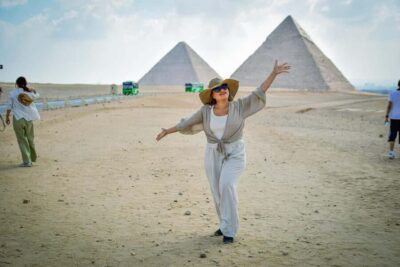
Cairo Pyramids, Sphinx & Egyptian Museum Day Trip
Read our review →Browse the lists this tour appears in