
Reviewed · MEMPHIS, SAQQARA & DAHSHUR TOURS
Memphis, Saqqara and Dahshur Day Tour From Cairo
The best part of this full-day tour is the chance to follow Egyptian pyramid design from its earliest grand experiment to its classic form. Saqqara’s Step Pyramid shows the leap from low mastaba tombs to stacked stone levels, while Dahshur’s Bent and Red Pyramids reveal how builders learned by trial and error.
I like the private vehicle with hotel pickup and drop-off, and I like the route’s variety: tombs and pyramids first, then the old capital of Memphis. Guides such as Ahmed, Aya, Mohammed, and Muhammad have been praised for clear explanations, patience, and keeping the day relaxed.
The main consideration is that the day includes several commercial stops for perfume, cotton, papyrus, and carpets. They may interest you, but if you want only archaeological sites, they add time and can make the schedule feel less focused.
Key points at a glance
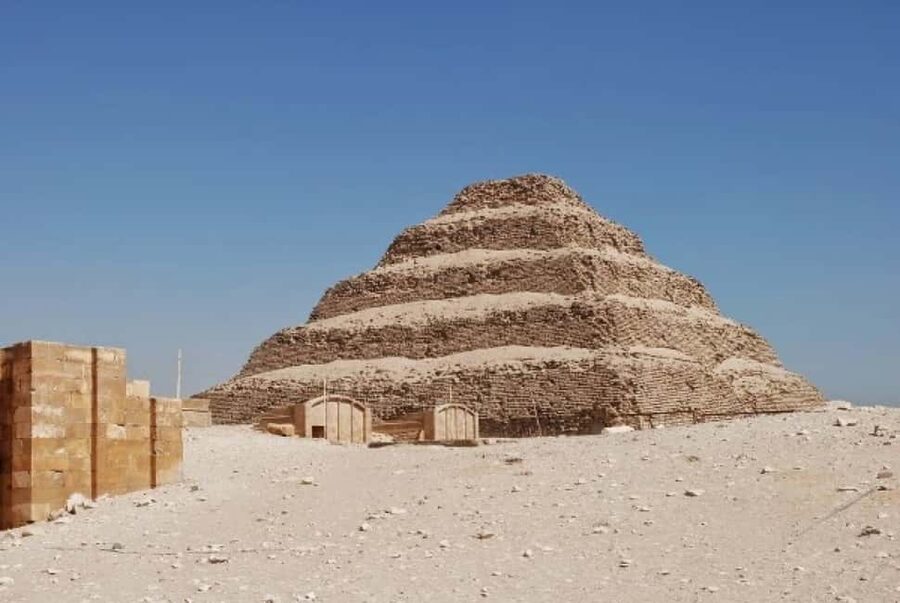
- Saqqara’s Step Pyramid: See the landmark built for King Djoser and an important stage in pyramid design.
- Dahshur’s Bent and Red Pyramids: Enter or explore two of Egypt’s oldest and best-preserved pyramids, subject to site access.
- Ancient Memphis: Visit the former capital, with its colossal Ramses II statue and alabaster sphinx.
- Private transport: Travel from Cairo or Giza in a private, air-conditioned vehicle with a bottle of water.
- Local workshops: Allow about 20 minutes at each stop for perfumes, Egyptian cotton, papyrus, and handmade carpets.
- Flexible booking: Reserve now, pay later, and cancel up to 24 hours before the tour for a full refund.
Why this route is better than a pyramid-only outing
Cairo’s famous Giza Pyramids get most of the attention, but Saqqara and Dahshur give you a better sense of how pyramid building developed. This route moves through several stages of ancient Egyptian engineering rather than showing you only the finished product.
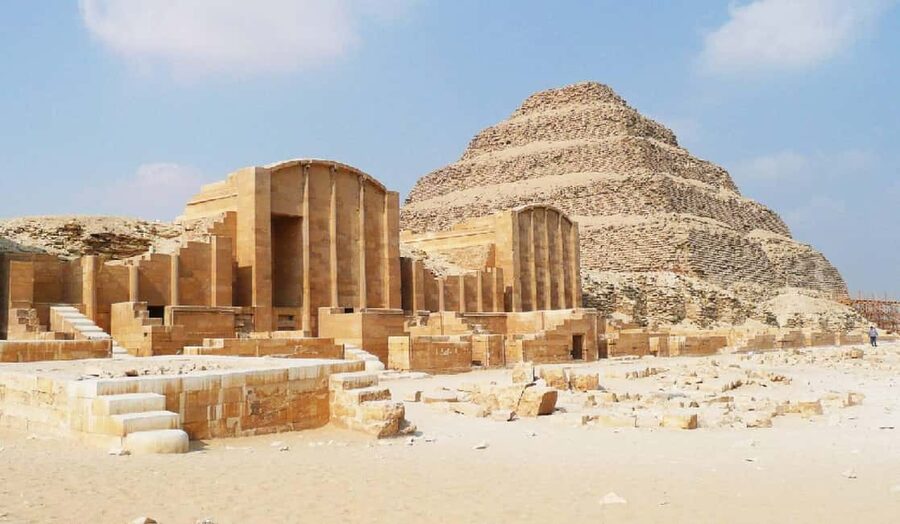
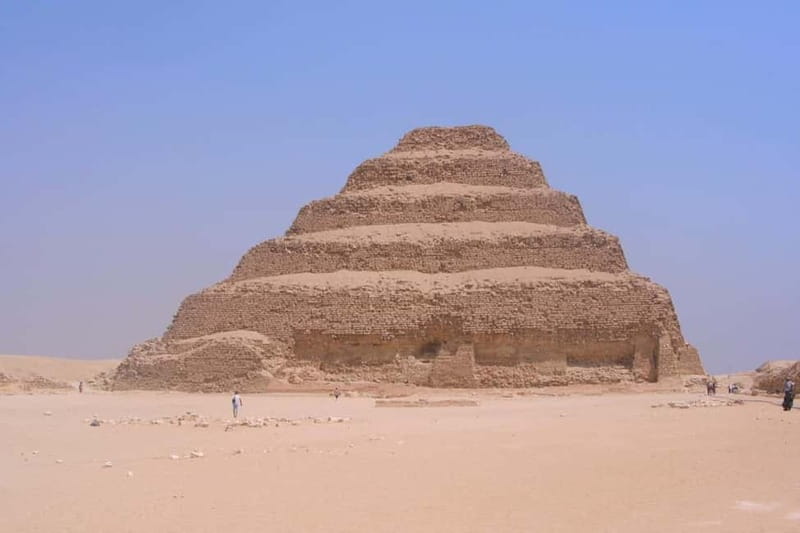
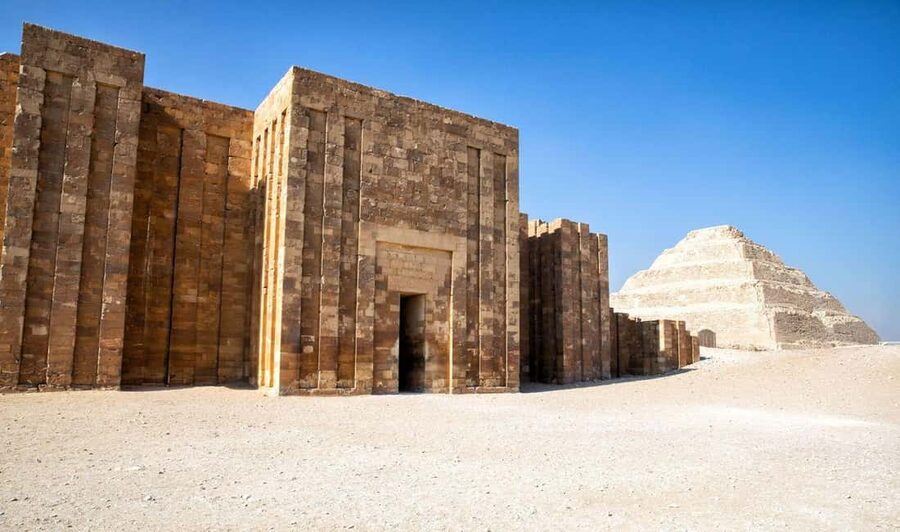
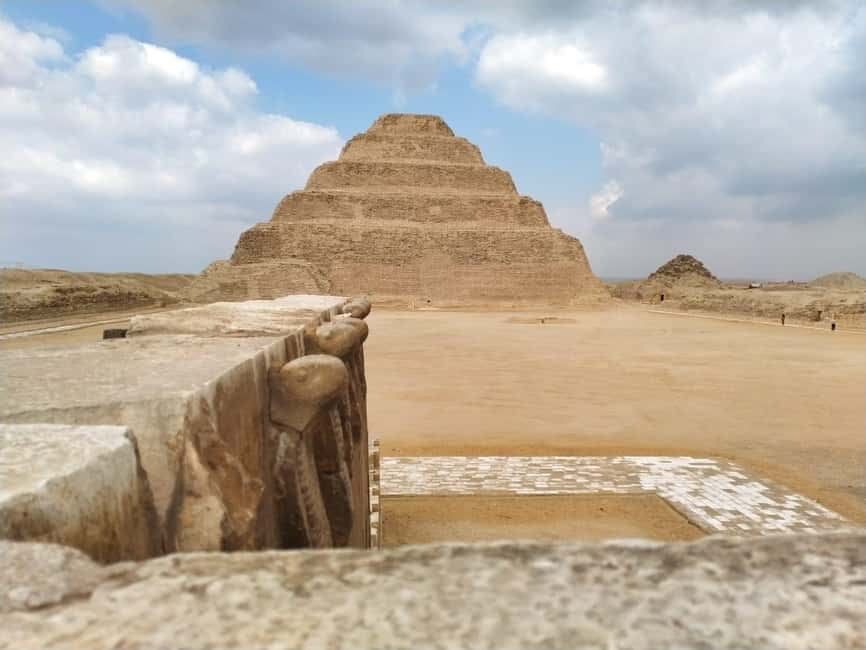
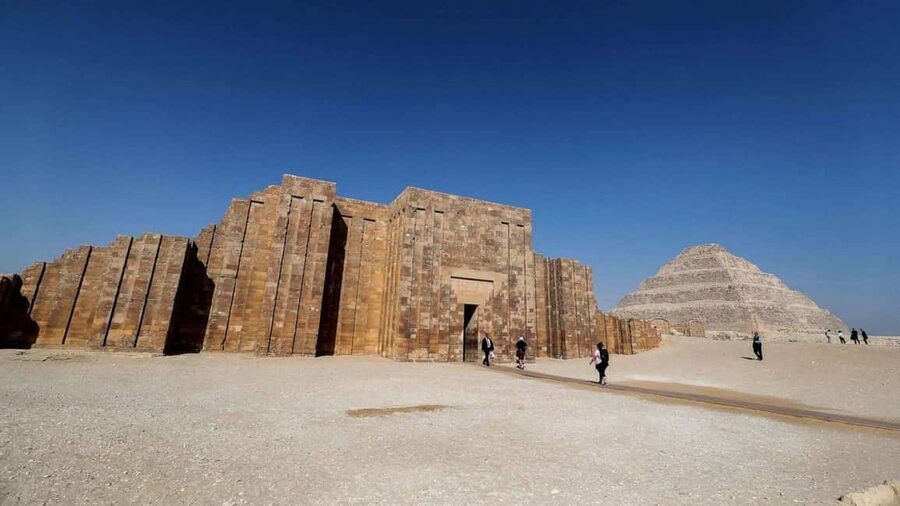
Saqqara is about 27 kilometers southwest of Cairo. Its Step Pyramid was built for King Djoser and is often treated as a key turning point in pyramid construction. The shape is unmistakable: broad stone levels rise one above another, creating a form that looks more like a giant staircase than the smooth-sided pyramids you may picture first.
That difference matters. Your guide can help you read the site as a story of experimentation. Ancient builders began with the simpler mastaba form and then pushed upward, adding layers until the royal tomb became a huge stepped monument.
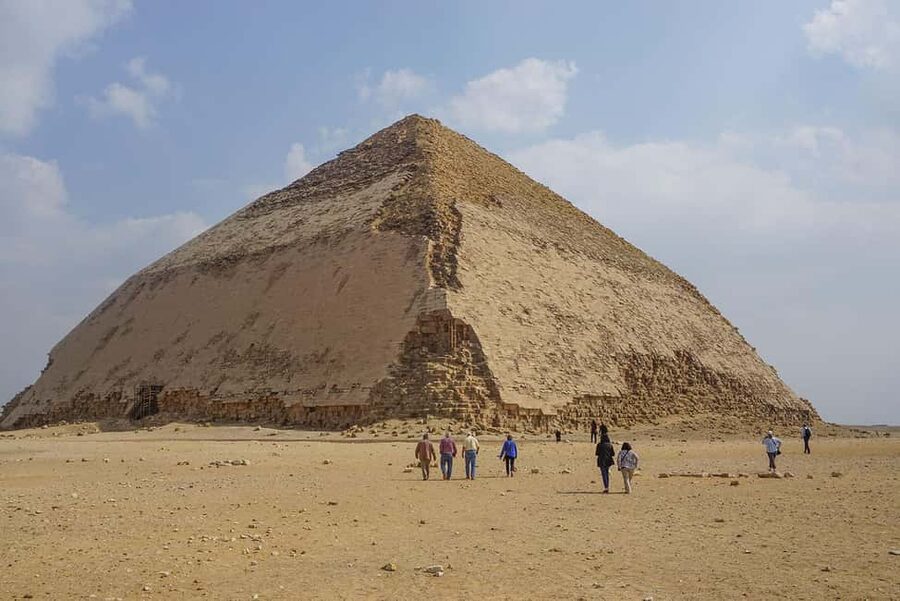
Dahshur takes the story further. The royal necropolis lies about 40 kilometers south of Cairo on the west bank of the Nile. Its two main attractions here are the Bent Pyramid and the Red Pyramid, both built during the Old Kingdom between 2613 and 2589 BCE.
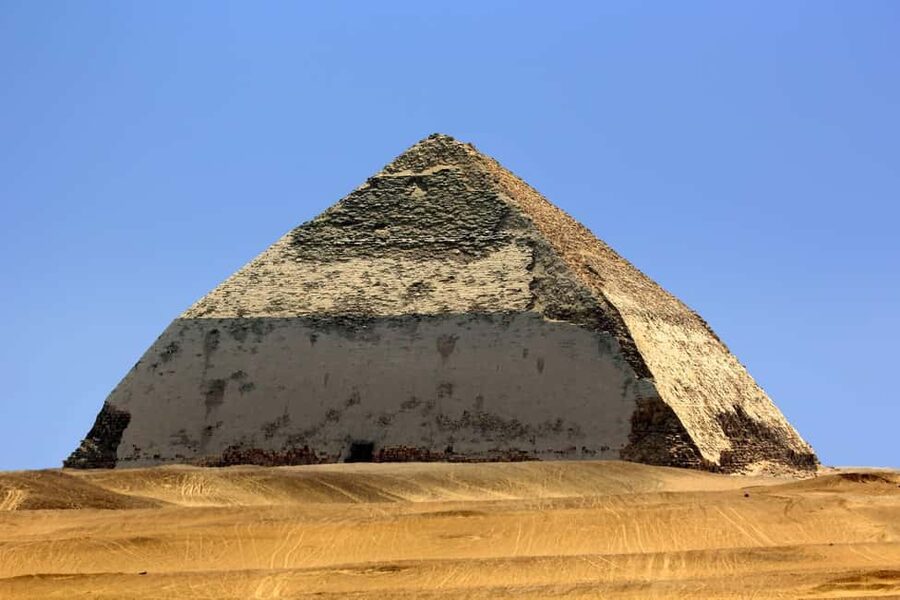
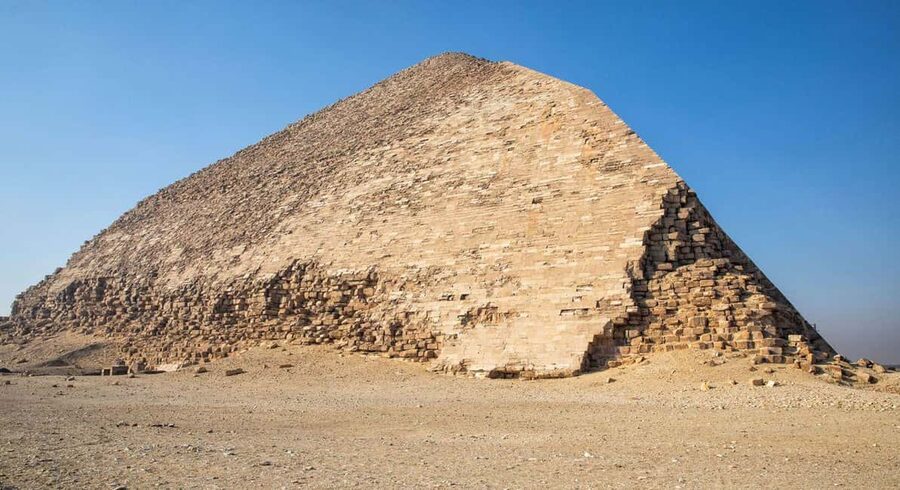
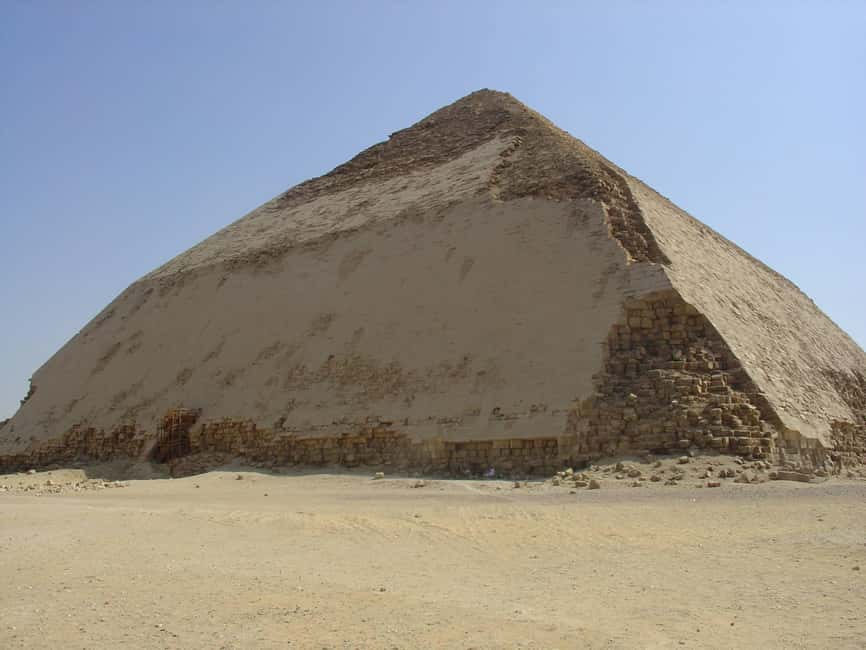
The Bent Pyramid changes angle partway up, giving it an unusual, almost unfinished look. The Red Pyramid has a more regular shape and is among the oldest, largest, and best-preserved pyramids in Egypt. Seeing both in one visit lets you compare the builders’ changing methods with your own eyes.
Memphis then shifts the focus from royal tombs to the city that helped govern ancient Egypt. The city dates to about 3100 BCE and was once the capital. The colossal statue of Ramses II and the great alabaster sphinx provide the main visual anchors of the visit.
I especially like this order because the sites build on one another. Saqqara explains the first major step, Dahshur shows technical correction, and Memphis gives the political setting behind the monuments.
Other older-pyramid days out of Cairo:
- VIP All inclusive Best of the best Giza Pyramids,Sakkara,Memphis
★ 5.0 · 3,164 reviews - From Cairo: Pyramids of Giza, Sphinx, Saqqara & Memphis Tour
★ 4.7 · 3,110 reviews - Cairo: Pyramids, Sakkara & Memphis Tour with Lunch
★ 4.6 · 2,493 reviews
Saqqara and the Step Pyramid of King Djoser
Your day begins with pickup from your hotel in Cairo or Giza. From there, the private vehicle takes you toward Saqqara, with your guide accompanying you.
The Step Pyramid is not simply another large stone monument. It represents a change in how royal power was displayed and how tombs were built. Instead of a low, flat mastaba, Djoser’s monument rises in stacked stages, making it one of the most important stops for understanding pyramid evolution.
Give yourself time to look at the form from different angles. The pyramid’s broad base and layered profile are easy to appreciate from a distance, while the surrounding complex helps show that this was more than a single tomb.
Your guide’s quality matters here. A guide who explains hieroglyphics, tomb details, and temple functions can turn weathered stone into a readable place. Ahmed has been noted for explaining hieroglyphics in tombs and temples particularly well, while other guides connected with the tour include Aya, Mohammed, and Muhammad.
The guiding style may vary. One guide may provide a detailed historical explanation, while another may keep the pace lighter and more conversational. If you want a close look at inscriptions or architectural details, say so early in the day. A private tour gives you more room to ask for that.
Inside Dahshur’s Bent and Red Pyramids
Dahshur is where this tour feels most different from a standard Cairo sightseeing circuit. The pyramids are older than the monuments most people first associate with Egypt, and the Bent and Red Pyramids offer a direct comparison.
The Bent Pyramid is famous for its change in angle. Its lower section is steep, then the upper section becomes shallower. The altered shape reflects the practical problems ancient builders faced as they tried to create a tall, stable pyramid.
The Red Pyramid is more consistent in shape and is often considered an early true pyramid. Its name comes from the reddish stone used in its construction. The two pyramids are valuable together because you can see the development rather than hearing about it as an abstract timeline.
The tour information includes entry fees, and several people connected with the experience have been able to enter the pyramids. Inside, conditions can be tight and physically demanding, so you should be ready for enclosed passages and a very different experience from viewing a pyramid outside. The exact areas open on a given day can depend on site conditions, so ask your guide what is available when you arrive.
I would not rush Dahshur. The setting is quieter and more open than central Cairo, and the monuments need a moment to register. The tradeoff is the road itself. Parts of the route can be bumpy, but the private driver and air-conditioned vehicle make the transfer easier. A driver named as especially capable with the rough roads was praised for handling the journey smoothly.
Memphis and the colossal Ramses II statue
The final ancient site is Memphis, Egypt’s old capital, dating back to about 3100 BCE. The city’s importance is easy to miss if you focus only on surviving walls, since much of ancient Memphis has not survived as a complete urban center.
The main displays give the visit its impact. The colossal statue of Ramses II is a striking reminder of the scale used to express royal authority. The great alabaster sphinx adds a second large-scale work and gives you a chance to compare materials and styles.
This stop is shorter and more concentrated than Saqqara or Dahshur. That can be a benefit late in a full day, when you may appreciate a compact site with a few memorable pieces rather than another enormous complex.
One point needs clarification before you book. The tour description highlights Memphis and its major monuments, while one service account refers to the Memphis museum. Ask your guide at pickup exactly which Memphis displays are included that day. The supplied information confirms the Memphis visit, the Ramses II statue, and the alabaster sphinx, but it does not promise a separate museum itinerary.
Same base, a different sort of day:
- Cairo: Pyramids & Great Sphinx Private Tour with Camel Ride
★ 4.9 · 6,335 reviews - Tour to Giza Pyramids and The Egyptian Museum
★ 5.0 · 6,016 reviews - Cairo 8 Hour Private Tour of Pyramids, Egyptian Museum and Bazaar
★ 5.0 · 2,931 reviews - Private ViP all-inclusive Giza Pyramids,Sphinx,Inside Pyramid
★ 5.0 · 2,448 reviews
The 20-minute shopping and craft stops
Between the ancient sites, the tour includes roughly 20-minute stops at several workshops and government-associated souvenir outlets. These are not random additions. They focus on products strongly associated with Egypt, including natural oils, soft Egyptian cotton, papyrus art, and handwoven rugs.
At Paradise Perfumes and Flower Cotton, you can learn about natural oils and Egyptian cotton. Key of Life Papyrus presents papyrus making and traditional artwork. At the local Handmade Carpets school, you can watch artisans weave rugs by hand.
These stops can be useful if you want gifts or would like to see how traditional products are made. They also give you a break from the sun and stone. The government stops are described as places to find high-quality souvenirs guaranteed by the Egyptian government, though you should still compare prices and buy only what suits your budget.
The downside is time. A 20-minute stop can become longer if you ask many questions or shop, and several such visits may reduce the time available at the archaeological sites. Tell your guide if your priority is photography, inscriptions, or extra time at a pyramid. Since the tour is private, your wishes should be easier to discuss than on a large group excursion.
What the private format adds
The private setup is the tour’s most practical feature. You are picked up at your hotel in Cairo or Giza, transported in a private air-conditioned vehicle, and returned to the same general area at the end of the day.
That matters in Egypt’s heat and traffic. You are not waiting for a large group at every stop, and you have a better chance to ask questions as they arise. A bottle of water is included, which is a small detail but a welcome one on a day spent outdoors.
The tour also benefits from a guide who stays with the experience rather than simply dropping you at the gates. Strong guides have been patient when the day ran over the planned time, and they did not make people feel hurried. That is especially useful at Saqqara and Dahshur, where you may need extra time to manage uneven ground or pyramid entrances.
Still, private does not automatically mean unlimited time. The advertised plan includes three major sites and several workshops in one full day. If you stop for photographs, enter the pyramids, and shop, the schedule can become full quickly.
How good is the $91 value?
At $91 per person, the tour offers solid value if you want a guided private day rather than arranging separate taxis and admission tickets. The price includes a private guide, entry fees, all transfers in a newer private air-conditioned vehicle, and bottled water.
Those inclusions reduce the number of small expenses you need to track. Tipping and personal purchases are not included, so leave room in your budget for those. The perfume, cotton, papyrus, and carpet stops are also commercial opportunities, so do not confuse included entry fees with included shopping.
The value is strongest for first-time visitors who want the route organized. You receive transport between Cairo or Giza and three sites spread across the desert and Nile valley area, plus explanations at each stop.
The value is less clear if you want a tightly archaeological day with no shopping. In that case, the extra workshops may feel like a compromise. You could still book the tour, but agree on your priorities with the guide before setting out.
Guide quality and the day’s pace
The strongest service reports focus on the guides and driver. Ahmed has been praised for explaining hieroglyphics in clear detail. Aya and Mohammed have been described as an excellent team, and Muhammad has been credited with being informative, patient, and willing to let the day run a little longer without making anyone feel rushed.
That said, guiding is not perfectly consistent. One account found the service good but wanted more detail and closer attention from the guide. This is a fair caution. If ancient Egyptian history is your main reason for booking, ask for detailed explanations rather than waiting for the guide to cover every point automatically.
The day’s pace suits you if you want several major sights in one outing. It may not suit you if you prefer long, quiet periods at one monument. The itinerary has enough moving parts that you should decide early whether your priority is history, pyramid interiors, photographs, or shopping.
Who should book this day tour?
I would recommend this tour to first-time Cairo visitors, couples, families, and anyone who wants a private vehicle and guide without building the route independently. It also suits you if you want to compare different pyramid forms rather than see only the most famous monuments.
It is a good choice for people who value hotel pickup, air-conditioning, and an organized schedule. The private format is helpful if members of your group walk at different speeds or want to ask many questions.
You may want another option if you dislike shopping stops, need a slow archaeological day, or want a guaranteed, highly specialized Egyptology lecture. The experience can still work for you, but only if you set expectations with the guide at the beginning.
Booking is flexible: you can reserve and pay later, and cancellation up to 24 hours in advance brings a full refund. The listed languages are Arabic and English.
Should you book it?
Book this tour if you want Saqqara, Dahshur, and Memphis in one organized day, with private transport and entry fees included. The combination of Djoser’s Step Pyramid, Dahshur’s experimental designs, and Memphis’s Ramses II statue gives you a stronger understanding of ancient Egypt than a pyramid photo stop alone.
Before departure, tell the guide how much time you want at the monuments and whether the workshops interest you. If detailed history matters, ask for it directly. With that small bit of planning, the $91 price is a sensible choice for a private day outside Cairo.
FAQ
Where does the tour start and finish?
Pickup is provided from your hotel in Cairo or Giza, and you are transferred back to your hotel at the end of the tour.
Which ancient sites are included?
The tour visits Saqqara, Dahshur, and Memphis. At Saqqara, you see the Step Pyramid of King Djoser. Dahshur includes the Bent and Red Pyramids, while Memphis includes the colossal Ramses II statue and the great alabaster sphinx.
Is transportation private?
Yes. All transfers are provided in a private air-conditioned vehicle described as a newer model.
Are entrance fees included?
Yes, entry fees are included in the tour price. Personal items and tipping are not included.
What languages are available?
The listed languages are Arabic and English.
Can I cancel or pay later?
You can reserve and pay later. Cancellation up to 24 hours in advance is eligible for a full refund.
Just added in Cairo
- White Desert Overnight Camping Sharing Tour in Egypt★ 5.0 · 15 reviews
- Cairo Best 2Days tour Pyramids, Saqqara & Old Cairo★ 5.0 · 15 reviews
- Giza Pyramids with (GEM) Grand Egyptian Museum★ 5.0 · 42 reviews
- visit the pyramids of Giza + the necropolis of Saqqara + the Memphis site.★ 4.5 · 20 reviews
- Tour to Giza pyramids Memphis Sakkara and Felucca on the Nile★ 5.0 · 16 reviews
- Private Giza pyramid,sphinx, Mummification temple& inside pyramid★ 5.0 · 32 reviews
- Monastery St Simon with Cave Church and Garbage City Private Tour★ 5.0 · 15 reviews
- sunset at Giza pyramids by camels★ 5.0 · 31 reviews
Memphis, Saqqara & Dahshur Tours, compared.
VIP All inclusive Best of the best Giza Pyramids,Sakkara,Memphis
Read our review →
Pyramids of Giza, Sphinx, Saqqara & Memphis Tour
Read our review →
Private tour: GIza Pyramids, Memphis City & Sakkara Pyramid
Read our review →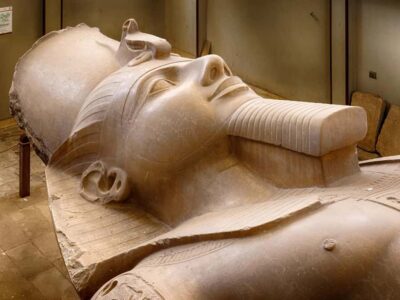
Sakkara, Memphis & Dahshur (Pyramid & Felucca Options)
Read our review →
Private Full-Day Tour to Giza Pyramids,Sphinx,Memphis, and Saqqara
Read our review →
All-inclusive Private Trip Giza Pyramids Sphinx Saqqara, Dahshur
Read our review →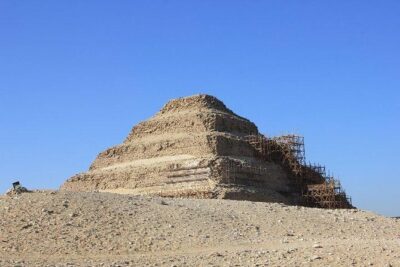
Half Day Tour To Memphis Sakkara And Dahshur Pyramids
Read our review →Browse the lists this tour appears in