
Reviewed · NILE CRUISES
Dahabiya Nile Cruise: Aswan to Luxor – 4 Days/3 Nights
A small dahabiya gives you a far quieter Nile experience than the large cruise ships. You sail from Aswan to Luxor in four days, stopping at temples, villages, islands, and riverbank sites that are easy to miss from a larger boat. The best moments come between the monuments: sunrise from the sundeck, birds near the shore, and slow evenings on the water.
I especially like the combination of full-board accommodation and private touring, which keeps the trip simple, and the access to places such as El Kab and Besaw Island. The main consideration is the price, $1,123 per person, and the compact schedule on Day 4, when several major Luxor sights are packed into one long sightseeing session.
Key points to know before booking
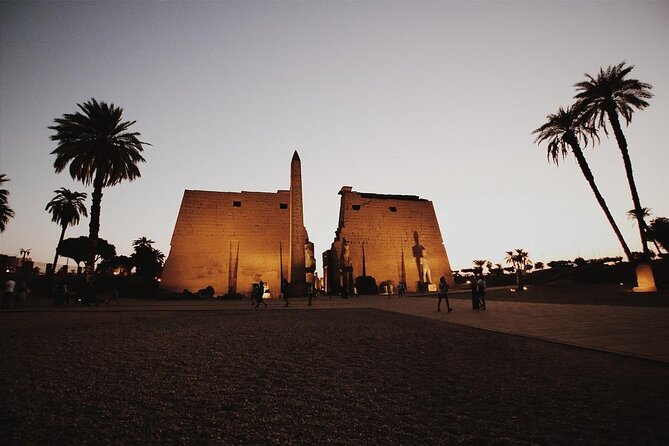
- A small-boat Nile journey: The dahabiya offers a quieter ride and can stop at smaller islands and riverbank locations.
- Strong temple coverage: Philae, Kom Ombo, Edfu, Hatshepsut’s Temple, the Valley of the Kings, and Karnak are all included.
- Private group format: Only your party takes part, with transfers and sightseeing arranged around your group.
- Three full-board nights: Breakfast, lunch, dinner, tea, coffee, and natural water are included.
- Personal guides vary: Guides named in past bookings include Ahmed, Salem, Aref, and Mohamed, though your assigned Egyptologist may be different.
- A busy final day: Luxor’s west bank and Karnak are covered after leaving the boat, so plan for an active morning and afternoon.
Why a dahabiya changes the Nile experience
The classic Nile cruise is often associated with large motor vessels and fixed schedules. A dahabiya feels more intimate. Its smaller size allows it to moor near islands and quiet stretches of river, away from the busiest landing points.
You may not spend every hour under sail. One account describes the boat being towed by a small vessel at times, which is normal for this kind of trip and keeps the cabins quiet. The tradeoff is speed. You are not racing from one sight to the next, but you also should not expect a fast transfer between Aswan and Luxor.
That slower pace is the point. You can watch farmland, fishing boats, birds, and village life from the river instead of seeing Egypt only through a bus window. The boat also gives you peaceful spaces between guided visits. Tea and coffee are included, and meals are served on board as part of the three-night full-board arrangement.
The trip is private, so your group does not share the sightseeing schedule with a large crowd. That can make temple visits easier to manage, especially if you want to ask questions or adjust the pace within the limits of the schedule.
Other Nile cruises in Aswan people book:
- 4-Days Nile Cruise From Aswan To Luxor including Abu Simbel and Hot Air Balloon
★ 5.0 · 3,142 reviews - 4-Day 3-Night Nile Cruise from Aswan to Luxor&Abu Simbel+Balloon
★ 5.0 · 2,023 reviews - 4-Day 3-Night Nile Cruise from Aswan to Luxor including Abu Simbel, Air Balloon
★ 4.5 · 612 reviews
Day 1: Philae, a Nile island, and Kom Ombo

Your Aswan pickup can be from the airport, railway station, or hotel. You meet your Egyptologist guide first and visit Philae Temple before boarding the dahabiya.
Philae is dedicated to Isis, one of ancient Egypt’s most important goddesses. The temple complex sits on an island, reached by boat, which makes the arrival part of the experience. The water setting helps you understand why this site feels different from temples reached by road.
After Philae, you board the dahabiya and eat lunch on board. The boat then continues toward Kom Ombo, with a stop at a small Nile island for a walk through the countryside. This is one of the most appealing parts of the schedule because it moves beyond the usual list of famous monuments.
Kom Ombo is built on a bend in the Nile, giving it an excellent setting above the river. The temple is unusual because it honors two gods: Sobek, the crocodile god, and Horus the Elder. Its reliefs and symmetrical design reflect this double dedication.
Allow about two hours for the Kom Ombo visit. Afterward, you return to the dahabiya and continue toward Gebel el-Silsila. The day combines a major temple with time outdoors, though the exact sailing rhythm can depend on wind, river conditions, and the boat’s operating arrangements.
Day 2: Gebel el-Silsila, Edfu, and an island overnight
Day 2 begins with breakfast and a sunrise view from the sundeck. The boat passes Gebel el-Silsila, an important sandstone quarry area. You can see rock-cut chapels connected with Horemheb, Seti I, Ramses II, and Merenptah from the dahabiya.
The schedule says the boat watches the site while sailing, rather than presenting it as a long shore excursion. That distinction matters. You will see the quarries and chapels from the river, but this is not the same as spending hours walking through the archaeological area.
The boat then continues to Edfu. Here, you meet your guide and visit the Temple of Horus, one of Egypt’s best-preserved cult temples. It was dedicated to the falcon-headed Horus, and its walls tell the myth of Horus avenging Osiris by defeating Seth.
Edfu is one of the strongest archaeological stops on the route because the scale and condition of the temple make the ancient religious complex easy to picture. Plan on about two hours at the site. The included entrance fee saves you from handling another payment during a busy touring day.
After Edfu, the boat continues to Besaw Island, where it moors for the night. This is another reason to choose a dahabiya. The overnight setting is part of the trip, not simply a place to sleep between road transfers.
Day 3: El Kab and a quiet stretch toward Esna
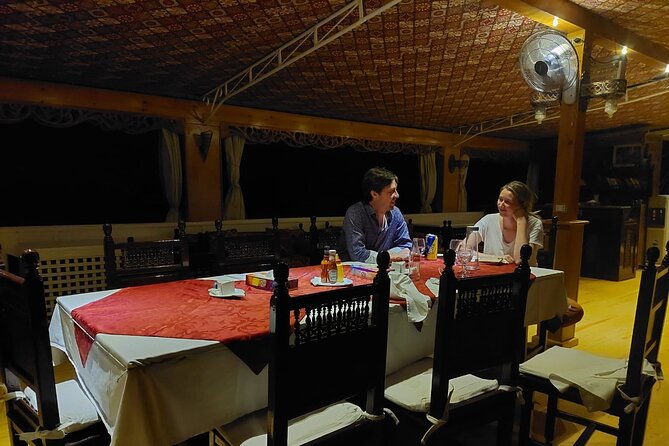
After breakfast, the dahabiya sails toward El Kab, the ancient town of Nekheb. This site is less famous than Edfu or Karnak, but it adds variety to the journey.
At El Kab, you visit the remains of temples and tombs cut into the nearby cliffs. The site reaches far back into Egypt’s early history and gives you a look at an old settlement rather than only monumental royal architecture.
The listed visit lasts about two hours. You should expect a more open archaeological setting here, with less of the grand scale associated with the major temples. For many people, that is the attraction. You can focus on the remains and the setting without trying to absorb another enormous complex.
After El Kab, you return to the dahabiya and sail toward Esna. The schedule gives you the afternoon mainly for time on the river. This is the least packed sightseeing day, so it offers a welcome pause before Luxor.
The boat stay is three nights, with breakfast, lunch, and dinner included each day. Personal expenses and tips are not included. Drinks such as wine and beer were available on some past sailings, but you should confirm current pricing and availability rather than assume they are part of the package.
Other cruises leaving from Aswan:
- From Aswan: 4-Day Nile Cruise from Aswan to Luxor with Guide
★ 4.1 · 593 reviews - 4-Days Nile Cruise From Aswan To Luxor including Abu Simbel and Hot Air Balloon
★ 4.5 · 509 reviews - 4-Day 3-Night Nile Cruise from Aswan to Luxor – Private Tour
★ 5.0 · 369 reviews - 4 Days Nile Cruise from Aswan to Luxor including Abu Simbel and Hot Air Balloon
★ 4.5 · 356 reviews
Day 4: Leaving the boat for Luxor’s west bank
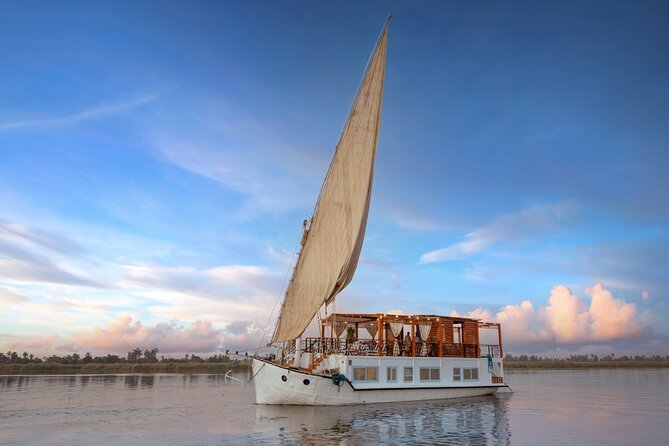
After breakfast, you check out of the dahabiya and transfer by air-conditioned vehicle for the Luxor sightseeing program. The final day covers the Valley of the Kings, Hatshepsut’s Temple, the Colossi of Memnon, and Karnak Temple before drop-off in Luxor.
The Valley of the Kings is the first major stop. The admission includes entry to three tombs, but not the tomb of Tutankhamun. That is important if King Tut’s tomb is a personal priority. You may be able to ask about additional entry separately, but it is not included in this experience.
The tombs can be physically demanding because of heat, steps, and sloping passages. The tour description says you visit three tombs, so you should expect a focused selection rather than an open-ended morning. Your guide can help explain the burial customs, wall scenes, and changing royal designs.
Next comes the Temple of Queen Hatshepsut at Deir el-Bahari. Hatshepsut ruled during the 18th Dynasty and is remembered as the only woman to reign as pharaoh in ancient Egypt. The temple’s terraces rise against the cliffs, creating one of the most recognizable settings on the west bank.
The Colossi of Memnon are a short stop, listed at about 30 minutes. These two huge statues once marked the entrance to the funerary temple of Amenhotep III. Much of that temple has disappeared, but the statues remain an easy and worthwhile roadside visit.
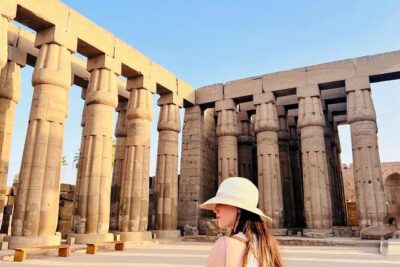
Karnak comes last. This vast complex was dedicated mainly to Amun and the Theban religious tradition. It includes pylons, obelisks, sanctuaries, columns, and courtyards added across roughly 1,500 years.
You have about an hour at Karnak according to the schedule. That is enough to see the main areas with a focused guide, but not enough to inspect every corner. I would treat this as an introduction rather than a complete study visit.
After Karnak, you are transferred to your chosen destination in Luxor. Drop-off options include a hotel, airport, or railway station. The listed meeting point is on the Luxor Corniche, so confirm the precise final location when arranging your onward plans.
The guide can make or break the archaeology
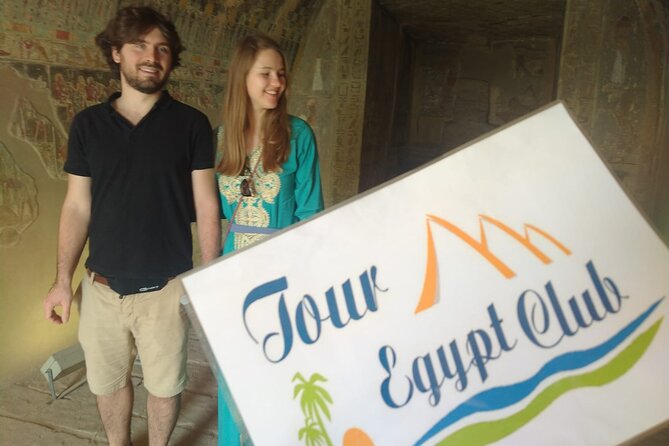
The temples are impressive on their own, but the guide determines how much you take away. The tour includes a professional Egyptologist, and previous bookings have used guides named Ahmed, Salem, Aref, and Mohamed.
One guide, Mohamed, was described as having advanced archaeological training and answering a wide range of questions. Salem was praised for his care and for helping with practical matters during the trip. Aref was specifically associated with handling special meal needs, including a vegan diet.
Those names do not guarantee who will lead your departure. Still, they show the kind of guide assignment you may receive. I recommend telling the operator before departure if you want more archaeological detail, a slower pace at the temples, or help with dietary requirements.
The private format is useful here. Your group can ask questions without competing with a large busload, though the fixed schedule still limits how long you can stay at each stop.
Food, comfort, and time on board
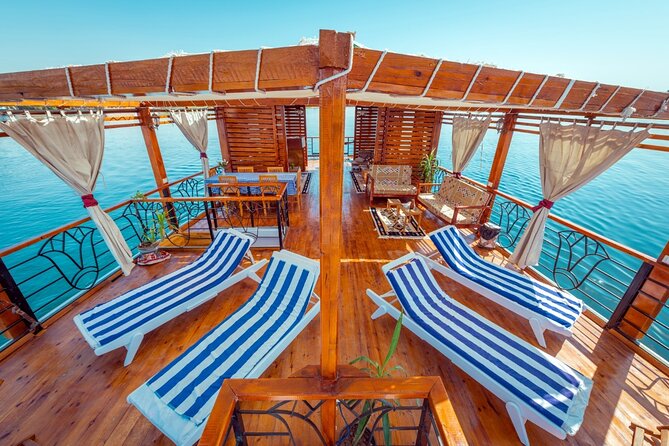
Three nights of accommodation on the dahabiya are included on a full-board basis. Breakfast, lunch, and dinner are covered, as are tea, coffee, and natural water.
The strongest practical advantage is convenience. You do not need to leave the boat each evening to find dinner, and meals create a regular rhythm between excursions. Past sailings have included traditional Egyptian food, with special arrangements made for vegan dining.
Boat comfort can vary by vessel and cabin category, so ask for current cabin photos and details before paying. The supplied information does not specify cabin size, bathroom arrangements, internet access, or air-conditioning, and those details can matter more than the word dahabiya itself.
Some past sailings used boats described as cozy, polished, and recently remodeled. Others raised concerns about changes in the promised vessel before departure. I would get the boat name, cabin type, and written confirmation of what you are booking. That simple step protects you from an unpleasant surprise.
Is $1,123 per person fair?
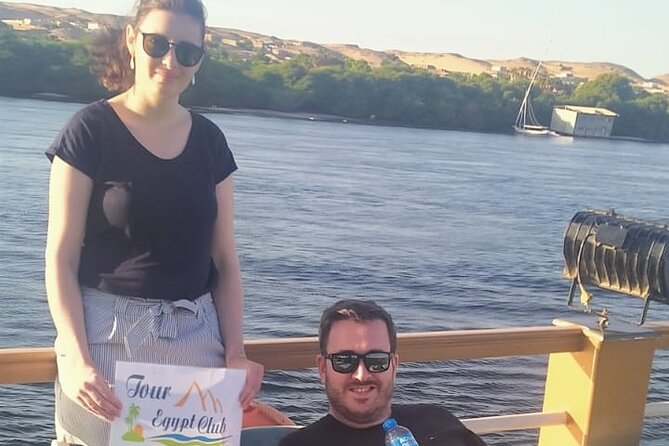
At $1,123 per person, this is not a budget Nile transfer. The price includes three nights on board, all listed meals, entrance fees, private transport, an Egyptologist guide, Aswan pickup, the Esna to Luxor transfer, and Luxor drop-off.
That bundle has real value if you want the trip arranged from start to finish. Buying the same pieces separately would require coordinating a boat, drivers, temple entries, guides, and hotel-to-boat transfers.
The price is harder to justify if you mainly want a bed and transportation. The dahabiya experience is the reason to pay more. You are paying for a small-boat atmosphere, quieter sailing, and access to smaller stops, not simply for a route between two cities.
Group discounts are offered, and the activity is private to your party. Ask how the discount applies and whether the quoted price changes with group size. Tips and personal spending are extra, so include those in your total budget.
Who should book this Nile cruise?
I would recommend this trip to you if you want ancient monuments but also care about quiet river time. It suits couples, families, and small private groups who prefer a slower boat to a large cruise ship.
It is also a good match if you have already seen the headline sites and want less common stops such as El Kab, Gebel el-Silsila, and a small island walk. The private guide setup helps if your group has a particular interest in religion, architecture, royal burial, or daily life along the Nile.
You may want a different arrangement if your priority is maximum time inside every temple, a nightlife-focused cruise, or a guaranteed visit to Tutankhamun’s tomb. The fourth day is full, and the scheduled hour at Karnak is brief for such a large site.
Most people can participate, and the tour is near public transportation. Still, the Valley of the Kings and Hatshepsut’s Temple involve walking in a hot archaeological setting, so ask about mobility needs before booking.
The cancellation terms are worth noting. You receive a full refund if you cancel at least six full days before the start time, a 50 percent refund for cancellations two to six days ahead, and no refund less than two days before departure. Poor weather may lead to a new date or a full refund.
Should you book the Aswan to Luxor dahabiya?
Book it if your ideal Egypt trip includes quiet river mornings, small-group guiding, and a well-planned set of major temples. The dahabiya format gives the four-day route its character, and the combination of Philae, Kom Ombo, Edfu, El Kab, the Valley of the Kings, Hatshepsut’s Temple, and Karnak is strong.
Before paying, confirm the exact boat, cabin details, guide assignment if important to you, and the final Luxor drop-off. If those details are clear, this is a well-rounded way to connect Aswan and Luxor without spending the whole trip inside a large motor vessel.
FAQ
Where does the cruise begin?
The cruise begins in Aswan, Egypt. Pickup is available from an Aswan airport, railway station, or hotel.
Where does the cruise end?
The cruise ends in Luxor. Drop-off can be arranged at a Luxor hotel, airport, or railway station, with the listed meeting point on the Luxor Corniche.
How long is the experience?
The trip lasts approximately four days and includes three nights aboard the dahabiya.
Is the tour private?
Yes. Only your group takes part in the private tour and sightseeing arrangements.
Which temples are included?
The included sites are Philae Temple, Kom Ombo Temple, the Temple of Horus at Edfu, the Valley of the Kings, Hatshepsut’s Temple, the Colossi of Memnon, and Karnak Temple.
Is King Tutankhamun’s tomb included?
No. Admission includes three tombs in the Valley of the Kings, excluding the tomb of King Tutankhamun.
Are meals included?
Yes. Breakfast, lunch, and dinner are included for the three nights. Tea, coffee, and natural water are also included.
Is a guide included?
Yes. A professional Egyptologist guide accompanies the sightseeing portions of the experience.
Are entrance fees included?
Yes. Entrance fees for the listed sites are included.
What is not included?
Tips and personal expenses are not included. Any optional items or personal purchases should be paid separately.
Can I cancel for a full refund?
Yes, if you cancel at least six full days before the experience start time. Cancellations two to six full days ahead receive a 50 percent refund, while cancellations less than two full days before departure are not refunded.
Just added in Aswan
- 4-Days Aswan sails Nile Cruise Luxor &Abu Simbel.Hot air Balloon★ 4.5 · 77 reviews
- Sailing Nile Cruise from Aswan to Luxor for 2 Nights★ 4.5 · 139 reviews
- Private Tour in Aswan : Felucca and Nubian village★ 5.0 · 29 reviews
- Philae Temple and Aswan High-Dam Half-day tour★ 5.0 · 49 reviews
- (3-Nights Cruise From Aswan To Luxor & Balloon, Abu Simbel)★ 4.5 · 23 reviews
- Aswan Philae Temple, Obelisk, and High Dam Private Tour★ 4.5 · 17 reviews
- Day Tour to Abu Simbel from Aswan by Bus★ 4.5 · 25 reviews
- Abu Simbel Private Full-Day Tour from Aswan★ 5.0 · 114 reviews
Nile Cruises, compared.
4-Days Nile Cruise From Aswan To Luxor including Abu Simbel and Hot Air Balloon
Read our review →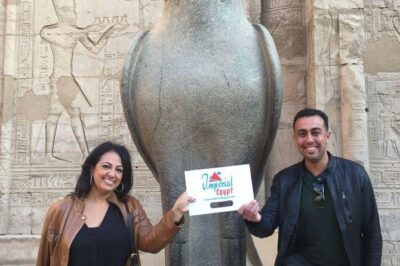
4-Day 3-Night Nile Cruise from Aswan to Luxor&Abu Simbel+Balloon
Read our review →
4-Day Nile Cruise from Aswan to Luxor with Guide
Read our review →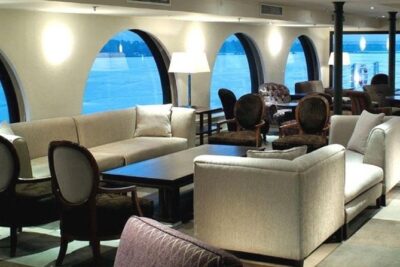
4-Day 3-Night Nile Cruise from Aswan to Luxor – Private Tour
Read our review →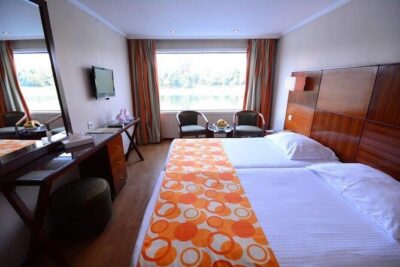
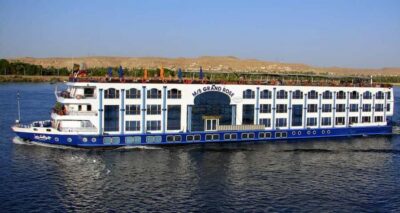
4 Days Nile Cruise Luxor Abu Simbel & Air Balloon
Read our review →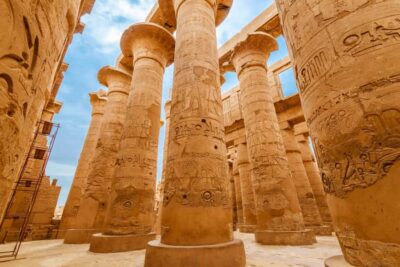
3-Night Nile Cruise to Aswan and Hot Air Balloon
Read our review →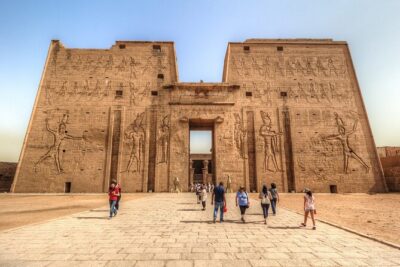
Private 04 Days Days Nile Cruise from Aswan to Luxor
Read our review →Browse the lists this tour appears in