
Reviewed · TOURS IN CAIRO
2 Days In Giza And Cairo. (Including lunch)
Giza’s pyramids get the glory, but this two-day private tour gives you the wider story: royal tombs at Saqqara and Dahshur, the ancient capital of Memphis, King Tutankhamun’s golden mask, and Cairo’s grand Ottoman mosque. You move by air-conditioned car, with hotel pickup and a guide to explain what the sites cannot explain on their own.
I like the sensible pacing compared with a one-day Cairo-Giza sprint, and I like the broad sweep of the route. You get both ancient and Islamic Cairo, plus two included lunches and private transport. The main caution is the schedule: even spread across two days, it packs in a lot. One account describes a guide moving too quickly, so ask for enough time at each stop.
The key points at a glance
- Four major ancient sites on day one: Giza, Saqqara, Memphis, and Dahshur give you more than the standard pyramid visit.
- A private guide makes the difference: Hala, Muhammad, Mo, Haitham, and Ahmed Hadida are among the guides named in past experiences, though your guide will depend on availability.
- King Tut’s mask is included: Day two visits the Egyptian Museum, including the famous gold mask and the Yuya and Thuya collection.
- Cairo’s Islamic landmarks complete the picture: The Citadel and Mosque of Muhammad Ali lead into the old market of Khan el-Khalili.
- The $300 price covers the basics: Transport, guide, entrance fees, and two lunches are included, while tips and personal spending are extra.
- You get your hotel door-to-door: Pickup starts at about 8:00 a.m., and the guide returns you to your hotel after each day.
Why two days works better than one
Cairo and Giza are not places to tick off in a hurry. The pyramids alone can take three hours, and the museum deserves another three. Add Saqqara, Memphis, Dahshur, the Citadel, and Khan el-Khalili, and a single-day plan becomes a long march through famous names.
This tour separates the ancient sites from central Cairo. That gives you a better chance to focus on one subject at a time. Day one is about royal tombs and the Old Kingdom. Day two shifts to museum collections, Islamic architecture, and Cairo’s market streets.
The tour remains full. You are not getting long unplanned afternoons. Still, two consecutive full days are a sensible choice if you want explanations, transport, and entrance arrangements handled for you.
A few more things to do in Cairo worth a look
- Cairo: Pyramids, Sakkara & Memphis Tour with Lunch
★ 4.6 · 2,493 reviews - Cairo: Grand Egyptian Museum, Pyramids, Sphinx Tour & Lunch
★ 4.7 · 2,282 reviews - Private tour to Giza Pyramids,Sphinx,Egyptian Museum with Local Lunch
★ 5.0 · 1,530 reviews
Day one begins with the Great Pyramid
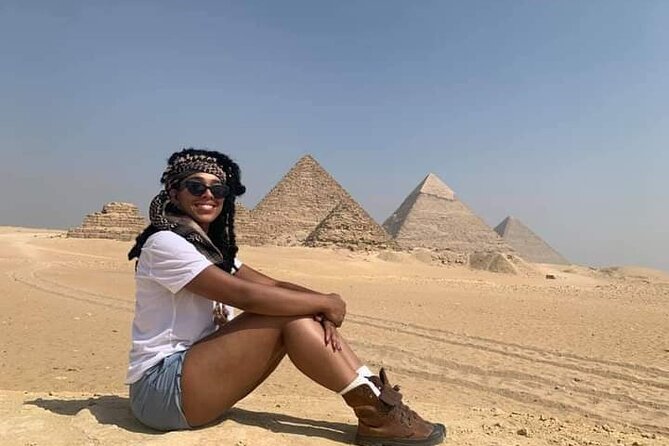
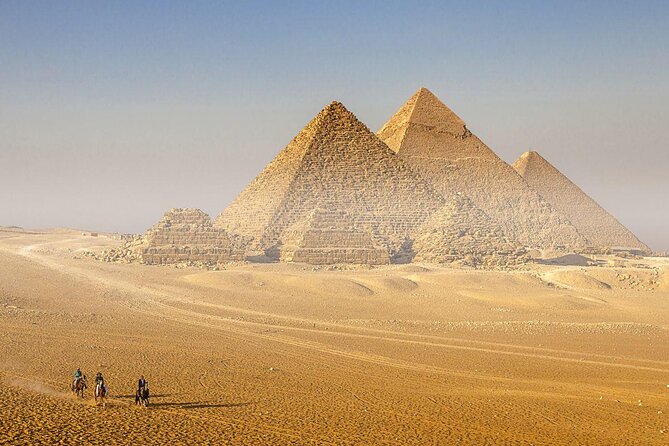
The first stop is the Giza Plateau, where you see the pyramids of Khufu, Khafre, and Menkaure. Khufu’s Great Pyramid is the only surviving landmark of the ancient Seven Wonders, and the scale is difficult to grasp from photographs.
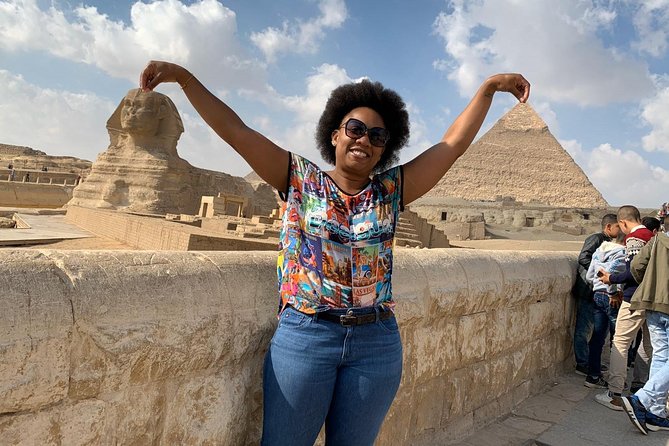
The planned three hours cover the plateau, the panoramic viewpoint, the Valley Temple, and the Great Sphinx. Your guide explains the different pyramids and the nearby tombs of officials and royal family members. The panoramic area is the best place in the schedule for broad photographs of the three main pyramids.
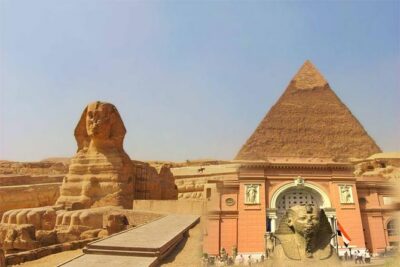
The Valley Temple and Sphinx add welcome variety. The temple is built from enormous stone blocks, while the Sphinx gives you a closer look at the human-and-lion guardian figure associated with the Giza complex.
You should treat the three hours as a working visit, not unlimited free time. The experience is private, so you can ask your guide to slow down or clarify a point. Do that early if you prefer detail over speed.
Saqqara reveals the step before the true pyramid
Saqqara is one of the strongest parts of the first day. The Step Pyramid of Djoser is the oldest major stone structure named in the tour, and it looks very different from the smooth-sided pyramids at Giza.
Your guide connects the monument to King Djoser and Imhotep, the architect credited with using limestone in the pyramid’s funerary complex. That explanation matters because Saqqara shows an earlier stage in pyramid design. You are not simply seeing another pyramid. You are seeing an important change in how royal tombs were built.
The two-hour visit also includes the pyramid of Teti and mastabas belonging to officials. These smaller tombs help you picture the wider burial complex, rather than focusing only on a king’s monument.
Saqqara can feel less immediately familiar than Giza, which is part of its appeal. If you want a tour with context, this stop earns its place. If your priority is only the most famous monuments, you may find the extra site tiring after Giza.
Memphis adds an ancient capital to the day
Memphis was founded by King Menes and served as Egypt’s capital during the Old Kingdom. The stop is shorter, about an hour including lunch, but it adds a useful political setting to the morning’s royal tombs.
You see the statue of Ramses II and the alabaster sphinx of Memphis. These pieces help show that the ancient capital was more than a collection of burial monuments. Your guide can connect the city’s role to the rulers and building projects you have already seen at Giza and Saqqara.
Lunch follows at a local restaurant. The meal is included, which keeps the day simple and prevents you from spending time arranging food between sites. One past account specifically found the lunch good, but the supplied details do not specify a fixed menu or restaurant, so you should not book this expecting a particular dish.
Same base, a different sort of day:
- Cairo: Pyramids & Great Sphinx Private Tour with Camel Ride
★ 4.9 · 6,335 reviews - Tour to Giza Pyramids and The Egyptian Museum
★ 5.0 · 6,016 reviews - VIP All inclusive Best of the best Giza Pyramids,Sakkara,Memphis
★ 5.0 · 3,164 reviews - From Cairo: Pyramids of Giza, Sphinx, Saqqara & Memphis Tour
★ 4.7 · 3,110 reviews
Dahshur gives you quieter pyramid time
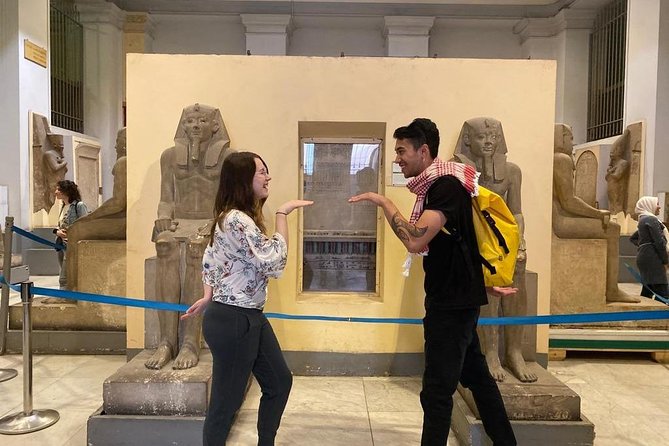
Dahshur closes day one with the Bent Pyramid and Red Pyramid. Both were built for Snefru, the father of Khufu and founder of the Fourth Dynasty.
The Bent Pyramid is especially useful for understanding pyramid construction. Its changing angle reflects a failed attempt to create a true pyramid, while the Red Pyramid shows a later, more successful form. Together they turn abstract architectural history into something you can see in the stone.
The scheduled two hours make this more than a quick roadside photo stop. Still, day one is long. By Dahshur, you will already have spent hours walking and listening. Wear practical shoes, carry water, and tell your guide if you need a slower pace.
At the end of the day, you return to your hotel. That hotel drop-off matters because the route covers several separate archaeological areas, and you do not need to arrange a late return yourself.
Day two starts with King Tut at the Egyptian Museum
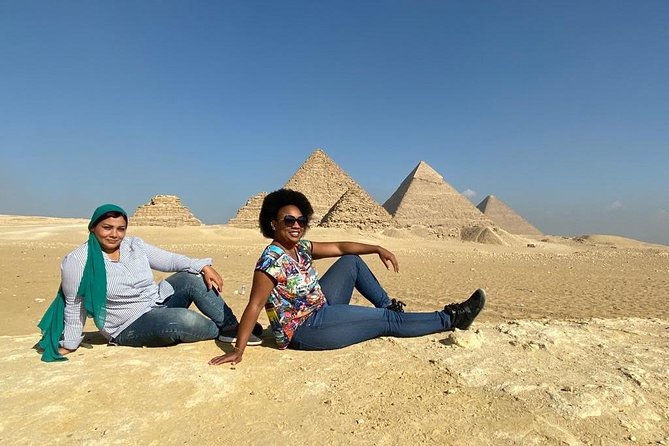
The Egyptian Museum visit lasts about three hours. Its best-known draw is the collection of Tutankhamun, including the famous gold mask of the boy king.
You also see objects connected with Yuya and Thuya, described here as Tutankhamun’s great-grandparents. A private guide can help you sort out names, dates, and relationships that are easy to lose in a large museum collection.
The museum is valuable even if you already know the mask from photographs. Seeing it among other royal objects gives it context, and a guide can point out details you might otherwise pass without understanding.
The schedule allows more time here than at Memphis, but three hours can still pass quickly. If the mask is your main reason for booking, say so at the start. If you prefer mummies, jewelry, or royal burial objects, ask your guide to shape the museum visit around those interests.
Some past accounts refer to a National Museum visit, but the stated program for this experience specifies the Egyptian Museum of Antiquities. Confirm the exact museum when you book if this distinction matters to you.
The Citadel and Mosque of Muhammad Ali
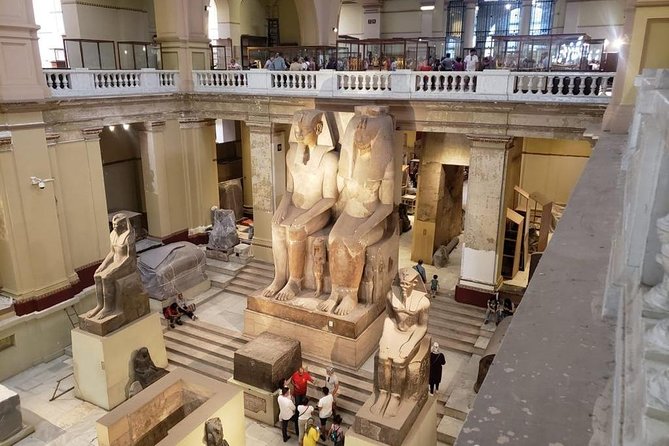
Next comes the Citadel of Salah el-Din, built in 1182. The complex introduces a different period of Cairo’s story, moving from pharaonic royal power to medieval Islamic rule.
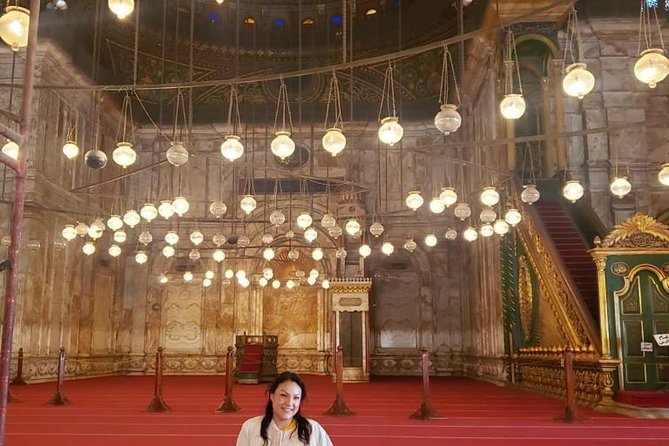
Inside the Citadel, the main highlight is the Mosque of Muhammad Ali, also called the Alabaster Mosque. It was built in 1848 by the Turkish architect Youssef Bushnok and follows an Ottoman design.
The mosque’s value is visual as well as historical. Its design was intended to match the power of the Ottoman imperial style, reflecting Muhammad Ali’s ambitions. Your guide can explain why this building looks different from older Egyptian mosques and how it fits into the Citadel complex.
This stop takes about two hours, followed by lunch. The included meal is convenient, especially after a morning in the museum, but once again, the menu and restaurant are not specified. Personal expenses remain outside the price.
Khan el-Khalili is the less structured finale
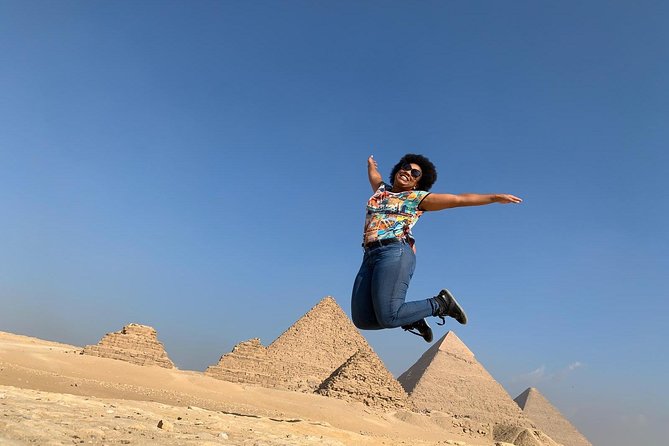
The final stop is Khan el-Khalili, an open market established during the Mamluk period under Sultan Barqouq in the fourteenth century. It is also linked with Islamic Cairo and the earlier Fatimid rulers.
The market is a good change of pace after museums and formal monuments. You can browse, look at the old lanes, and get a feel for Cairo as a living city rather than only an archaeological destination.
The two-hour visit is enough for browsing, but your spending is your own responsibility. If you plan to buy anything, keep personal expenses separate from the tour price and ask your guide for help with local prices. A guide can also help you avoid wasting time if you are not interested in shopping.
The schedule does not promise a separate Coptic Cairo visit. A few past accounts describe customized programs that included Coptic Cairo or skipped the market, but those changes were personal arrangements. Treat the listed route as the standard plan and request alterations in advance.
What the private format really adds
Private touring in Cairo is less about luxury than control. Your own group rides in an air-conditioned vehicle, and you can ask questions without trying to hear a guide over a large crowd.
The named guides in past accounts include Hala, Muhammad, Mo, Haitham, and Ahmed Hadida. Hala is described as able to read hieroglyphics, while Muhammad is praised for explaining pharaonic, Coptic, and Islamic subjects. These names give you a sense of the staff, but they do not guarantee who will lead your visit.
The private format also helps with practical matters. Past accounts describe guides arriving early, helping with purchases, and making visitors feel supported. That kind of assistance can be useful in Cairo, where moving between distant sites and understanding local customs may take effort.
There is one clear warning. A private guide may move quickly if you do not set expectations. Ask for explanation time, photo time, and quiet time at the start of each stop. You are paying for a private experience, so use that flexibility.
Is $300 per person good value?
At $300 per person, the tour is not a budget day trip. The price covers two full days, private transport, a guide, admission to all named sites, hotel pickup and drop-off, and two lunches.
The value improves if you would otherwise need to arrange separate taxis, entrance tickets, a museum guide, and transport to Saqqara, Memphis, and Dahshur. Those outlying sites are difficult to combine efficiently without a vehicle and a clear plan.
The value is weaker if you want long periods alone at each monument or prefer to choose your own restaurants. The tour has a set structure, and lunch is included at an unspecified restaurant. Tips and personal expenses are not included, so budget for those separately.
Group discounts are offered, though the amount is not provided. Since the activity is private, ask about the group price before booking if you are traveling with family or friends.
Who should book it?
I would choose this for a first Cairo visit when you want the major sights explained and do not want to manage transport. It suits families, couples, and small groups who like a private vehicle and the ability to ask for adjustments.
It is also a good fit if you want more than Giza. Saqqara, Memphis, and Dahshur give day one real breadth, while the museum, Citadel, and Khan el-Khalili give day two a useful balance.
I would hesitate if you dislike full sightseeing days, have limited walking tolerance, or want an unhurried museum visit. The schedule is broad by design. It works best when you accept that you will see many important places rather than spend an entire day at one.
Practical details before you reserve
Pickup begins at about 8:00 a.m. from your Cairo hotel, and the vehicle is air-conditioned. Confirmation is provided when you book, and the activity is private, so only your group participates.
Admission tickets and both lunches are included. Tips and personal expenses are not. Most people can take part, and the experience requires good weather.
Free cancellation is available up to 24 hours before the start time for a full refund. Changes or cancellations inside that 24-hour window are not accepted for a refund. If poor weather cancels the experience, you are offered another date or a full refund.
Should you book this Cairo tour?
Book it if you want a guided, door-to-door introduction to Cairo and Giza that goes well beyond the Great Pyramid. The best reasons are the private format, the four ancient sites on day one, and the combination of King Tut, the Citadel, and Khan el-Khalili on day two.
Before you start, tell your guide what matters most and ask not to rush. If you want broad coverage, $300 can be a fair price for the transport, tickets, meals, and guiding. If your ideal day means lingering at one site, choose a shorter private tour instead.
FAQ
How long does the experience last?
The experience lasts approximately two days, with one full touring day in Giza and the surrounding ancient sites, followed by one full day in Cairo.
What time does pickup begin?
The stated start time is 8:00 a.m. Pickup is offered from any hotel in Cairo.
Is this a private tour?
Yes. Only your group participates in the activity.
What sites are visited on day one?
Day one includes the Pyramids of Giza, the Great Sphinx, Saqqara, Memphis, and Dahshur.
What sites are visited on day two?
Day two includes the Egyptian Museum of Antiquities, the Citadel of Salah el-Din, the Mosque of Muhammad Ali, and Khan el-Khalili.
Are entrance tickets included?
Yes. Admission to all mentioned sites is included in the tour price.
Are meals included?
Yes. Two lunches are included, one on each day.
Is transportation included?
Yes. Transport is provided in an air-conditioned vehicle, with pickup and drop-off at your Cairo hotel.
Are tips included?
No. Tipping and personal expenses are not included.
Can I cancel for a full refund?
Yes, if you cancel at least 24 hours before the experience start time. Cancellations or changes made less than 24 hours before the start time are not refunded.
Just added in Cairo
- White Desert Overnight Camping Sharing Tour in Egypt★ 5.0 · 15 reviews
- Cairo Best 2Days tour Pyramids, Saqqara & Old Cairo★ 5.0 · 15 reviews
- Giza Pyramids with (GEM) Grand Egyptian Museum★ 5.0 · 42 reviews
- visit the pyramids of Giza + the necropolis of Saqqara + the Memphis site.★ 4.5 · 20 reviews
- Tour to Giza pyramids Memphis Sakkara and Felucca on the Nile★ 5.0 · 16 reviews
- Monastery St Simon with Cave Church and Garbage City Private Tour★ 5.0 · 15 reviews
- sunset at Giza pyramids by camels★ 5.0 · 31 reviews
- Private Giza pyramid,sphinx, Mummification temple& inside pyramid★ 5.0 · 32 reviews
Tours in Cairo, compared.
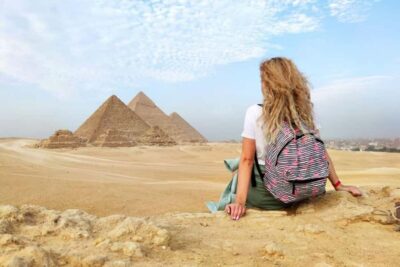
Pyramids & Great Sphinx Private Tour with Camel Ride
Read our review →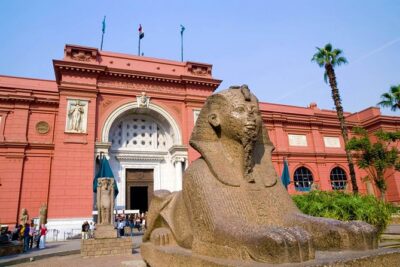
Tour to Giza Pyramids and The Egyptian Museum
Read our review →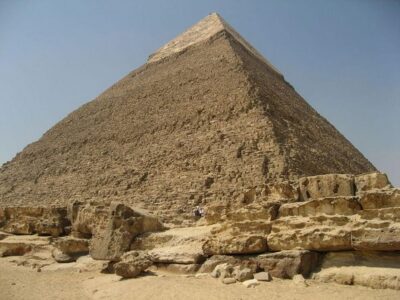
VIP All inclusive Best of the best Giza Pyramids,Sakkara,Memphis
Read our review →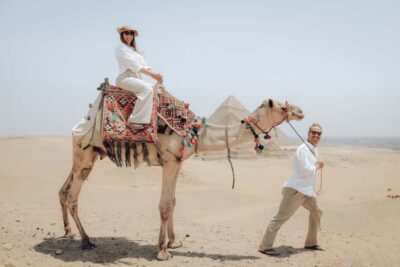
Pyramids of Giza, Sphinx, Saqqara & Memphis Tour
Read our review →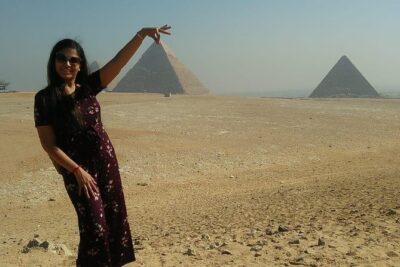
Cairo 8 Hour Private Tour of Pyramids, Egyptian Museum and Bazaar
Read our review →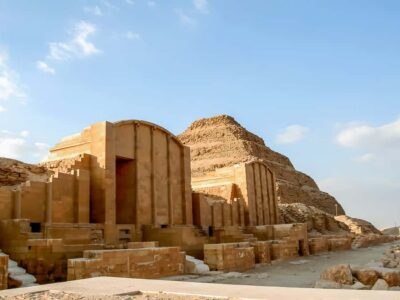
Private ViP all-inclusive Giza Pyramids,Sphinx,Inside Pyramid
Read our review →
Grand Egyptian Museum, Pyramids, Sphinx Tour & Lunch
Read our review →Browse the lists this tour appears in