
Reviewed · TOURS IN CAIRO
2 days cairo
Cairo’s biggest strength is its range. In two days, you move from the oldest surviving pyramid complex at Saqqara to the Great Pyramid, then from royal tombs to medieval mosques and a Coptic church built into the Mokattam hills. This is a serious introduction to the city, not a gentle sightseeing stroll.
I like the private vehicle and flexible guide service, especially when Cairo traffic, heat, or family needs call for a change of plan. I also like the mix of famous sights and less expected stops, including Dahshour and the Cave Church. The main concern is the packed schedule and unclear admission wording: the tour says entrance fees are included in one section, but each sightseeing stop is also marked as not included. Confirm that before paying.
Key points to know before booking
- Dahshour comes before Giza, giving you a quieter look at early pyramid design before the plateau’s crowds and scale.
- Giza and Saqqara share the first day, so you see both the famous pyramids and Djoser’s groundbreaking Step Pyramid.
- Your own air-conditioned vehicle picks you up anywhere in Cairo or Giza and keeps the two-day plan private.
- Guides such as Mohammed and Fatima are praised for clear English, historical storytelling, patience, and adapting plans to families.
- Day two changes the subject completely, moving from ancient Egypt to the Egyptian Museum, Coptic Cairo, and medieval Islamic Cairo.
- Check entrance costs carefully, since the tour information gives conflicting details about what is included.
A two-day Cairo plan with real range
At $140 per person, this experience is priced as a private sightseeing package rather than a basic shared bus tour. You are paying for private transportation, a guide, parking fees, and pickup from any location in Cairo or Giza. For a small group, that can be good value, especially if you want help with Cairo’s traffic and a plan that can bend around your needs.
The schedule is ambitious. Day one covers three major archaeological areas, while day two includes the Egyptian Museum, the Cave Church, and Islamic Cairo. The listed stops add up to about eight hours of sightseeing, before driving, meals, traffic, and any extra visits are counted. I would treat the itinerary as a framework rather than a minute-by-minute promise.
The strongest part of this setup is control. Your group does not have to follow the pace of strangers, and the guide can help shape the day around your interests. Past guests describe guides and drivers handling practical needs, including a pharmacy stop, lodging problems, and family adjustments. That kind of help matters in Cairo, where a little local support can save time and stress.
The weak point is the admission policy. The highlights say sightseeing entrance fees are provided, but the detailed stops say admission tickets are not included at Dahshour, Giza, Saqqara, and the Egyptian Museum. The exclusions also list entrance fees. Ask for a written breakdown of the $140 price before the tour begins.
A few more things to do in Cairo worth a look
- White & Black Desert tour 2 Days 1 night camping from Cairo.
★ 5.0 · 649 reviews - Cairo: 2-Day Bahariya Oasis Camp and Desert Tour
★ 4.9 · 616 reviews - White & Black desert camping tour 2 Days 1 night From Cairo
★ 5.0 · 467 reviews
Day one: Dahshour and the first experiments in pyramid building
Dahshour is a smart first stop because it adds context to the better-known pyramids at Giza. This royal necropolis lies about 40 kilometers south of Cairo on the west bank of the Nile. Its pyramids date from roughly 2613 to 2589 BC, making them among the earliest large pyramid projects in Egypt.
The site is known especially for the Bent Pyramid and the Red Pyramid. Even without adding extra details to the formal schedule, the value of Dahshour is clear: you see pyramid building as a process, not a finished idea that appeared fully formed at Giza. The shapes and construction choices help explain how Egyptian architects developed their methods.
The planned visit is about one hour. That is enough for a focused introduction, but not a long archaeological exploration. If ancient engineering interests you, ask your guide how the monuments at Dahshour relate to Saqqara and Giza. A good explanation here can make the rest of the day easier to understand.
Admission is listed as not included, so budget for a separate ticket unless the operator confirms otherwise. The desert setting also means you should bring water, sun protection, and shoes that are comfortable on uneven ground. Those are simple measures, but they matter on a day built around open-air monuments.
The Giza Plateau: famous for good reason
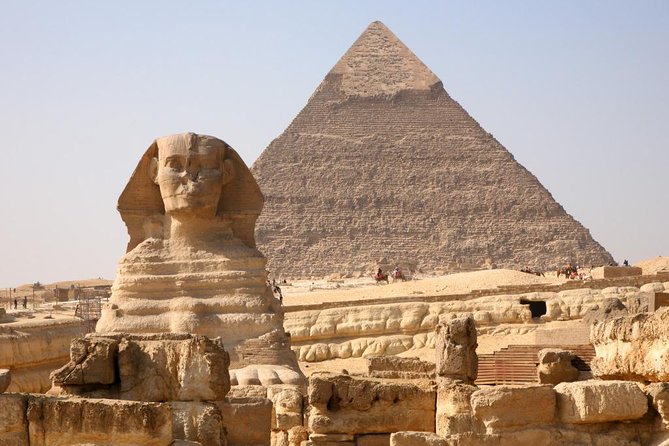
Giza needs no introduction, but it still benefits from a guide. The plateau includes the Great Pyramid of Khufu, the pyramid of Khafre, the pyramid of Menkaure, the Sphinx, and several cemeteries. You will see the monuments that dominate nearly every first visit to Egypt, but the experience is more useful when someone explains how the complex fits together.
The scheduled time is two hours. That is a reasonable introduction to the plateau, though it is not a leisurely examination of every corner. Your guide can help focus the visit on the main pyramids and the Sphinx, while also pointing out details that are easy to miss from a quick photo stop.
This is also where private transport earns its keep. You will have a vehicle waiting rather than needing to solve every transfer yourself. Cairo is a difficult city in which to judge distances by the map, and traffic can make a simple move take much longer than expected.
Giza can feel intense. There are large monuments, open ground, vehicle movement, and plenty of commercial activity around one of Egypt’s most famous sites. A private guide does not remove every distraction, but it gives you someone to keep the visit organized and answer questions as they come up.
Again, admission is marked separately from the tour price in the detailed schedule. Ask whether the base price covers the plateau entry, the Sphinx area, and any interior pyramid ticket. Those are not always the same ticket, and the supplied details do not spell out the difference.
Saqqara and Djoser’s Step Pyramid
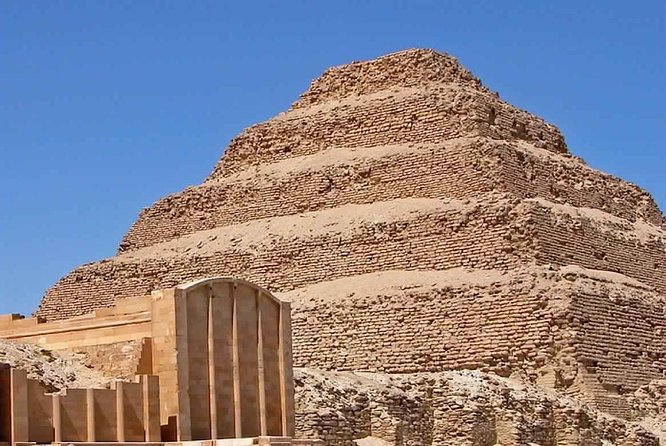
The third stop on day one is Saqqara, an enormous ancient burial ground that served the old Egyptian capital. The centerpiece here is the Step Pyramid of Djoser, one of the most important turning points in pyramid design.
The planned visit is two hours. That gives you more time than Dahshour and makes Saqqara one of the day’s key stops. The site is valuable because it shows a different stage of Egyptian monument building. Instead of going straight from the Great Pyramid to another famous pyramid, you see an earlier form that helps fill in the story.
I would pay close attention to the guide’s explanation at Saqqara. This is the sort of place where a few clear connections can transform a pile of ancient stone into a readable historical sequence. The guides associated with this service, including Mohammed and Fatima, are praised for turning Egyptian history into stories and for encouraging questions.
There is a practical tradeoff. After Dahshour and Giza, you may be tired before reaching Saqqara. The first day is not designed for a slow pace. If you are traveling with children, older relatives, or anyone who tires easily, tell the tour team in advance. The private format makes it more realistic to adjust the amount of time at each site.
Saqqara admission is also shown as not included. Get the full ticket policy in writing, and ask which monuments are part of the planned visit rather than assuming every area is covered.
Same base, a different sort of day:
- Cairo: Pyramids & Great Sphinx Private Tour with Camel Ride
★ 4.9 · 6,335 reviews - Tour to Giza Pyramids and The Egyptian Museum
★ 5.0 · 6,016 reviews - VIP All inclusive Best of the best Giza Pyramids,Sakkara,Memphis
★ 5.0 · 3,164 reviews - From Cairo: Pyramids of Giza, Sphinx, Saqqara & Memphis Tour
★ 4.7 · 3,110 reviews
Day two begins at the Egyptian Museum
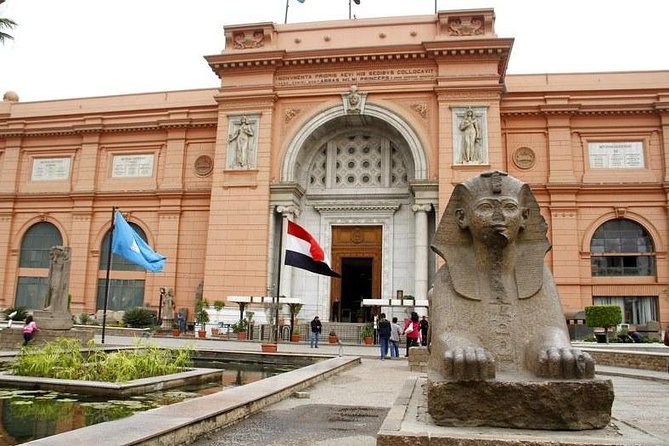
The Museum of Egyptian Antiquities gives you a needed change of pace after a full day outdoors. The planned visit lasts two hours, and the museum houses a large collection of Pharaonic antiquities. It is a place for objects, not just monumental architecture: statues, funerary pieces, and artifacts that show how ancient Egyptian society worked and what its people valued.
Two hours can provide a useful overview, but it will not cover everything. The museum’s collection is too broad for that. Your guide should help you choose a route and explain the objects in front of you rather than trying to turn the visit into a rushed march through every room.
This is one place where a private guide can make a major difference. A museum can feel confusing when you do not know which pieces matter or how they connect. The strongest guides from this company are described as warm, clear, and able to explain history in an engaging way. Fatima is singled out for her English and careful explanations, while Mohammed is praised for his enthusiasm and approachable manner.
The entrance fee is the biggest point to settle before departure. The detailed information says the ticket is not included, despite the separate statement that sightseeing fees are provided. Do not rely on the headline alone. Ask exactly what you will pay for the museum and the archaeological sites.
The Cave Church and Cairo’s Coptic identity
The Cave Church, also called the Monastery of Saint Simon in the supplied details, brings you into a very different part of Cairo. It is associated with the Zabbaleen community, many of whom have retained their Coptic Christian faith while working in garbage collection and recycling.
The church is planned as a one-hour stop, and admission is listed as free. Its setting is part of the experience. Rather than seeing another grand royal monument, you encounter a living religious place tied to a distinct Cairo community. That shift helps you understand the city beyond ancient Egypt and Islamic architecture.
You should dress and behave respectfully in this setting. The tour details do not specify a dress code, but a church visit calls for modest clothing and a quiet manner. Your guide can provide the local context and help you understand what you are seeing without treating the community as a curiosity.
This stop may be especially worthwhile if you want your two days to include present-day Cairo, not only pharaohs and monuments. It is also a useful choice for families, since it breaks up the museum and old-city sightseeing with a place that feels different in both subject and setting.
Islamic Cairo and Al-Muizz Street
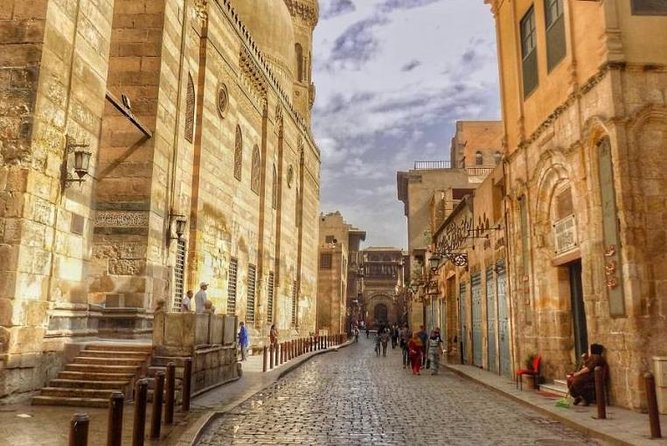
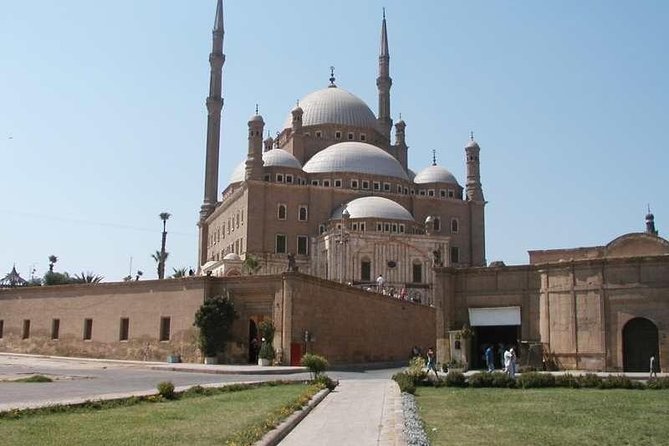
The final scheduled stop is Islamic Cairo, with time on Al-Muizz li-Din Allah al-Fatimi Street. This is one of the oldest streets in the area and runs for about one kilometer. It is known for its concentration of medieval Islamic architecture, including mosques and other historic buildings.
The planned visit lasts two hours. That is enough for a meaningful walk, but not enough to inspect every building along the route. Wear practical shoes and be ready for a walking-focused finish to the day. The detailed information lists admission as free, though some individual monuments along historic streets can have their own entry arrangements, so ask your guide what the walking portion includes.
Several people who took this itinerary particularly enjoyed Islamic Cairo. That makes sense. The pyramids are the obvious reason to come to Egypt, but the old city gives you a closer feel for Cairo as a lived-in place, with religious buildings, old streets, and layers of medieval history beside modern city life.
I would save some energy for this stop. After the museum and Cave Church, it can be tempting to treat the old city as an add-on. It deserves better than that. If your interests lean toward architecture, religion, or daily life, tell your guide early so the final two hours receive the attention they deserve.
Guides, drivers, and the private format
The experience is sold as a private activity, so only your group participates. Pickup is offered from any place in Cairo or Giza, and transport is provided in an air-conditioned vehicle. Parking fees are included, which removes one small but useful source of uncertainty.
The feedback attached to this service repeatedly emphasizes professional communication, reliable drivers, and guides who adapt to the group. Names that appear in the experience feedback include Farouk, Mohammed, Fatima, Nasser, Mustafa, and Tamer. You may not have all of them, but the details suggest that the company works with a wider team rather than one fixed guide.
Mohammed is praised for making history interesting and for helping families feel looked after. Fatima is described as highly capable in English and thoughtful in her explanations. Farouk is repeatedly associated with organizing the wider experience and responding quickly when plans need to change.
That flexibility is the best reason to choose this tour over a fixed group outing. You can ask for more time at Saqqara, shorten a stop if the heat becomes too much, or make a practical detour when needed. Still, flexibility depends on traffic and opening conditions, so it does not mean every requested addition will fit.
Is $140 good value?
For one person, $140 is not the cheapest way to see Cairo. But the comparison changes if you are sharing the vehicle with family or friends. The price covers private transport, an air-conditioned vehicle, a guide, parking, and pickup in Cairo or Giza. You are also buying help with a complicated city and a demanding sightseeing plan.
The value is strongest for first-time visitors, families, and people with only two days. It is also useful if you want to combine the major pyramids with Islamic and Coptic Cairo without arranging several separate rides.
The value is weaker if you prefer a slow, self-guided visit or already have transport and a guide. You may also spend more than expected if the archaeological and museum tickets are extra. This is the single financial detail I would clarify before booking.
The experience is often booked well ahead, with an average booking lead time of 79 days. That suggests you should not leave it until the last minute if your Cairo dates are fixed, especially if you want a particular guide or pickup arrangement. The service offers mobile tickets, group discounts, and free cancellation up to 24 hours before the start time. Poor weather may lead to a different date or a full refund.
Who should book these two days?
I would recommend this experience if you want a broad first look at Cairo and prefer a private guide to handling the city alone. It suits families particularly well because the van is described as spacious and comfortable, and the plan can be adjusted to suit children and adults.
It also works for history-focused visitors who want more than the Giza plateau. Dahshour and Saqqara add archaeological context, while the Egyptian Museum, Cave Church, and Islamic Cairo show different sides of Egypt’s past and present.
I would hesitate if your priority is a slow pace. Three major ancient sites on day one and three very different Cairo stops on day two make this a full program. You should also consider whether you are comfortable with the admission-fee uncertainty and confirm it before booking.
Should you book it?
Book it if you have only two days, want private transport, and need a guide to connect Cairo’s scattered sights. The combination of Dahshour, Giza, Saqqara, the museum, the Cave Church, and Islamic Cairo gives you far more than a pyramid-only visit.
Before you commit, confirm the entrance-fee policy, the exact guide assigned to your group, and how much flexibility is possible with the daily schedule. If those details are clear, $140 can be a fair price for a well-supported introduction to Cairo. If you prefer depth over coverage, book a shorter plan and spend more time at fewer sites.
FAQ
How long is the Cairo experience?
The experience lasts approximately two days. Day one covers Dahshour, Giza, and Saqqara. Day two covers the Egyptian Museum, the Cave Church, and Islamic Cairo.
Where can pickup take place?
Pickup is offered from any place in Cairo or Giza.
Is the tour private?
Yes. This is a private activity, so only your group participates.
What transportation is provided?
Private transportation is provided in an air-conditioned vehicle. Parking fees are included.
Are entrance fees included?
The supplied details are inconsistent. One section says sightseeing entrance fees are included, while the detailed stops and exclusions say entrance fees are not included. Confirm this directly before booking.
What is the cancellation policy?
You can cancel up to 24 hours before the experience start time for a full refund. Cancellations or changes made less than 24 hours ahead are not accepted for a refund. If poor weather causes the operator to cancel, you will be offered another date or a full refund.
Just added in Cairo
- White Desert Overnight Camping Sharing Tour in Egypt★ 5.0 · 15 reviews
- Cairo Best 2Days tour Pyramids, Saqqara & Old Cairo★ 5.0 · 15 reviews
- Giza Pyramids with (GEM) Grand Egyptian Museum★ 5.0 · 42 reviews
- visit the pyramids of Giza + the necropolis of Saqqara + the Memphis site.★ 4.5 · 20 reviews
- Tour to Giza pyramids Memphis Sakkara and Felucca on the Nile★ 5.0 · 16 reviews
- Private Giza pyramid,sphinx, Mummification temple& inside pyramid★ 5.0 · 32 reviews
- Monastery St Simon with Cave Church and Garbage City Private Tour★ 5.0 · 15 reviews
- sunset at Giza pyramids by camels★ 5.0 · 31 reviews
Tours in Cairo, compared.
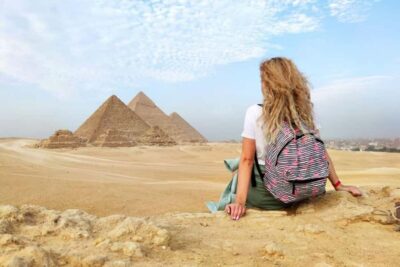
Pyramids & Great Sphinx Private Tour with Camel Ride
Read our review →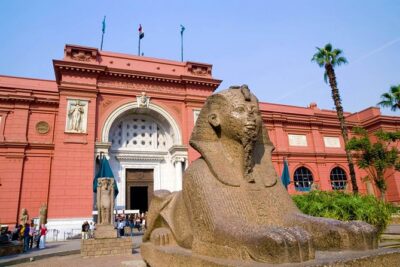
Tour to Giza Pyramids and The Egyptian Museum
Read our review →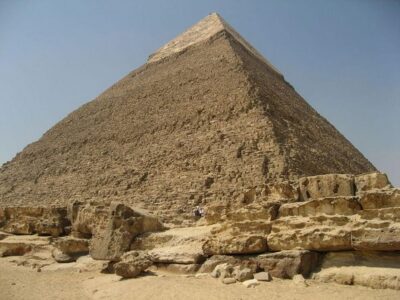
VIP All inclusive Best of the best Giza Pyramids,Sakkara,Memphis
Read our review →
Pyramids of Giza, Sphinx, Saqqara & Memphis Tour
Read our review →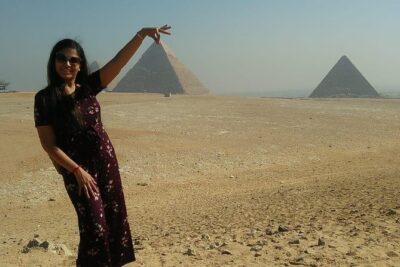
Cairo 8 Hour Private Tour of Pyramids, Egyptian Museum and Bazaar
Read our review →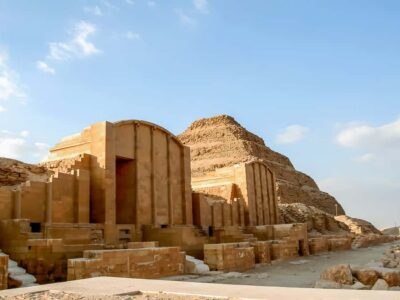
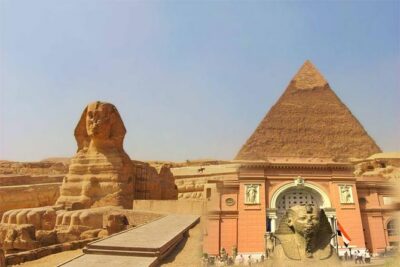
Private ViP all-inclusive Giza Pyramids,Sphinx,Inside Pyramid
Read our review →
Grand Egyptian Museum, Pyramids, Sphinx Tour & Lunch
Read our review →Browse the lists this tour appears in