
Reviewed · DAY TRIPS BY PLANE
3 Days 2 Nights Travel package to Aswan & Luxor from Cairo by flights
The real appeal here is simple: in just three days, you reach the two great ancient sites that are hardest to fit into a Cairo visit, Abu Simbel and Luxor. Flights save precious road time, while an Egyptologist guide gives the temples and tombs a clear story instead of leaving you to puzzle over the carvings alone.
I like two things in particular. First, the package handles the awkward pieces, including Cairo airport transfers, domestic flights, local vehicles, hotels, meals, and entrance fees. Second, the route covers both Philae and Abu Simbel, then gives you a full Luxor day with the Valley of the Kings and Karnak. The drawback is the pace: early starts, long touring days, and flight schedules that may make an extra Luxor night worthwhile.
Key points to know before booking
- Abu Simbel requires a 4:30 AM start: You receive a box breakfast before the roughly nine-hour outing to and from the temples.
- The route flies one way into Aswan and back from Luxor: That avoids a long return journey by road and keeps this short break practical.
- Philae and the High Dam fill your first Aswan day: You get both an ancient temple and a major modern Egyptian engineering project.
- Luxor is packed into one sightseeing day: The West Bank and East Bank are both covered, including four major stops.
- Hotels are three-star properties: One night is in Aswan and one night is in Luxor, with breakfast included.
- The maximum group size is 40 people: The tour is described as small group, but you should not expect a private or very intimate experience.
Why this short Egypt route works
At $930 per person, this is not a bargain-basement excursion. It is a time-saving package for someone already based in Cairo who wants to add southern Egypt without arranging every transfer separately. Flights, two hotel nights, three lunches, two breakfasts, entrance fees, guides, and Cairo transportation are all part of the price.
That matters in Egypt. Aswan, Abu Simbel, and Luxor are not close enough to treat as casual side trips from Cairo. Booking each flight, car, hotel, guide, and ticket yourself can take time and create gaps between bookings. Here, one company coordinates the moving parts.
You should still judge the price against your schedule. If you have a week or more, independent planning or a longer Nile itinerary may give you more time at each site. If you have only a few days and want the major southern highlights, the package earns its keep through convenience.
The pace is the trade-off. Day two is a very long Abu Simbel outing, and day three asks you to cover both banks of Luxor before flying back to Cairo. You will see a lot, but you will not linger everywhere.
Other trips that fly out of Cairo for the day:
- Cairo: Private Luxor Day Tour with Entrance fees by Flights
★ 4.4 · 644 reviews - Full-Day Luxor private Tour from Cairo by Plane with Lunch
★ 5.0 · 446 reviews - Day Trip To Luxor From Cairo By Plane
★ 4.5 · 393 reviews
Day one: Philae Temple and the High Dam in Aswan
Your first transfer begins at your Cairo hotel. A representative takes you by air-conditioned vehicle to Cairo Airport for the flight to Aswan. The exact flight times are not supplied, so check them carefully before you commit to connecting plans in Cairo.
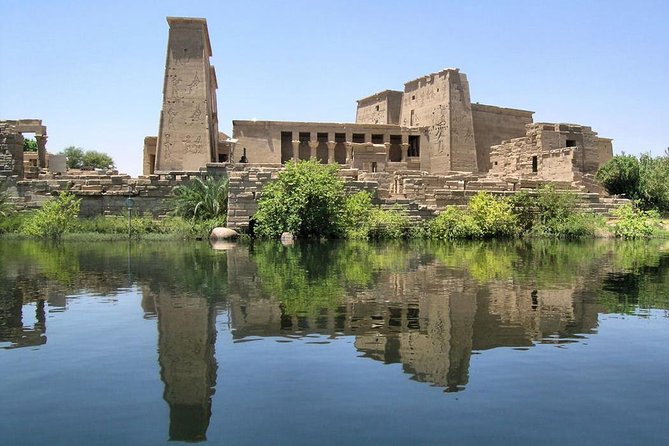
Once in Aswan, you meet your English-speaking Egyptologist guide and visit Philae Temple. Philae was originally located on an island in the First Cataract of the Nile. After the construction of the High Dam threatened the site with flooding, the temple complex was moved to its present island location in Lake Nasser through an Egyptian and UNESCO preservation project.
That relocation gives the visit extra meaning. You are not just looking at a beautiful temple. You are seeing a place that survived a major change to the Nile and a huge preservation effort. The setting on an island also gives Philae a different feel from the large temple compounds at Luxor.
The tour description allows about three hours for the Aswan visit, covering Philae and the High Dam. The guide’s role is especially useful at Philae, where the reliefs, gods, royal names, and later religious changes can look like a wall of symbols without context.
The High Dam provides a sharp contrast. Built beginning in 1961 under President Gamal Abdel Nasser, it changed the flow of the Nile, created Lake Nasser, and helped control flooding and generate power. Ancient Philae and modern infrastructure share the same afternoon, which makes this a more thoughtful pairing than a list of disconnected stops.
Lunch is included on day one. After sightseeing, you check into your three-star Aswan hotel, with free time before the overnight stay. Do not count on a long, leisurely first evening. Your next morning begins before sunrise.
Day two: the long road to Abu Simbel
The Abu Simbel outing starts at 4:30 AM. The hotel provides a box breakfast, then you travel with your guide and driver to the two temples. The full visit and transport are scheduled for about nine hours, so this is the most demanding day of the trip.
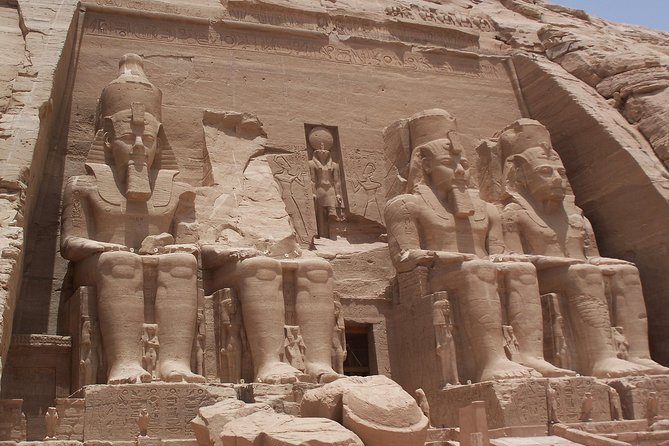
The effort is justified by the scale of the site. The Great Temple was built for Ramesses II and dedicated to Ptah, Re-Horakhty, Amun-Re, and Ramesses II himself. Its famous seated figures are only the first thing you notice. Inside, the carved rooms and religious scenes explain how the king presented his power and divine connection.
The nearby temple of Queen Nefertari gives the visit balance. It is smaller than the temple of Ramesses II, but it is not a minor stop. Seeing both temples helps you understand the royal presentation of the period and the place given to Nefertari.
The temples also carry a modern story. Like Philae, Abu Simbel was threatened by the rising waters associated with the Aswan High Dam. Egypt and UNESCO worked together to save the complex from flooding. That preservation work is one reason the site remains accessible today.
You should plan for fatigue. A 4:30 AM start followed by a nine-hour excursion is not ideal for anyone who needs a slow morning or has difficulty with long vehicle journeys. Still, if Abu Simbel is high on your Egypt wish list, this is the most direct way to fit it into a Cairo-based holiday.
After Abu Simbel, the schedule moves you toward Luxor, where the second hotel night is included. The supplied plan does not spell out the exact transfer timing from Aswan to Luxor, so confirm how that movement is arranged and when you are expected to arrive. This matters because the following day begins early and carries a full sightseeing load.
Day three: the Valley of the Kings and Luxor’s temples
Your final sightseeing day covers Luxor’s West Bank in the morning and its East Bank after lunch. You visit the Valley of the Kings, Hatshepsut’s mortuary temple, and the Colossi of Memnon before crossing to Karnak and Luxor Temple.
The Valley of the Kings is the emotional center of the West Bank. Rather than building large pyramids, New Kingdom rulers were buried in concealed rock-cut tombs. Your entrance fees are included, but the supplied details do not state how many individual tombs are covered or whether special tomb tickets are extra. Ask your guide on the day if a particular tomb matters to you.
The tombs are not interchangeable. Some have better-preserved painted scenes, while others are known for their historical importance. A good guide helps you understand what you are seeing and keeps the visit from becoming a rushed march from doorway to doorway.
Hatshepsut’s mortuary temple offers a different style. Its broad terraces and formal design sit against the cliffs of the West Bank. The temple tells you something about Hatshepsut’s unusual reign and the way royal authority was presented in ancient Egypt. You will want time to look at the structure as a whole, not only the reliefs.
The Colossi of Memnon are a short stop compared with the Valley of the Kings. These huge seated statues once guarded the entrance to a much larger temple complex. Today, they work well as a quick photo and history stop before lunch.
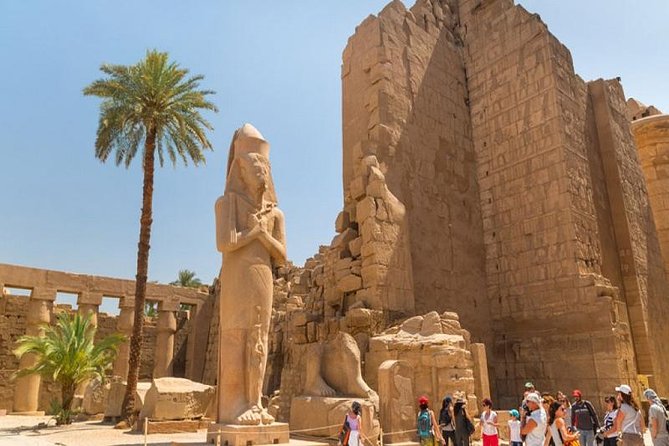
After the midday break, the tour crosses to Luxor’s East Bank. Karnak is the largest temple complex in Egypt and one of the places where a guide can make a major difference. Its columns, courts, pylons, and sanctuaries were added and changed by many rulers over a long period. Without context, the sheer size can be overwhelming.
Luxor Temple is smaller than Karnak but no less important. Its location in the heart of modern Luxor makes it feel different from the more remote West Bank sites. The contrast between the two temples gives the final afternoon a good rhythm, though six hours is still a tight window for all four major stops.
After the East Bank visits, you transfer to Luxor Airport for the flight to Cairo. A driver then meets you and takes you back to your Cairo hotel in a private air-conditioned van. The tour ends that day, so do not schedule an important evening flight from Cairo unless you have verified the domestic flight times and left a generous cushion.
Other multi-day packages starting in Cairo:
- 6 Days Hypnotic Cairo & Nile Cruise Tour Package
★ 5.0 · 248 reviews - Our Exceptional 5 days Cairo, Luxor and Abu Simbel Tour Package
★ 5.0 · 212 reviews - Private 9-Day Tour package to Cairo, Alexandria, Luxor, and Aswan by flight
★ 5.0 · 193 reviews - Egypt Tour Package to Cairo and Nile Cruise
★ 5.0 · 98 reviews
Hotels, meals, and transport
The package includes one night in a three-star hotel in Aswan and one night in a three-star hotel in Luxor. Breakfast is included at both hotels, with a box breakfast supplied before the Abu Simbel departure. Three lunches are also included.
The accommodation level is practical rather than luxurious. One useful point from the supplied booking experience is that upgrading to five-star hotels and adding another Luxor night cost less than $200 for two changes. That figure is not guaranteed for your dates, but it is a good reason to ask about upgrades before booking separately.
The vehicles are described as modern and air-conditioned, which is important for a route that includes early departures and long transfers. Cairo pickup and return are included, as are in-destination transfers and the flights between Cairo, Aswan, and Luxor.
The tour has a maximum of 40 people. That is manageable for a structured sightseeing day, but the phrase small group should not lead you to expect a private guide or a tiny party. If personal attention matters most, ask whether a smaller option is available.
How much time will you really have?
The advertised duration is about three days, but the usable sightseeing time is concentrated into a few demanding blocks. Day one gives you Aswan’s main sights. Day two belongs almost entirely to Abu Simbel. Day three covers the principal sites of Luxor before the flight north.
This schedule suits you if you prefer a strong overview to a slow, reflective visit. It is less suitable if you want long museum stops, time at a hotel pool, unplanned walks, or repeated visits to a favorite temple.
Flight timing is a real planning issue. One booking experience added another night in Luxor because of the flight schedule. That choice can reduce pressure and give you a better chance to enjoy Luxor without racing straight from the East Bank to the airport.
The itinerary also says two nights, one in Aswan and one in Luxor, but it does not give every transfer time between the cities. Confirm the precise sequence before paying, especially if you have other Cairo reservations or a separate flight home.
What the guide adds
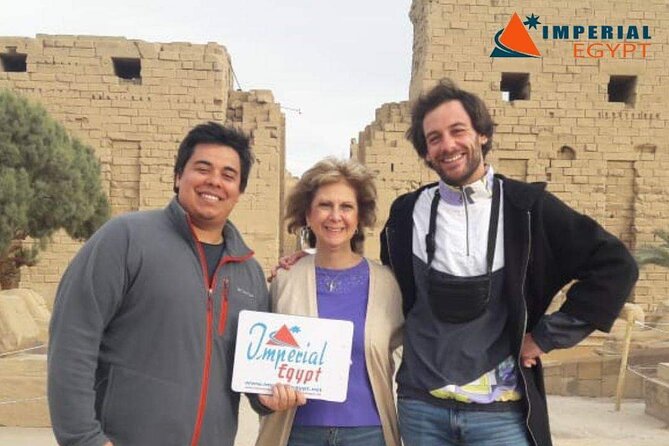
An English-speaking Egyptologist guide accompanies the sightseeing. No guide name is provided in the available details, so you cannot choose a specific guide in advance.
The guide is most useful at Philae, Abu Simbel, the Valley of the Kings, and Karnak. These places contain layers of religious symbols, royal claims, construction phases, and preservation stories. A clear explanation helps you connect the sites instead of treating them as isolated photo stops.
The tour includes entrance fees to all sites named in the route. Personal spending, optional activities, and tips are not included. Carry some flexibility for anything outside the stated program, but do not assume optional extras are part of the $930 price.
Who should book this Aswan and Luxor tour?
I would recommend it to a first-time Egypt visitor who has already planned Cairo and wants the major southern highlights in a short break. It is also a strong fit if you dislike arranging domestic flights, airport pickups, hotels, and local guides separately.
The package suits active sightseers who can handle a pre-dawn start and a full day on their feet. It is less suitable for anyone who wants a gentle pace, a small private group, or several free hours in each city.
The cancellation terms deserve serious attention. The experience is non-refundable and cannot be changed for any reason, so check names, passport numbers, nationality, Cairo hotel details, phone number, and travel dates before finalizing. Confirmation is normally immediate, but bookings made within two days of travel may take up to 48 hours and remain subject to availability.
Should you book it?
Book this tour if your priority is coverage: Abu Simbel, Philae, and Luxor’s headline sites in three days, with flights and most practical details handled for you. The $930 price is reasonable when you value time and coordination, not just the lowest possible cost.
Think twice if you can add nights. An extra Luxor night would make the schedule easier, and a five-star upgrade may be worth asking about. The core route is excellent for a fast first look, but you should accept that it is a tightly packed introduction, not a relaxed southern Egypt holiday.
FAQ
How long is the tour?
The tour lasts approximately three days and includes two hotel nights, one in Aswan and one in Luxor.
Are flights from Cairo included?
Yes. Pickup from your Cairo hotel, the flight to Aswan, the flight from Luxor to Cairo, and the related transfers are included.
What sites are visited in Aswan?
You visit Philae Temple and the High Dam on the first day. The second day is devoted to the temples of Abu Simbel.
What time does the Abu Simbel day begin?
The stated departure time is 4:30 AM. A box breakfast is provided by the Aswan hotel.
What sites are visited in Luxor?
You visit the Valley of the Kings, Hatshepsut’s mortuary temple, the Colossi of Memnon, Karnak Temples, and Luxor Temple.
Are hotel stays included?
Yes. The package includes one night in a three-star hotel in Aswan and one night in a three-star hotel in Luxor.
Are meals included?
Yes. Two breakfasts and three lunches are included. The Abu Simbel breakfast is provided as a box breakfast.
Is a guide included?
Yes. An English-speaking Egyptologist guide accompanies the sightseeing, with the tour described as a small group experience.
What is not included in the price?
Optional activities, personal spending, and tipping are not included. The experience is also non-refundable and cannot be changed after booking.
Just added in Cairo
- White Desert Overnight Camping Sharing Tour in Egypt★ 5.0 · 15 reviews
- Cairo Best 2Days tour Pyramids, Saqqara & Old Cairo★ 5.0 · 15 reviews
- Giza Pyramids with (GEM) Grand Egyptian Museum★ 5.0 · 42 reviews
- visit the pyramids of Giza + the necropolis of Saqqara + the Memphis site.★ 4.5 · 20 reviews
- Tour to Giza pyramids Memphis Sakkara and Felucca on the Nile★ 5.0 · 16 reviews
- Private Giza pyramid,sphinx, Mummification temple& inside pyramid★ 5.0 · 32 reviews
- Monastery St Simon with Cave Church and Garbage City Private Tour★ 5.0 · 15 reviews
- sunset at Giza pyramids by camels★ 5.0 · 31 reviews
Day Trips by Plane, compared.

Day trip from Sharm el Sheikh to Cairo by plane
Read our review →
Private Luxor Day Tour with Entrance fees by Flights
Read our review →
Hurghada Cairo Pyramids day tour by plane – Small group
Read our review →
Full-Day Luxor private Tour from Cairo by Plane with Lunch
Read our review →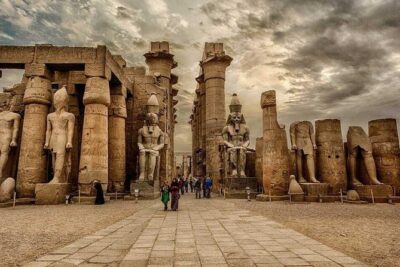
Private Day from Sharm to Cairo by plane, all entrance fees, Camel, Lunch, Guide
Read our review →Browse the lists this tour appears in