
Reviewed · EGYPT TOUR PACKAGES
3 Days Private Guided Cairo Tour Package
The most striking thing about this three-day Cairo tour is its reach. In one package, you move from the Great Pyramid and Sphinx to Memphis, Saqqara, Dahshur, the Egyptian Museum, medieval mosques, and Old Cairo. That saves you from piecing together several taxis and day tours in a city where traffic and distances can eat up your time.
I like the private car and guide, since you can set the pace and get help with tickets, directions, and local customs. I also like the broad historical sweep, from the earliest stone pyramid to Coptic churches and Mamluk Cairo. The main caution is that Day 1 is extremely full, and guide quality can vary, so confirm the day’s priorities and your guide’s name before setting out.
Key points to know before booking
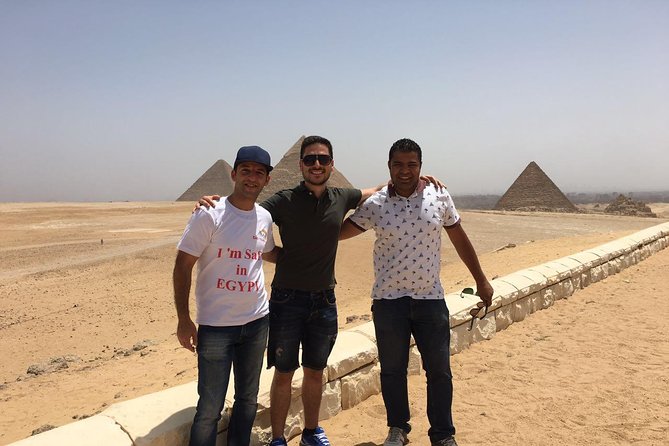
- Giza, Saqqara, Memphis, and Dahshur in one day: You see Egypt’s headline monuments plus quieter pyramid fields farther south.
- A genuinely private setup: Your group has its own guide and air-conditioned vehicle, rather than joining a large coach.
- The guide makes the difference: Past departures have included guides named Ahmed Zaki, Habib, Ehab, Maged, Hossam, and Ahmed Yassin, but the assigned guide is not guaranteed.
- Three different Cairo experiences: Day 1 focuses on pharaohs, Day 2 on the museum and Islamic Cairo, and Day 3 on Coptic and Mamluk heritage.
- Good value at $150 per person: Water, lunch, transport, guiding, and entry fees are included, but pyramid interiors, tips, and personal purchases cost extra.
- Plan for a demanding first day: The schedule includes many stops, so ask what can be shortened if you prefer more time inside a major site.
Why this private Cairo format works
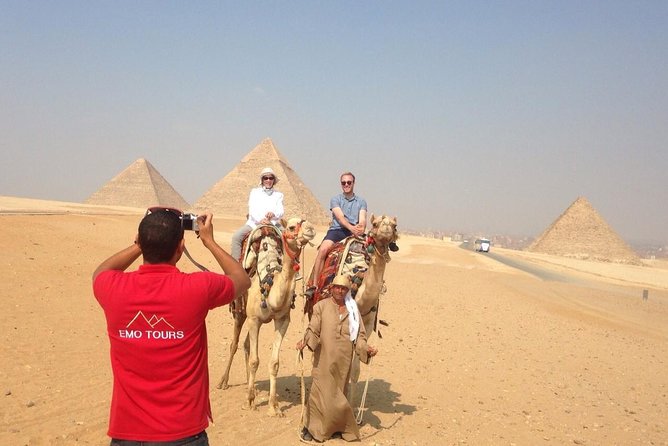
Cairo is not a compact sightseeing town. Giza lies across the Nile from central Cairo, Saqqara and Dahshur are farther south, and Old Cairo and the Citadel sit in different parts of the urban maze. A private driver lets you connect these areas without negotiating every ride yourself.
The guide is just as important as the car. A good guide can explain why the Step Pyramid matters, point out the difference between Khufu’s and Khafre’s complexes, and make sense of the layers inside the Egyptian Museum. Names associated with earlier departures include Ahmed Zaki, Habib, Ehab, Maged Abdelazim Elbehairy, Hossam, Ahmed Yassin, and Mo Salah, but you should treat those as examples, not a promise of assignment.
The experience is also flexible in a useful way. Past arrangements have allowed some groups to choose their start times, and private touring means you can ask for more photographs, more explanation, or a shorter stop. Still, the published plan is ambitious. Do not assume every listed stop will receive equal time.
At $150 per person, the price is attractive if you value convenience. You are paying for three days of private transport, a guide, lunch, bottled water, and entry fees. The value becomes especially good for two or more people sharing a private vehicle, though you still need money for tips, personal items, and entry inside the pyramids.
Other multi-day packages starting in Cairo:
- 6 Days Hypnotic Cairo & Nile Cruise Tour Package
★ 5.0 · 248 reviews - Our Exceptional 5 days Cairo, Luxor and Abu Simbel Tour Package
★ 5.0 · 212 reviews - Private 9-Day Tour package to Cairo, Alexandria, Luxor, and Aswan by flight
★ 5.0 · 193 reviews
Day 1: Giza’s royal tombs and the older pyramid fields
Day 1 is the archaeological marathon. It combines Giza with Memphis, Saqqara, and Dahshur, then lists individual pyramids and tombs within those areas. Expect a day built around driving, short visits, and repeated exposure to major monuments.
The Sphinx and the Giza Plateau
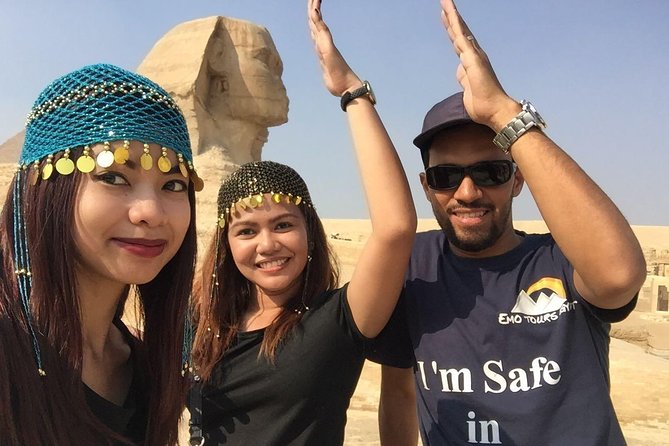
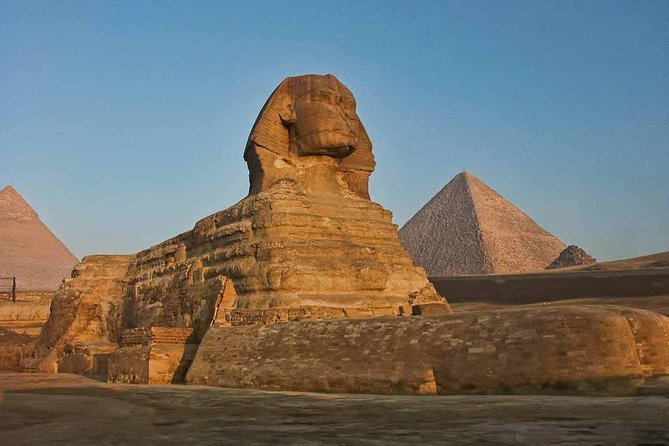
The Great Sphinx is the natural opening image of Cairo: a lion’s body with the head of a king, traditionally linked with Khafre. The planned visit lasts about 30 minutes, enough for the classic frontal view and a short explanation of the surrounding funerary complex.
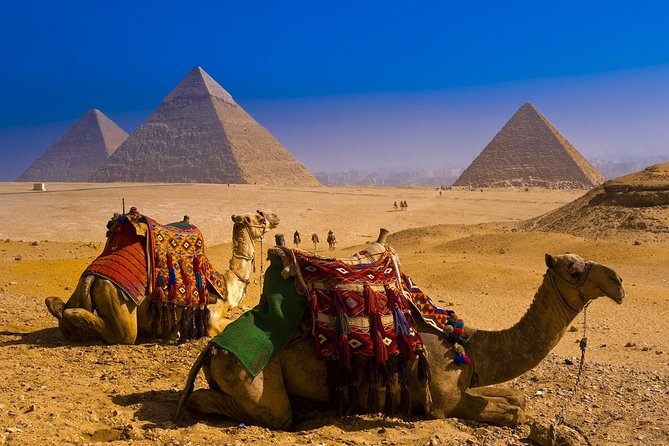
The main Giza visit takes about three hours. You see the pyramids of Khufu, Khafre, and Menkaure, along with the Valley Temple, where priests carried out preparation for royal burial. The scale is hard to grasp from photographs, and the plateau gives you several different ways to view the monuments.
Khufu’s Great Pyramid is the star, but do not let it crowd out the other two. Khafre’s pyramid often appears taller because it sits on higher ground and still retains some casing stone near its summit. Menkaure is smaller but has a distinct granite lower section and a more compact complex.
The schedule separately lists the Great Pyramid, Khafre’s Pyramid, and Menkaure’s Pyramid after the main Giza stop. That suggests your guide may take you to specific viewpoints for each. It is worth asking early how much time you will have near all three, since one earlier account described feeling rushed around the second and third pyramids.
Entry fees are included in the package, but going inside any pyramid is not included. If entering Khufu’s or another pyramid matters to you, ask about the extra ticket and the time it will take before the day begins. Interiors are narrow and very different from the open views outside, so this is a choice rather than an essential add-on.
Memphis and Saqqara
After Giza, the route heads south to Memphis, the ancient capital associated with the unification of Egypt around 3100 BC. The open-air remains are less grand than Giza, but the colossal statue of Ramses II and the alabaster sphinx give you a close look at royal sculpture.
The nearby Sphinx of Memphis receives a short visit. Its date is generally placed between 1700 and 1400 BC, and the pharaoh it honors is not known. That uncertainty is useful: not every ancient monument comes with a neat label, and your guide can explain how archaeologists work with incomplete evidence.
Saqqara is the day’s key stop after Giza. The Step Pyramid of Djoser is the earliest large stone building in Egypt, a six-tier structure created for King Djoser. Its stacked form looks unlike the smooth-sided pyramids at Giza, and it shows the experiment that led to later pyramid design.
The schedule allows about two hours at Djoser. That is welcome, because Saqqara is not just a single pyramid. The site includes causeways, courtyards, burial complexes, and tombs that help you see how a royal funerary center functioned.
The Pyramid of Teti and the Pyramid of Unas add another layer. Teti’s pyramid is one of the earliest known to contain Pyramid Texts, while Unas’s complex has a long causeway leading from a valley temple. These stops matter most if you enjoy the details of Egyptian religion and royal burial, rather than simply collecting famous photographs.
The Mastaba of Ti is especially worthwhile for its scenes of everyday life. Its wall carvings show activities such as work and household routines, giving you a more human view of ancient Egypt than another royal monument can provide. Allow about 30 minutes here, and ask your guide to point out the small details.
A few more things to do in Cairo worth a look
- Siwa Oasis All inclusive 3 days Tour from Cairo or Giza
★ 5.0 · 310 reviews - Siwa Oasis Tour All inclusive 3 Days Experience from Cairo&Giza
★ 5.0 · 227 reviews - White Desert & Bahariya oasis 3 days 2 nights Tour from Cairo
★ 5.0 · 135 reviews - all-inclusive Private 3 Days to the best 11 sightseeing Cairo
★ 5.0 · 124 reviews
Dahshur and the Bent Pyramid
Dahshur is farther from central Cairo and usually feels less crowded than Giza. Its pyramids show an important stage in construction, especially the Bent Pyramid of Snefru, whose angle changes partway up. The altered shape reflects a design problem during construction and makes the monument instantly recognizable.
The area also contains the Red Pyramid and pyramids linked to the Middle Kingdom, including the Black Pyramid of Amenemhat III and the Pyramid of Amenemhat II. The supplied plan specifically highlights the Bent Pyramid and gives Dahshur about two hours, but the exact monuments visited may depend on timing and site access.
Dahshur is a strong reason to choose this tour instead of a basic Giza outing. You get a better sense of Egypt’s architectural development, not just the finished masterpieces. The drawback is the pace. With Giza, Memphis, Saqqara, Dahshur, and several named monuments all on one day, you may need to choose between depth and coverage.
Day 2: Museum treasures, the Citadel, and Khan el-Khalili
Day 2 shifts from ancient burial grounds to Cairo itself. It begins at the Egyptian Museum, then moves to the Citadel, the Mosque of Muhammad Ali, and Khan el-Khalili.
The Egyptian Museum in Tahrir Square
Plan on about three hours in the Egyptian Museum. The pinkish building in central Cairo holds royal treasures, mummies, jewelry, household objects, toys, bowls, and artifacts from people whose names have been forgotten.
Three hours sounds generous, but the collection is large and unevenly labeled. Your guide can help you avoid wandering past the objects that matter most. Ask for a route that balances famous pieces with the ordinary objects that show how people lived.
The package includes entry fees, though the museum stop is described as having free admission in the schedule. That inconsistency is worth clarifying at booking, especially if a particular gallery or special exhibit carries a separate fee.
The museum can be tiring after the long first day, so take water and wear comfortable shoes. Complimentary bottled water is included, and lunch is also listed, but the exact restaurant, meal, and timing are not specified. If food matters to you, ask whether lunch can accommodate dietary needs.
Saladin’s Citadel and the Alabaster Mosque
The Citadel of Cairo served as the seat of government and home of Egypt’s rulers for nearly seven centuries. Its walls and elevated position give you a useful view of how Cairo’s rulers controlled the city.
Inside, the Mosque of Muhammad Ali is the visual highlight. Built between 1830 and 1848, it is often called the Alabaster Mosque because of its stone finish. Give yourself time to look upward at the domes and around the broad prayer space, but remember that this is an active religious site. Dress modestly and follow your guide’s instructions.
The Citadel and mosque are listed as separate stops, with roughly 90 minutes combined. That is enough for an overview, not a slow architectural study. If you want detailed Islamic art history, tell your guide before arrival.
Khan el-Khalili
Khan el-Khalili is Cairo’s historic bazaar district. The planned stop lasts about an hour, which gives you time to walk the lanes, look at crafts and souvenirs, and absorb the feel of old commercial Cairo.
Go in with a clear plan. You can browse without buying, compare prices, and ask your guide about customary bargaining. Personal items are not included, so purchases are your responsibility. The guide can also help you keep the stop focused if shopping is not your priority.
Day 3: Coptic Cairo and the city’s major mosques
Day 3 is the most varied culturally. It covers Coptic churches and a synagogue in Old Cairo, then moves to major Islamic monuments near the Citadel and the site of early Islamic Cairo.
The Hanging Church and Coptic Cairo
Coptic Cairo occupies the area around old Babylon and an ancient route linking the Nile and Red Sea. The two-hour visit gives you time to see several places rather than only one church.
The Hanging Church, formally dedicated to Saint Mary, is one of the district’s best-known landmarks. Its name refers to its position above the old Roman fortress area. Inside, your guide can help explain the church’s place in Coptic Christian tradition.
The Ben Ezra Synagogue adds another religious chapter. The route also includes the Mosque of Amr ibn al-As, originally built in 641 to 642 AD in Fustat. It was the first mosque built in Egypt and Africa, making it an important stop even if the present structure has changed over time.
The itinerary allows one hour at the synagogue and one hour at the Hanging Church, with 30 minutes at the Mosque of Amr. This is a full morning, but the sites are close enough to create a coherent walk through the area.
Sultan Hassan and Al-Rifa’i Mosque
The Mosque-Madrassa of Sultan Hassan was built between 1356 and 1363 during the Bahri Mamluk period. Its size and layout reflect the power of the sultan who commissioned it, while its madrassa function shows that it was also a place of teaching.
Al-Rifa’i Mosque, near the Citadel, served as a royal mausoleum for the family of Muhammad Ali Pasha. The pair makes an effective contrast: one monument belongs to the Mamluk period, while the other is tied to the later ruling family.
Expect about an hour at Sultan Hassan and another hour at Al-Rifa’i. These are not filler stops. They give you the architectural and political background needed to understand Cairo beyond the pharaohs.
The guide, driver, and day-to-day comfort
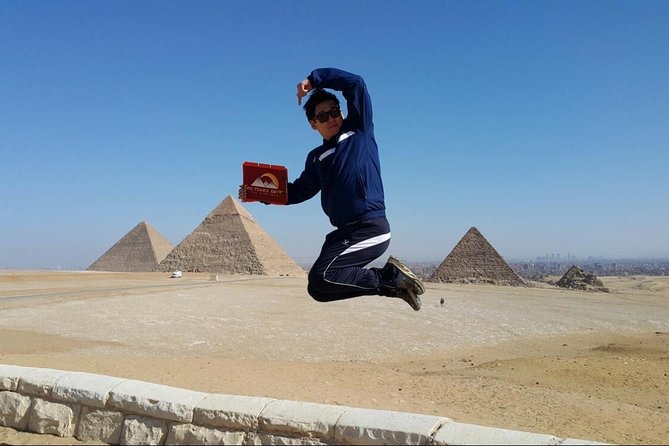
The private setup is one of the package’s strongest features. You travel by private air-conditioned vehicle, and pickup is offered. That matters in Cairo, where a driver who knows the routes can save time and reduce stress.
Previous guide assignments have included Ahmed Zaki, Habib, Ehab, Maged, Hossam, Ahmed Yassin, Mo Salah, and others. Some guides have been praised for clear English, historical explanation, flexibility, photography help, and a friendly manner. Do not book based on a particular name unless the company confirms that person in writing.
There have also been uneven experiences. One past departure felt rushed at Giza, and another raised concerns about guide quality during a busy period. Lunch has also been a weak point for some people, despite being included. I would confirm the guide, vehicle, start times, pyramid priorities, and lunch arrangements before the first morning.
Who should choose this tour
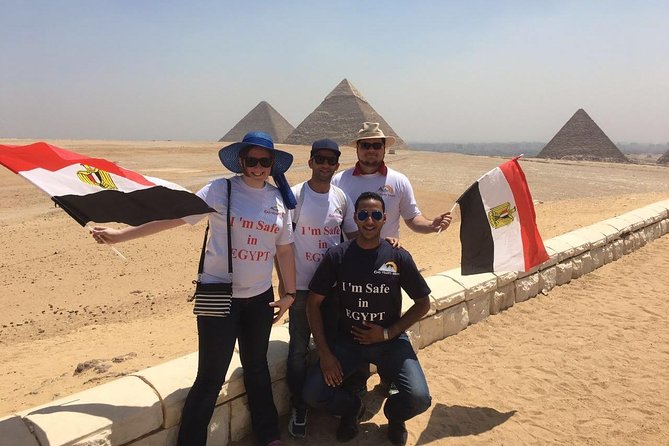
This suits you if you have three days in Cairo and want to cover the major ancient and religious sites without arranging separate transport. It is especially useful for first-time visitors, families, and small groups who prefer a private vehicle and a guide who can adjust the pace.
It is less suitable if you want long, quiet visits at each monument. Day 1 covers too much for a relaxed archaeological study. You should also look elsewhere if you want hotel accommodation, since lodging is not included in the stated package.
Free cancellation is available up to 24 hours before the start time. Changes or cancellations inside that window are not accepted for a refund. The activity is private, and most people can participate, with public transportation nearby.
Should you book the three-day Cairo tour?
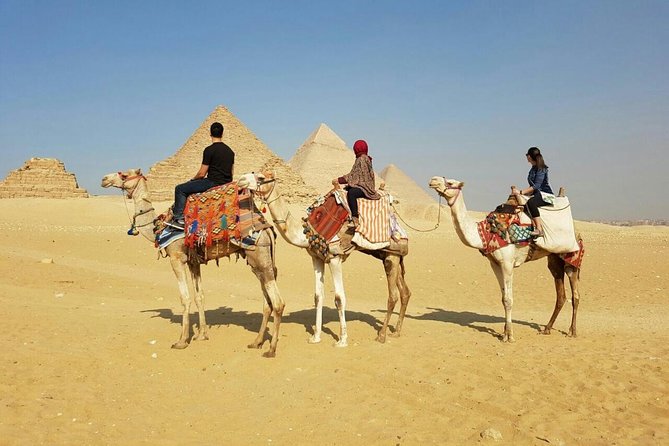
Book it if your priority is coverage, convenience, and a private guide at a low per-person price. The combination of Giza, Saqqara, Dahshur, Memphis, the museum, Islamic Cairo, and Coptic Cairo gives you a strong first look at the city.
Before paying, ask for the assigned guide’s name, confirm that all entry fees are covered except pyramid interiors, and agree on which Giza monuments deserve the most time. If the answer is clear and the schedule can be adjusted, $150 is a solid value. If you prefer slow museum visits and unhurried ruins, ask to trim the number of Day 1 stops rather than trying to see everything at speed.
FAQ
Is this a private tour?
Yes. Only your group participates, with a private guide and private air-conditioned vehicle.
How long does the Cairo tour last?
The package lasts approximately three days.
Does the tour provide pickup?
Yes. Pickup is offered.
What is included in the price?
The package includes bottled water, a tour guide, private transport, entry fees, and lunch.
Are pyramid interior tickets included?
No. Entry inside any of the pyramids is not included.
Are tips included?
No. Tipping is not included.
Does the tour include the Egyptian Museum?
Yes. The second day includes about three hours at the Museum of Egyptian Antiquities.
Which ancient sites are visited?
The route includes Giza, Memphis, Saqqara, Dahshur, the Step Pyramid of Djoser, and the pyramids of Khufu, Khafre, Menkaure, Teti, and Unas.
Can I cancel for a full refund?
Yes, if you cancel at least 24 hours before the experience start time. Cancellations made less than 24 hours before the start time are not refunded.
Just added in Cairo
- White Desert Overnight Camping Sharing Tour in Egypt★ 5.0 · 15 reviews
- Cairo Best 2Days tour Pyramids, Saqqara & Old Cairo★ 5.0 · 15 reviews
- Giza Pyramids with (GEM) Grand Egyptian Museum★ 5.0 · 42 reviews
- visit the pyramids of Giza + the necropolis of Saqqara + the Memphis site.★ 4.5 · 20 reviews
- Tour to Giza pyramids Memphis Sakkara and Felucca on the Nile★ 5.0 · 16 reviews
- Private Giza pyramid,sphinx, Mummification temple& inside pyramid★ 5.0 · 32 reviews
- Monastery St Simon with Cave Church and Garbage City Private Tour★ 5.0 · 15 reviews
- sunset at Giza pyramids by camels★ 5.0 · 31 reviews
Egypt Tour Packages, compared.
6 Days Hypnotic Cairo & Nile Cruise Tour Package
Read our review →
Our Exceptional 5 days Cairo, Luxor and Abu Simbel Tour Package
Read our review →
Private 9-Day Tour package to Cairo, Alexandria, Luxor, and Aswan by flight
Read our review →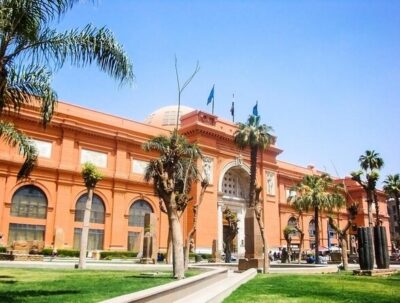
Private 6-Days Egypt Tour Package with Nile Cruise by Flights
Read our review →
Enjoy 8 days Egypt Tour Package from Cairo airport with Flights
Read our review →Browse the lists this tour appears in