
Reviewed · GIZA PYRAMIDS & SPHINX TOURS
Private full day tour to Giza Pyramids, Sphinx, Sakkara and Dahshour with guided
Giza gives you the famous postcard view, but Saqqara and Dahshour explain how Egypt learned to build pyramids in the first place. I like that this private tour links four major sites in one day, and I like having a guide and driver to handle Cairo traffic, entrances, and the long stretches between monuments.
The main catch is the price wording. The tour costs $55 per person, but the details say entrance fees are not included, even though the overview suggests otherwise. Confirm the current ticket costs and lunch arrangements before paying, and bring comfortable shoes, sun protection, and patience for a long day.
Key points to know before booking
- Four major archaeological areas in one day: Visit Giza, Saqqara, and Dahshour, with the Sphinx and several individual pyramids and tombs along the way.
- Private service: Only your group participates, with a private air-conditioned vehicle and hotel pickup and drop-off.
- Strong guide reports: Nasser is repeatedly praised for clear explanations, patience, photo help, and practical support. Bassam and other multilingual guides may also be assigned.
- Entrance fees need checking: The pyramid-area entry is included in one itinerary note, but the main inclusions section excludes entrance fees.
- Good for families: Past bookings included infants and strollers, with guides helping parents adjust the pace.
- Plan for heat and walking: Wear sturdy shoes, a hat, and light, comfortable clothing. The sites are exposed, and the day runs roughly eight to nine hours.
Why this Cairo pyramid route works
Many first visits to Cairo stop at Giza and leave it there. That gives you the icons, but not the full story. This route adds Saqqara and Dahshour, two places that show the step-by-step development of Egyptian pyramid building.
I find that sequence useful. At Giza, you see the finished idea in monumental form: the pyramids of Khufu, Khafre, and Menkaure. At Saqqara, you see the Step Pyramid of Djoser, an early experiment in building a huge stone monument. At Dahshour, the Bent Pyramid and Red Pyramid help explain the move toward smooth-sided pyramids.
The private format matters in Cairo. You are not tied to a large group waiting for late arrivals, and you can ask questions without competing for the guide’s attention. The vehicle also gives you a place to cool down between sites, which is welcome after walking around bare stone in the Egyptian sun.
The tour is operated by Egypt Direct Tours and lasts about eight to nine hours. Pickup and drop-off are offered at no charge, and the vehicle is air-conditioned. Bottled water, soft drinks, fuel, and parking are included.
Other ways to see the pyramids from Cairo:
- Cairo: Pyramids & Great Sphinx Private Tour with Camel Ride
★ 4.9 · 6,335 reviews - Tour to Giza Pyramids and The Egyptian Museum
★ 5.0 · 6,016 reviews - VIP All inclusive Best of the best Giza Pyramids,Sakkara,Memphis
★ 5.0 · 3,164 reviews
Giza, the Sphinx, and the three royal pyramids
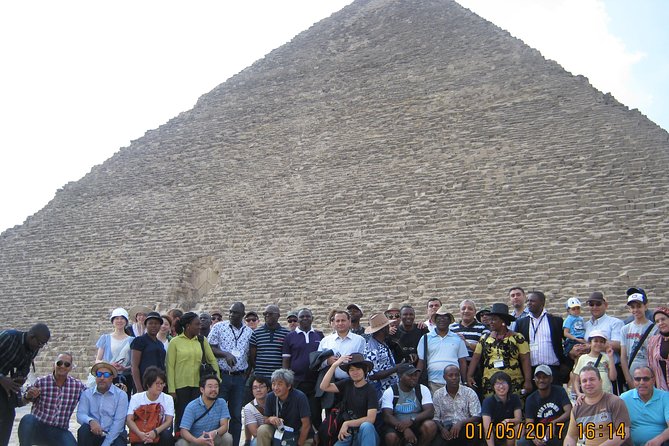
The first major section focuses on the Giza complex, where you see the three famous pyramids associated with Fourth Dynasty rulers: Khufu, Khafre, and Menkaure. The site is broad, so you should expect a mix of vehicle transfers, outdoor walking, photo stops, and time spent listening to explanations.
Khufu’s pyramid, also called the Great Pyramid, is the oldest and largest of the three. It is also the only surviving member of the Seven Wonders of the Ancient World. The exterior alone is enough to make the stop worthwhile, but your guide can put its size and construction into context.
You may have the option to enter a pyramid, but interior admission is separate according to the supplied details. Entering the Great Pyramid involves narrow passages and steep sections, so it is not essential for everyone. If enclosed spaces, low ceilings, or difficult footing bother you, enjoy the monument from outside and use the time for photographs and explanation.
Khafre’s pyramid is the second-largest pyramid at Giza. Its higher position can make it appear taller than Khufu’s, and some of its original smooth outer casing remains near the top. It was built for Khafre, also known as Chephren, who ruled during the Fourth Dynasty.
Menkaure’s pyramid is smaller, but it completes the visual story of the Giza group. I like seeing all three together because their different sizes help you understand that this was a royal cemetery, not a single isolated building.
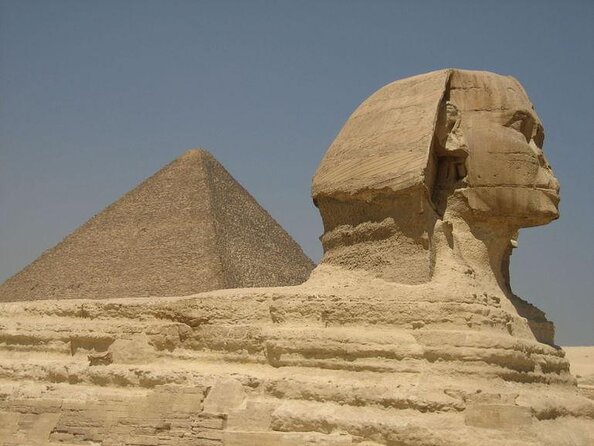
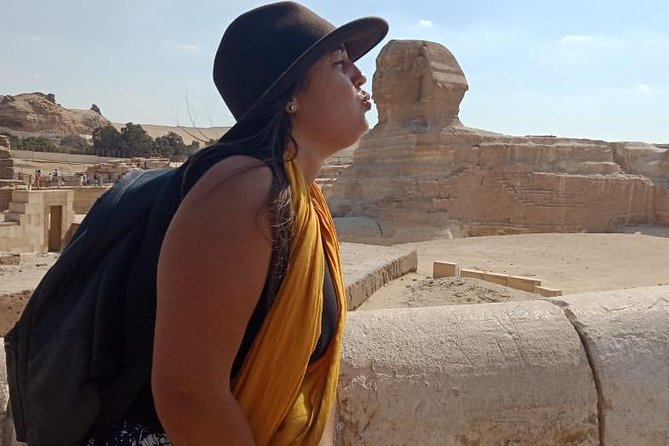
The Great Sphinx is visited near the Valley Temple. It has the body of a lion and the head traditionally linked with King Khafre. The nearby temple was used in the funerary ceremonies connected with the king, including the preparation of the body.
Allow roughly two to three hours for the main Giza and Sphinx portion, although the exact pace can change. The supplied schedule lists separate time for Khafre and Khufu, so the full visit may feel longer than a quick photo stop.
What the guide adds at Giza
Giza is easy to recognize but harder to understand without context. The stones, royal names, and construction dates can blur together when you are seeing several monuments in one morning. A qualified Egyptologist guide gives the buildings a human and political framework.
Nasser is the guide name most often associated with this experience in the supplied feedback. His strengths include patient answers, clear English, help with photographs, and a calm approach when guests need more time. He has also worked with drivers such as Mohammad, Islam, Atif, Yessir, and Shreef, although your assigned team may be different.
You should not assume a particular guide by name unless Egypt Direct Tours confirms it. Still, the repeated praise for Nasser is useful because it tells you what to request: a guide who explains the pharaohs, stone types, construction methods, and purpose of each monument instead of rushing you from one viewpoint to the next.
The guide can also help with practical matters inside the complex. One past booking described assistance with where to go and help arranging photographs. That sort of support is valuable at Giza, where the site is large and the approach of unofficial sellers can make a first visit tiring.
Saqqara and the Step Pyramid of Djoser
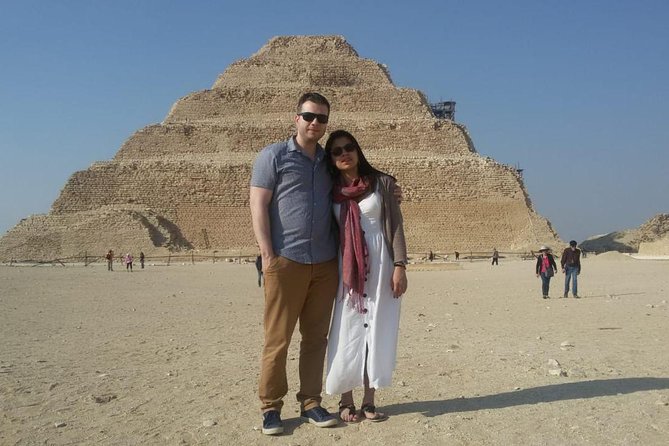
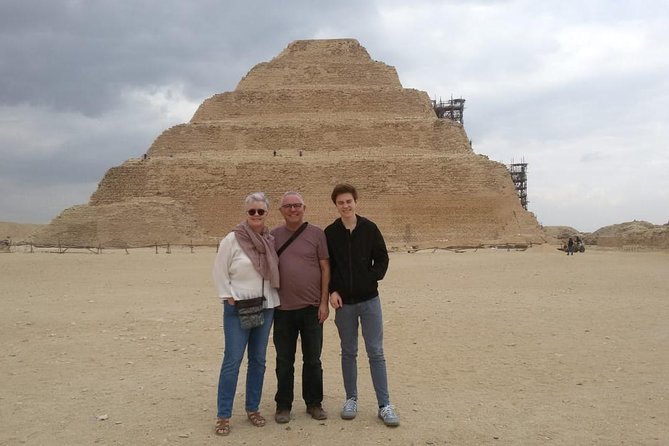
Saqqara sits about 27 kilometers southwest of Cairo and gives the day a very different feel from Giza. Its centerpiece is the Step Pyramid of Djoser, built in the Third Dynasty during the 27th century BC.
The Step Pyramid is a six-tier, four-sided structure and the earliest colossal stone building in Egypt. It was built as the tomb of Pharaoh Djoser and marks an important stage between the earlier mastaba tomb and the later smooth-sided pyramid.
This is where the tour becomes especially useful for anyone interested in ancient engineering. You are not just looking at an older pyramid. You are seeing a change in design, materials, and ambition. The structure helps explain how Egyptian builders moved from a low rectangular tomb to a monument with great vertical height.
The supplied schedule gives about an hour for Saqqara and another short period for the Step Pyramid, while another itinerary note suggests about two hours in the area. Treat the timing as flexible rather than exact. Saqqara contains several features, and your guide may adjust the route according to site conditions and your interests.
The walking here can be uneven and exposed. Good shoes matter more than stylish ones, especially if you want to explore beyond the easiest viewing point. A hat and water are also practical, even though a bottle of water is provided.
Other older-pyramid days out of Cairo:
- From Cairo: Pyramids of Giza, Sphinx, Saqqara & Memphis Tour
★ 4.7 · 3,110 reviews - Cairo: Pyramids, Sakkara & Memphis Tour with Lunch
★ 4.6 · 2,493 reviews - Private Day Tour Giza Pyramids, Sphinx, Memphis, and Saqqara
★ 4.5 · 904 reviews - Private tour: GIza Pyramids, Memphis City & Sakkara Pyramid
★ 5.0 · 637 reviews
The Mastaba of Mereruka and the smaller-scale story
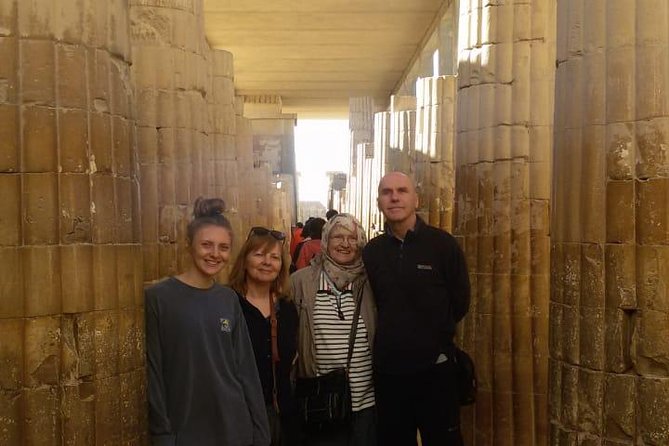
The Mastaba of Mereruka adds a welcome change from giant pyramids. This large non-royal tomb has 33 rooms or chambers and belonged to Mereruka, a vizier who served King Teti during the Sixth Dynasty.
A mastaba is a rectangular tomb with a flat roof and sloping sides. Inside, carved scenes and chambers show that Saqqara was not only a place for kings. Officials and elite families also built elaborate burial complexes that reveal daily life, work, ritual, and status.
The stop is brief, listed at about 15 minutes. That is enough for an introduction, but not a slow study of every room and carving. If tomb decoration interests you most, tell your guide early so you can use the available time well.
This is one reason I prefer the private setup. You can ask for more explanation at a tomb or move along when your group has had enough of enclosed spaces. A large fixed group usually gives you less control over that balance.
Dahshour and the lessons behind the pyramids
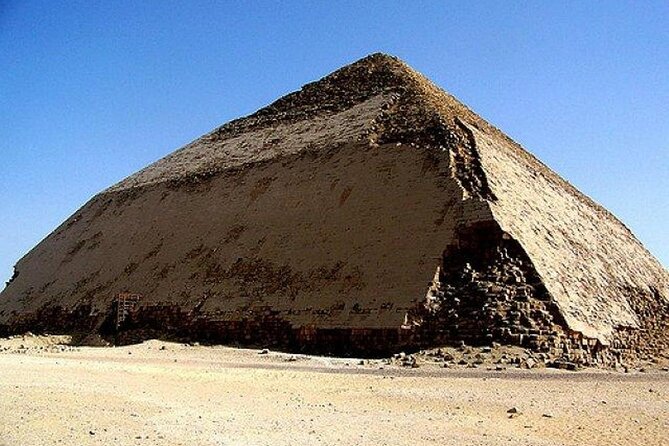
Dahshour is the final major archaeological area and one of the most important stops for understanding pyramid design. The pyramids here show Egyptian builders working out how to move from steep-sided forms to smooth-sided monuments.
The Bent Pyramid is especially useful for that story. Its change in angle reflects a design adjustment during construction, and it helps you see that pyramid building was a process of testing and correction, not a single perfect technique from the start.
The Red Pyramid is another key monument in the development of smooth-sided pyramids. Dahshour’s experiments helped provide the practical knowledge that later contributed to the construction of the Great Pyramid at Giza.
You are given about an hour at Dahshour. That is enough for a strong overview and photographs, but the day may be tiring by this point. If you want to enter a pyramid or spend long periods walking, ask how much time remains and confirm any extra ticket cost before committing.
Dahshour is less famous than Giza, which is part of its value. The setting can feel more focused on the monuments themselves, without the same expectation that every moment must reproduce a familiar postcard. I would not skip it if your interest goes beyond the headline attractions.
A private vehicle makes the long day easier
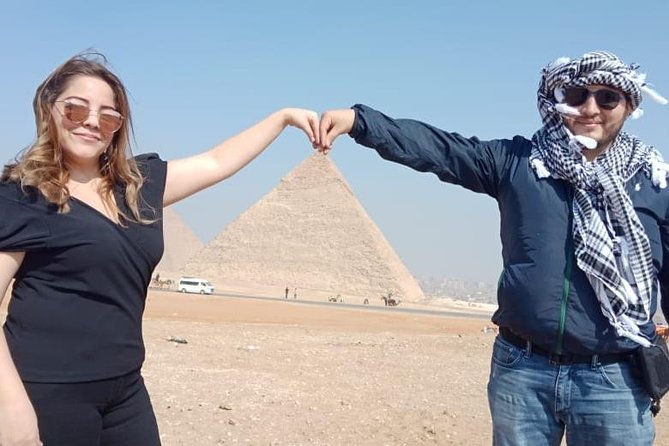
The route covers several sites spread around the Cairo area. Having a private, air-conditioned vehicle saves you from arranging separate taxis and gives you a reliable base between visits.
Cairo traffic can be demanding, and past bookings specifically praised the drivers for safe navigation. That does not make the roads quiet or predictable, but it does mean you can leave the route planning to the local team.
Pickup and drop-off are included, and parking and fuel are covered. The vehicle is described as private, so only your group participates. That arrangement suits couples, families, and small groups that want to set their own pace.
Families should find the format practical. Past bookings included babies as young as three and six months, along with a stroller. Guides helped parents keep the day manageable, and one private van was described as clean and spacious enough for bags and a stroller. Your own vehicle may differ, so tell the operator about children and equipment when booking.
The tour also lists health precautions, including vehicle sterilization, hand sanitizer, masks for staff, and periodic health checks. Each customer is asked to wear a mask from the meeting point, and credit cards are preferred over cash.
Price, meals, and the entrance-fee question
At $55 per person, the tour can be good value if you want private transport, a guide, and several sites in one day. Booking separate rides and finding a qualified guide on your own would take more planning, especially across Giza, Saqqara, and Dahshour.
The price does not tell the whole story, because the entrance-fee information is inconsistent. One section says the pyramid area is included, while the main list of exclusions says entrance fees are not included. The itinerary also labels admission as not included at the individual stops.
I would treat entrance tickets as an extra cost unless Egypt Direct Tours confirms otherwise in writing. Ask specifically about the Giza area, the Sphinx or Valley Temple, Saqqara, Mereruka’s tomb, Dahshour, and any pyramid interior admission.
Lunch is also described in the overall tour summary, and several day descriptions refer to lunch, including options for meat eaters, vegetarians, and vegans. Yet lunch is not listed in the formal inclusion list provided here. Confirm if lunch is included, where it will be served, and if drinks beyond the supplied water and soft drinks cost extra.
Gratuities are excluded. Keep a tip budget separate if your guide and driver provide good service, but tipping is not part of the advertised price.
Who will enjoy this tour most
I would choose this experience if you want the major pyramid sites in one organized day and prefer personal attention to a large bus group. It is especially suitable for first-time visitors who want historical explanation rather than only transportation and photographs.
It also suits families and small groups. The private van, hotel pickup, and flexible pace reduce some of the strain of Cairo sightseeing, though the heat, walking, and long schedule still require energy.
Ancient-history fans will get the most from the route. You see royal pyramids, a famous sphinx, an early stone pyramid, a decorated official’s tomb, and the design experiments at Dahshour. That is a fuller lesson in Egyptian architecture than a Giza-only outing.
I would think twice if you dislike early starts, hot outdoor sites, enclosed pyramid passages, or long days in a vehicle. You can skip an interior visit, but you cannot avoid the overall distance and the basic demands of the itinerary.
Practical details for a smoother day
Wear comfortable clothing and sturdy walking shoes. A hat is strongly advised, and sunscreen is a sensible addition even though it is not specifically listed among the included items.
Bring some flexibility. The stated duration is approximately eight to nine hours, and the schedule includes several stops with different walking and admission needs. Traffic, site access, and your own pace can affect the order and length of visits.
Confirmation is issued at booking. Children must be accompanied by an adult, and most people can participate. The tour is private, but the guide may be multilingual rather than assigned to one language unless you request this when booking.
Free cancellation is available up to 24 hours before the local start time for a full refund. Changes or cancellations made less than 24 hours before the start are not accepted for a refund.
Should you book this Giza, Saqqara, and Dahshour tour?
I would book it if you want a full ancient-Egypt day with private transport and a guide who can connect the monuments rather than simply point at them. The strongest part is the route itself: Giza shows the finished royal ideal, Saqqara shows the early stone design, and Dahshour shows the engineering lessons in between.
Before booking, get written clarification on entrance tickets and lunch. Those costs can change the real price considerably. If the confirmed extras fit your budget, $55 per person is a sensible starting price for a private eight to nine-hour outing.
Ask for an Egyptologist guide with strong English if needed, and mention children, strollers, dietary needs, or any wish to enter a pyramid. With those points settled, this is a practical way to see far more than Giza in a single day.
FAQ
How long does the tour last?
The tour lasts approximately eight to nine hours.
Is hotel pickup and drop-off included?
Yes. Private pickup and drop-off are offered free of charge.
Is the tour private?
Yes. Only your group participates in the activity.
Which sites are visited?
The route includes the Giza Pyramids, the Great Sphinx, the Valley Temple area, Saqqara, the Step Pyramid of Djoser, the Mastaba of Mereruka, and the pyramids of Dahshour.
Are entrance fees included?
The information provided is inconsistent. The main exclusions list says entrance fees are not included, and several itinerary stops are marked as admission not included. Confirm the current ticket arrangements before booking.
Is lunch included?
Lunch is described in the tour overview and in some day-tour details, but it is not included in the formal list of inclusions. Confirm this directly with Egypt Direct Tours.
Can children take part?
Yes. Children must be accompanied by an adult, and most people can participate. The private format has also been used by families with very young babies and strollers.
Just added in Cairo
- White Desert Overnight Camping Sharing Tour in Egypt★ 5.0 · 15 reviews
- Cairo Best 2Days tour Pyramids, Saqqara & Old Cairo★ 5.0 · 15 reviews
- Giza Pyramids with (GEM) Grand Egyptian Museum★ 5.0 · 42 reviews
- visit the pyramids of Giza + the necropolis of Saqqara + the Memphis site.★ 4.5 · 20 reviews
- Tour to Giza pyramids Memphis Sakkara and Felucca on the Nile★ 5.0 · 16 reviews
- Private Giza pyramid,sphinx, Mummification temple& inside pyramid★ 5.0 · 32 reviews
- Monastery St Simon with Cave Church and Garbage City Private Tour★ 5.0 · 15 reviews
- sunset at Giza pyramids by camels★ 5.0 · 31 reviews
Giza Pyramids & Sphinx Tours, compared.
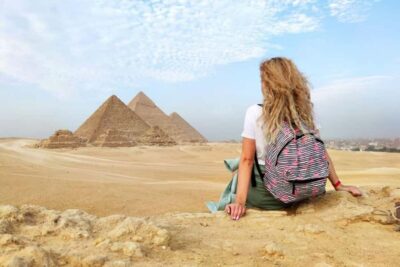
Pyramids & Great Sphinx Private Tour with Camel Ride
Read our review →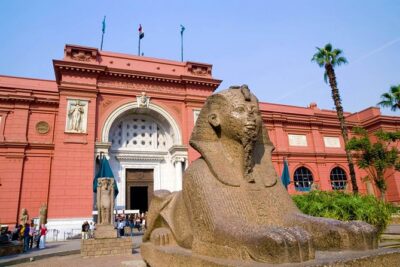
Tour to Giza Pyramids and The Egyptian Museum
Read our review →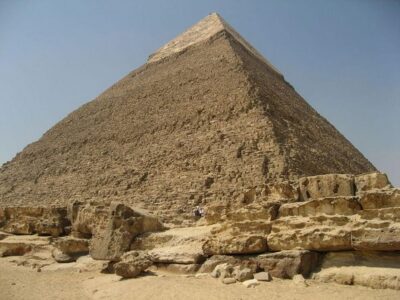
VIP All inclusive Best of the best Giza Pyramids,Sakkara,Memphis
Read our review →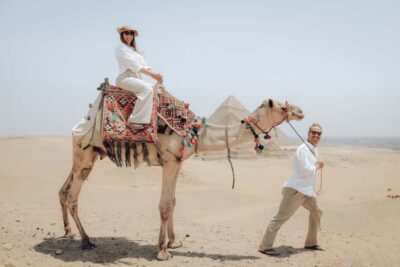
Pyramids of Giza, Sphinx, Saqqara & Memphis Tour
Read our review →
Half-Day Tour to Pyramids of Giza and the Sphinx
Read our review →
Private ViP all-inclusive Giza Pyramids,Sphinx,Inside Pyramid
Read our review →
Grand Egyptian Museum, Pyramids, Sphinx Tour & Lunch
Read our review →
Cairo Pyramids, Sphinx & Egyptian Museum Day Trip
Read our review →Browse the lists this tour appears in