
Reviewed · GIZA PYRAMIDS & SPHINX TOURS
Private Full Day Tour Giza Pyramids,Great Sphinx &Saqqara Complex
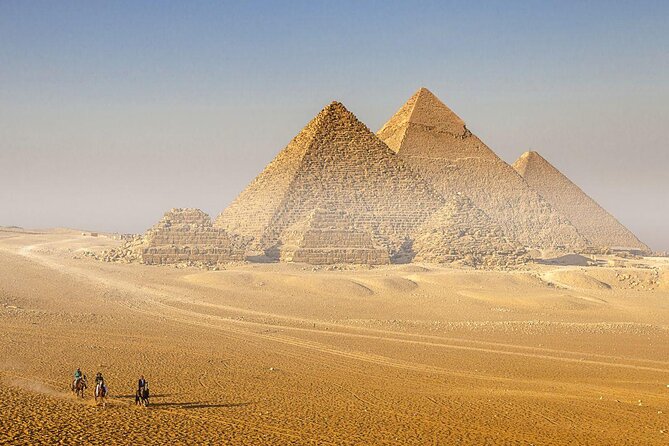
The best part of this private Cairo tour is the way it pairs Egypt’s famous postcard sight with the quieter, older world of Saqqara. You see the Great Pyramid, Khafre’s Valley Temple, the Sphinx, and Menkaure in the morning, then walk among early stone architecture and painted tomb scenes at Saqqara. It gives you both the grand spectacle and the archaeological detail.
I like the private vehicle and flexible start time, since you can usually begin around 8 AM and return around 4 PM without being tied to a large group. I also like the guides’ practical help. Ahmed, Samar, Summer, Wael, Eman, Gigi, and Hend are praised for clear explanations, friendly conversation, careful scheduling, and taking photos. The main caution is that lunch and entry fees need clarification before you book, since the tour information describes lunch as provided in one place but lists it as not included elsewhere.
Key points to know before booking
- Two major archaeological areas in one day: See Giza’s royal pyramid complex and Saqqara’s Step Pyramid and tombs.
- Private touring: Only your group participates, with pickup and drop-off at your Cairo or Giza accommodation.
- Strong guide focus: Guides including Samar, Summer, Ahmed, Wael, and Eman are praised for history, hospitality, flexibility, and photography.
- Extra pyramid tickets: Entering the interiors of the Giza pyramids, Djoser’s Pyramid, and the Southern Tomb requires additional tickets.
- Good value at $60 per person: The price covers a private guide and transport, though the exact inclusion of admission fees depends on the option selected.
- A full day in the sun: The schedule runs about 8 to 9 hours, so comfortable shoes, water, and sun protection matter.
Why pairing Giza with Saqqara makes sense
Giza is the sight most people picture when they think of Egypt. Its three main pyramids are immense, familiar, and crowded with attention. Saqqara gives you a different feel. It is tied to an earlier period of pyramid building and includes the Step Pyramid of Djoser, large funerary structures, and decorated tombs.
I like this pairing because the two sites explain different stages of ancient Egyptian design. At Giza, you see the mature pyramid form built for kings Khufu, Khafre, and Menkaure. At Saqqara, you see the older step form associated with Djoser and his architect Imhotep.
The tour is private, so your guide can adjust the pace. If you want more time for photos at Giza, you can ask. If painted tomb scenes interest you more than another viewpoint, you can make that clear. The day is still structured, but it is not built around a rigid coach schedule.
At $60 per person, the value is particularly good for couples, families, or small groups who want private transportation and a guide rather than simply hiring a car. Check the booking option carefully, though. The advertised price may change depending on whether admission tickets are included, and pickup from the airport, New Cairo, Nasr City, or 6th of October costs an extra $15 per person. Pickup from the New Administrative Capital costs $20 per person.
Other ways to see the pyramids from Cairo:
- Cairo: Pyramids & Great Sphinx Private Tour with Camel Ride
★ 4.9 · 6,335 reviews - Tour to Giza Pyramids and The Egyptian Museum
★ 5.0 · 6,016 reviews - VIP All inclusive Best of the best Giza Pyramids,Sakkara,Memphis
★ 5.0 · 3,164 reviews
Starting at the Giza Plateau
Pickup is available from your accommodation in Cairo or Giza, with an air-conditioned vehicle and a driver. The usual starting time is around 8 AM, but the schedule is flexible. An early start is sensible because the plateau can become hot, and the day includes a lot of walking and standing outdoors.
Your first major sight is the Giza pyramid complex. The guide introduces the pyramids of Khufu, Khafre, and Menkaure, explaining how each belongs to a royal funerary complex rather than being an isolated pile of stone. That distinction matters. You are not just looking at three giant monuments. You are seeing parts of a planned sacred area with temples, causeways, burial spaces, and ceremonial functions.
The first stop is listed as about an hour, followed by longer periods at individual pyramids. In practice, the exact rhythm can depend on traffic, heat, the pace of your group, and how many photographs you want.
Khufu, the Great Pyramid
Khufu’s Pyramid is the emotional center of the morning. It is the only surviving monument of the ancient Seven Wonders, and its scale is still hard to grasp even when you are standing beside it. The tour allows about two hours around the Great Pyramid, giving you time to listen, walk, and take photographs rather than rushing through a single viewing point.
Your guide can explain the wider complex, including the valley temple area that now lies beneath the village of Nazlet el-Samman. Parts of the ancient paving and limestone walls have been identified there, but the site has not been fully excavated. That detail helps you understand that Giza is not a finished museum display. Important archaeological questions remain.
Entry inside Khufu’s Pyramid is not part of the standard general access described here. A special ticket is required. The interior is a demanding visit rather than a grand chamber filled with decoration. If you want to go inside, tell the guide before or during the tour so the ticket can be arranged, and confirm the extra cost.
Khafre’s Pyramid and the Valley Temple
Khafre’s Pyramid is the second tallest at Giza, though its higher ground and surviving cap of smoother outer stone can make it look taller in photographs. The tour gives about 30 minutes to this pyramid, along with the causeway and Valley Temple.
The Valley Temple is especially useful because it shows how the royal body was prepared for burial. It was built for the mummification process connected with King Khafre. The large stone blocks and restrained interior make it feel different from the pyramid itself. Here, your guide can connect the visible architecture with the rituals that made the whole complex function.
The timing is brief, so ask questions while you are there. This is one of the places where a strong guide makes a real difference. Ahmed and Wael are praised for answering questions carefully, while Samar and Summer are repeatedly described as friendly, flexible, and good at explaining what you might otherwise miss.
Other older-pyramid days out of Cairo:
- From Cairo: Pyramids of Giza, Sphinx, Saqqara & Memphis Tour
★ 4.7 · 3,110 reviews - Cairo: Pyramids, Sakkara & Memphis Tour with Lunch
★ 4.6 · 2,493 reviews - Private Day Tour Giza Pyramids, Sphinx, Memphis, and Saqqara
★ 4.5 · 904 reviews - Private tour: GIza Pyramids, Memphis City & Sakkara Pyramid
★ 5.0 · 637 reviews
Menkaure and the six-pyramid viewpoint
Menkaure’s Pyramid is the smallest of Giza’s three main pyramids, but it has an unusual detail that deserves attention. Granite casing survives near the lower section. The granite came from Aswan, more than 1,000 kilometers away, which gives you a sense of the organization and labor needed to build these royal monuments.
The panoramic viewpoint is a short stop of about 10 minutes. From here, you can photograph six pyramids and look across toward the city of Giza. It is a planned photo stop, not a long visit, but it gives you the classic wide view that is hard to get beside the monuments themselves.
Your guide can also help with photographs. Several guides, especially Samar and Summer, are praised for taking strong pictures and short videos. That is useful for solo visitors and families who do not want one person left out of every group photograph. Still, keep your own phone or camera ready, since the stop is brief.
The Great Sphinx up close
The Sphinx is usually visited with the same general entry access for the pyramid area. The tour allows about 30 minutes for a close view of the monument, photographs, and an explanation of its familiar lion body and human head associated with Khafre.
The Sphinx is smaller than many first-time visitors expect. The surrounding stone enclosure and the worn features are just as important as the famous face. This is a good place to ask your guide about the monument’s role as a guardian and its connection to the nearby royal complex.
The area can attract persistent sellers, so it helps to stay with your guide and decide in advance if you want souvenirs, camel rides, or other add-ons. One reason Ahmed receives such strong praise is his effort to help visitors avoid unwanted sales pressure and common tourist scams. You should still keep your belongings close and agree on prices before accepting any paid service.
Lunch and the drive to Saqqara
The route continues through villages toward Saqqara after lunch. The tour description is not fully consistent about the meal: one section says lunch and bottled water are provided, while the inclusion list says lunch is not included. Treat lunch as something to confirm before payment. Bottled water is described as provided during the day.
This pause matters. Giza and Saqqara are not quick roadside stops, and the day can last eight or nine hours. You will enjoy the second half more if you have eaten, carried water, and taken a short break from the heat.
The drive through village areas also gives the day a more local setting than a simple monument-to-monument transfer. Do not expect a sightseeing stop at every point along the road. The value is the change in surroundings and the chance to ask your guide questions between sites.
Djoser’s Step Pyramid at Saqqara
Saqqara’s Step Pyramid is the oldest large stone structure in the world, dating to about 2670 BC. Built for King Djoser, it marks a crucial step in the development of pyramid architecture. Instead of a smooth-sided pyramid, you see a stack of stone levels rising from a broad ceremonial complex.
The visit is planned for about two and a half hours, making it the longest stop of the day. That is appropriate. The Step Pyramid is only one part of a large site that includes the colonnaded entrance, the Sed Festival complex, enclosure walls, north and south pavilions, the Southern Tomb, and many surrounding tombs.
Your guide can introduce Imhotep, the architect associated with Djoser’s complex, and explain how the site’s separate areas worked together. This is where the tour’s guide-led format earns its keep. Without context, the ruins can look like scattered stone. With a clear explanation, the layout becomes easier to read.
The interior of Djoser’s Pyramid requires a special ticket. The same applies to the new Southern Tomb. Some other pyramid interiors may be available without an extra charge, but conditions can vary, so ask your guide which areas are open and what your ticket covers.
Saqqara is also likely to feel quieter than Giza. That can make it easier to concentrate on the carvings, stonework, and scale of the complex. It is not an empty site, and you should expect uneven ground and outdoor walking, but the pace can feel less pressured.
The painted Tomb of Idut
The Tomb of Idut offers a welcome change from enormous stone monuments. Idut was a princess of the royal family who lived at the end of the Fifth Dynasty and into the beginning of the Sixth Dynasty. Her tomb is known for colorful scenes showing offerings and ordinary work.
Look for depictions of fishing with dip nets, scribes, agriculture, papyrus harvesting, livestock, butchering, and a statue of the princess being pulled on a sled. Another scene shows a man pouring water in front of the sled. These details give you a more personal view of ancient Egyptian life than the pyramids alone.
The visit is planned for about 30 minutes. It is short, but the tomb’s painted scenes reward close attention. Ask your guide to point out small figures and explain what each scene represents. The colors and daily activities are easy to miss if you simply walk through while thinking about the next pyramid.
After Idut’s Tomb, you return to your hotel or requested drop-off point. Depending on traffic and the start time, the full day should run about eight to nine hours.
Guides, vehicles, and the private format
GEM Explore Egypt describes its guides as having more than 15 years of experience. Names associated with especially positive experiences include Ahmed, Wael, Samar, Summer, Eman, Gigi, and Hend. The strongest pattern is not a single scripted personality. It is a mix of clear historical explanation, patience, friendliness, flexibility, and help with photographs.
Samar is praised for being communicative, protective, and good with photos. Summer receives similar praise for her energy, practical suggestions, and ability to keep the day fun. Ahmed is noted for thoughtful explanations and helping visitors avoid aggressive sellers. Eman is praised for arranging the schedule well and choosing a good lunch stop.
You cannot assume you will receive a particular guide unless the company confirms it. If one guide is important to you, request that person at booking, but treat the request as subject to availability.
The vehicle is air-conditioned, and past descriptions emphasize a clean, comfortable ride with bottled water. Since the tour is private, only your group participates. That makes it a sensible choice for families, friends, couples, or anyone who wants to ask many questions without slowing down a larger party.
What the $60 price really covers
At $60 per person, this is a strong price for a full private day if your selected option includes the advertised admission fees. The core value comes from the combination of transport, a private Egyptologist guide, pickup, drop-off, and time at two major archaeological areas.
Read the price options carefully. The information says entry fees are included if you choose the relevant option, so the lowest displayed price may not cover every ticket. Interior access to the pyramids and Saqqara’s special areas also requires additional tickets.
The price does not clearly include lunch. Because the description gives conflicting information, confirm this in writing before the tour. Airport and outlying-area pickup charges are also extra: $15 per person from the airport, New Cairo, Nasr City, or 6th of October, and $20 per person from the New Administrative Capital.
Free cancellation is available if you cancel at least 24 hours before the start time. Changes or cancellations made later are not accepted for a refund.
Who should book this day
I would choose this tour if you want the major Giza sights but do not want to stop there. Saqqara adds real value, especially if you enjoy archaeology, early Egyptian architecture, and painted tomb scenes.
It also suits you if you want a guide who can answer questions and help with photos. The private setup is useful for families and small groups because you can control the pace and spend more time at the places that interest you most.
It is less suitable if you want a slow, specialized archaeological study of every tomb, or if you dislike long outdoor days. The itinerary covers a lot of ground. Giza and Saqqara together are rewarding, but they are not a light half-day outing.
Should you book the Giza and Saqqara tour?
Yes, if you want an efficient private day that covers both the famous pyramids and one of Egypt’s most important early sites. The combination is stronger than a Giza-only tour, and the guide support adds useful context to places that can otherwise blur together.
Before booking, confirm three things: the guide language, the exact admission package, and whether lunch is included. Ask for a particular guide if you have a preference, and start early if possible. With those details settled, this is a good-value choice for seeing the essential Giza monuments while making time for the older, quieter remains at Saqqara.
FAQ
How long does the tour last?
The tour lasts approximately 8 to 9 hours. It usually starts around 8 AM and ends around 4 PM, though the start time is flexible.
Where does pickup take place?
Pickup and drop-off are available at your requested accommodation in Cairo or Giza. Extra charges apply for pickup from the airport, New Cairo, Nasr City, 6th of October, and the New Administrative Capital.
Is this a private tour?
Yes. Only your group participates in the tour.
Are admission fees included?
Admission fees are included if you choose the option that includes entry tickets. Confirm which sites and tickets are covered before booking.
Can I enter the pyramids?
You can enter some pyramids with a special ticket. Interior access to the Giza pyramids, Djoser’s Pyramid, and the Southern Tomb at Saqqara requires additional tickets.
Is lunch included?
The tour information gives conflicting details. One section says lunch is provided, while the inclusion list says lunch is not included. Confirm this point with GEM Explore Egypt before booking.
What is the cancellation policy?
You can cancel at least 24 hours before the start time for a full refund. Cancellations or changes made less than 24 hours before the tour are not accepted for a refund.
Just added in Cairo
- White Desert Overnight Camping Sharing Tour in Egypt★ 5.0 · 15 reviews
- Cairo Best 2Days tour Pyramids, Saqqara & Old Cairo★ 5.0 · 15 reviews
- Giza Pyramids with (GEM) Grand Egyptian Museum★ 5.0 · 42 reviews
- visit the pyramids of Giza + the necropolis of Saqqara + the Memphis site.★ 4.5 · 20 reviews
- Tour to Giza pyramids Memphis Sakkara and Felucca on the Nile★ 5.0 · 16 reviews
- Private Giza pyramid,sphinx, Mummification temple& inside pyramid★ 5.0 · 32 reviews
- Monastery St Simon with Cave Church and Garbage City Private Tour★ 5.0 · 15 reviews
- sunset at Giza pyramids by camels★ 5.0 · 31 reviews
Giza Pyramids & Sphinx Tours, compared.
Pyramids & Great Sphinx Private Tour with Camel Ride
Read our review →
Tour to Giza Pyramids and The Egyptian Museum
Read our review →
VIP All inclusive Best of the best Giza Pyramids,Sakkara,Memphis
Read our review →
Pyramids of Giza, Sphinx, Saqqara & Memphis Tour
Read our review →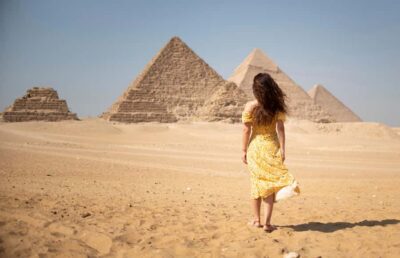
Half-Day Tour to Pyramids of Giza and the Sphinx
Read our review →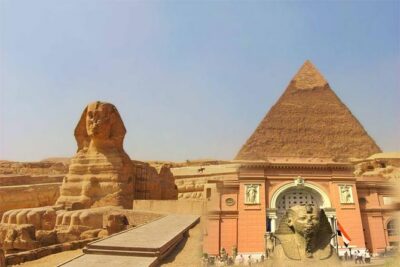
Private ViP all-inclusive Giza Pyramids,Sphinx,Inside Pyramid
Read our review →
Grand Egyptian Museum, Pyramids, Sphinx Tour & Lunch
Read our review →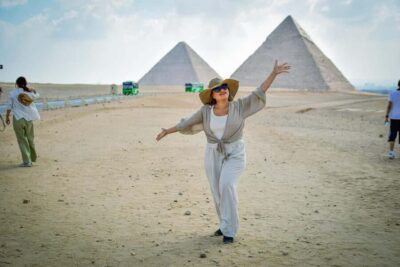
Cairo Pyramids, Sphinx & Egyptian Museum Day Trip
Read our review →Browse the lists this tour appears in