Reviewed · TOURS IN CAIRO
Private Full-Day Red Sea Monasteries Tour from Cairo
Two of Egypt’s oldest Christian monasteries sit far beyond Cairo, in the dry Red Sea Mountains. This private day trip takes you to St. Anthony’s Monastery and St. Paul’s Monastery, places where hermits lived in caves long before modern Egypt existed. You’ll see churches, frescoes, manuscripts, gardens, and fortress walls, then eat lunch in Zafarana before the long ride home.
I like the privacy here: your group gets its own air-conditioned minivan, hotel pickup, and flexible conversation with the guide. I also like the mix of desert scenery and living religious sites, especially St. Anthony’s old paintings and the church built around St. Paul’s cave. The drawback is simple: this is a long day, with about three hours of driving each way and roughly four hours at the monasteries.
Key points about this Red Sea monastery tour
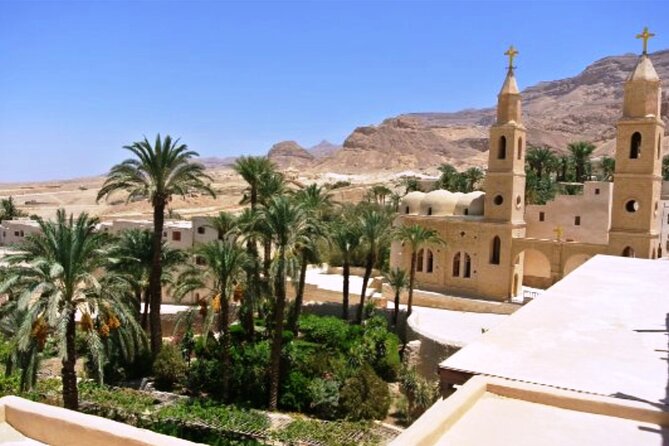
- Two ancient Coptic sites in one day: Visit St. Anthony’s, founded by followers of a 4th-century hermit, and St. Paul’s, built around a cave used by a 5th-century saint.
- Private transport from Cairo or Giza: Your group travels in an air-conditioned minivan with hotel pickup and drop-off.
- A real Eastern Desert journey: The road leads away from Cairo through dry, rugged hills toward the Red Sea Mountains.
- Independent time inside both monasteries: You can explore churches, grounds, gardens, towers, and caves after receiving background from your guide.
- Lunch is included: A meal at a local restaurant in Zafarana follows the monastery visits. Drinks cost extra.
- Strong guide feedback: Ali has been praised for helpful explanations, while Andrew and driver Sayid have been noted for friendly, patient service and strong English.
Why these monasteries are worth the long ride
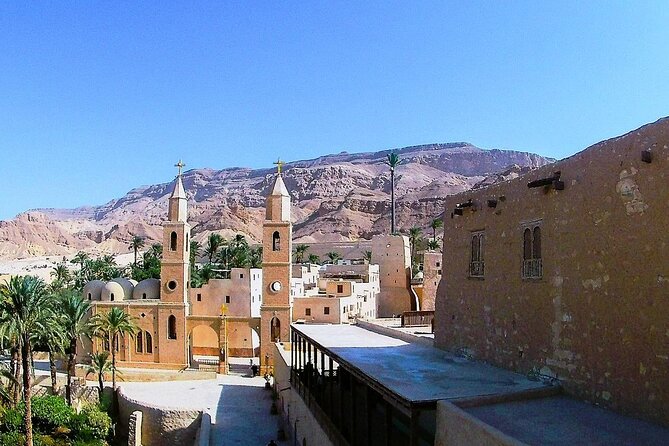
Cairo gives you pyramids, mosques, tombs, and museums. This excursion shows another side of Egypt, one tied to early Christian monasticism and the severe beauty of the Eastern Desert.
The monasteries were not built in a comfortable farming valley. They grew around caves and springs in the Red Sea Mountains, where hermits sought solitude. That setting matters. You are not simply walking through an old building. You are seeing religious compounds shaped by isolation, raids, water, prayer, and the daily work of monks.
St. Anthony’s is described as the world’s oldest working monastery. Its roots go back to the disciples of Anthony, a hermit who lived in a cave above the site. St. Paul’s developed around the cave of another hermit saint. Together, the two places give you a clear picture of how Christian monastic life took hold in Egypt during the 4th and 5th centuries.
I find the contrast with central Cairo especially valuable. In the capital, ancient sites are often surrounded by traffic and city life. Here, the road itself becomes part of the experience. You watch the Eastern Desert pass by, hear the story of the saints, and gradually reach a quieter religious world.
A few more things to do in Cairo worth a look
- From Cairo: Private Full-Day Tour of Historical Alexandria
★ 4.1 · 1,155 reviews - Old Cairo: Full-Day Islamic and Coptic Cairo Tour with Lunch
★ 4.6 · 688 reviews - Private Full-Day Tour to Giza Pyramids,Sphinx,Memphis, and Saqqara
★ 5.0 · 626 reviews
The three-hour road into the Eastern Desert
The day begins around 7:00 a.m. with pickup from your Cairo or Giza hotel. That early start is sensible. The route is long, and leaving in the morning gives you the best chance of visiting both monasteries without rushing.
Your private driver-guide takes you east in an air-conditioned minivan. The drive to the Red Sea Mountains takes roughly three hours, and the monastery of St. Anthony is listed about 334 kilometers southeast of Cairo. This is not a quick side trip from the city. You should think of it as a full-day road journey with two major stops.
The desert views are part of the appeal. You’ll see Egypt’s Eastern Desert and the craggy Red Sea hills as the city gives way to open, dry country. Your guide can explain the background of the monasteries during the ride. Guides such as Ali and Andrew have been specifically praised for clear, interesting conversation, and Andrew’s English has been noted as strong.
The private setup makes this drive easier than joining a large coach. You can ask questions, talk through the history, or simply watch the desert. You are not working around a large group’s schedule. That said, private does not mean short. Bring patience, water money, and something comfortable for the ride.
St. Anthony’s Monastery and its ancient paintings
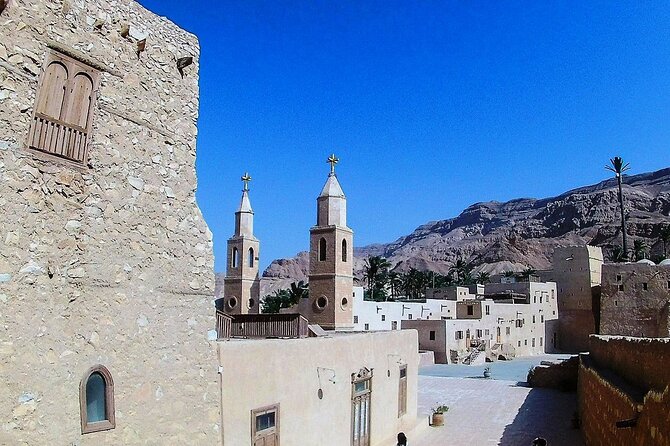
The first monastery is St. Anthony’s, also called Deir Mar Antonios. The complex sits in an oasis in the Eastern Desert and is considered the oldest monastery in the world.
You enter through the walled compound and explore at your own pace. The site includes churches, a library, gardens, and working monastic areas. The gardens are an important detail. In such a dry region, cultivated green space gives you a sense of how the monastery could support life in isolation.
Inside the churches, look for wall paintings of holy knights and hermits. Some of these paintings date from the 7th and 8th centuries. You’ll also see icons and other religious objects as you move through the buildings. The art is not the polished museum display you might expect. It belongs to a working Coptic religious setting, and that gives the visit a more direct, lived-in feel.
The tour allows about two hours here. That is enough time to see the main buildings and gardens without turning the visit into a rushed photo stop. You can explore independently after hearing the history from your guide, which suits anyone who prefers to look quietly rather than follow a constant running commentary.
There is also a possible climb to Anthony’s cave, high in the mountains. The description does not promise that every participant will make the climb, so treat it as an optional extra rather than the main event. If you want to attempt it, ask your guide about the conditions and available time before setting off. The monastery itself provides plenty to see even if you remain in the main compound.
St. Anthony’s is likely to be the more rewarding stop for visitors interested in early Christian art. The old frescoes, churches, library, and gardens give the site several layers. You are not limited to one chapel or one viewpoint.
St. Paul’s cave, churches, and fortress
The drive between the monasteries continues through the Red Sea hills to St. Paul’s Monastery. This site began as a group of hermitages around the cave where Paul lived.
The heart of the complex is the Church of St. Paul, built in and around that cave. This is the kind of religious architecture that makes the visit memorable. Rather than placing the church beside the cave, the complex incorporates the cave into the church itself.
Inside, you can see altars, candles, ostrich eggs, and murals showing saints and Bible stories. The ostrich eggs have symbolic meaning connected with the Resurrection. You’ll also see icons and manuscripts, giving you a closer look at the devotional life of the monastery.
The cave is tied to the story of Paul’s years as a hermit, including the account that a raven brought him bread. You do not need to be an expert in Coptic Christianity to appreciate the visit. The guide’s job is to explain the story and point out what you might otherwise miss.
A fortress above the church shows another side of the monastery’s past. Monks could retreat there during Bedouin raids. The complex also includes a refectory, mill, tower, and other churches. With about two hours planned here, you can move beyond the main chapel and get a better feel for the whole site.
St. Paul’s may appeal most to you if you like unusual buildings and religious stories tied closely to place. The cave church, fortress, and old working spaces make it different from St. Anthony’s. Visiting both is worthwhile because they are related but not repetitive.
Same base, a different sort of day:
- Cairo: Pyramids & Great Sphinx Private Tour with Camel Ride
★ 4.9 · 6,335 reviews - Tour to Giza Pyramids and The Egyptian Museum
★ 5.0 · 6,016 reviews - VIP All inclusive Best of the best Giza Pyramids,Sakkara,Memphis
★ 5.0 · 3,164 reviews - From Cairo: Pyramids of Giza, Sphinx, Saqqara & Memphis Tour
★ 4.7 · 3,110 reviews
Lunch in Zafarana after the monastery visits
After the two monastery visits, you stop for lunch at a local restaurant in Zafarana. Lunch is included in the price, while drinks are not, so bring or budget for anything you want to drink with the meal.
The timing works well. You have spent the morning and early afternoon on the road and walking through the compounds, so a seated meal gives you a proper break before the return trip. The supplied information does not specify a fixed menu, so do not book this tour expecting a particular dish.
A vegetarian option is available, but you need to request it when booking. That is an easy detail to miss and worth handling in advance. Since this is a private trip, you can also raise food needs directly with the operator, though only the vegetarian choice is specifically confirmed.
What the private format adds
The $175 per person price needs to be judged against what is included. You are paying for a private 10-hour experience, hotel pickup and drop-off, an air-conditioned minivan, a driver-guide, entrance fees, and lunch. For a solo visitor, the price is a serious expense. For a couple, family, or small group, the private format can make the cost more reasonable, especially if the group discount applies.
You also avoid arranging transport to remote sites on your own. The monasteries are far from Cairo, and the road journey would be awkward to organize with several separate connections. Having one vehicle for the entire day is a major part of the value.
The guide can add a lot to the experience. Ali has been praised for being helpful and for sharing interesting facts about Egypt and the monasteries. Andrew has been noted for his English, patience, and attentive manner, while Sayid has been praised as a friendly, professional driver. Names and guide assignments can vary, but these examples suggest the operator has staff used to handling international visitors.
The private format also lets you spend your attention where you want it. You can take more time with a fresco, pause in a garden, or ask about a manuscript without trying to stay with a large group. On the other hand, the itinerary still has a broad schedule. You should not expect unlimited time for every side path or a guaranteed climb to Anthony’s cave.
Clothing, comfort, and practical timing
Smart casual dress is requested. Because these are active Coptic monasteries, modest clothing is the sensible choice. Comfortable shoes will help on uneven ground and during the walking portions of the visits.
The tour starts at 7:00 a.m. and lasts about 10 hours. The stated driving time is roughly three hours each way, with about two hours at each monastery and one hour for lunch. Those figures add up to a very full day, so the actual return time may vary with road conditions and the pace of the visits.
Bring what you need for a long road trip. Drinks are not included. The vehicle is air-conditioned, which matters during a full day in the desert, but you should still plan for sun and dry conditions when walking outside.
Most people can participate, according to the tour information. Still, the optional climb to Anthony’s cave and the walking inside the compounds may not suit everyone. If mobility is a concern, ask about the walking route before booking rather than assuming the cave visit is required.
The activity is private, and only your group participates. It is also listed as being near public transportation, but that matters less here because hotel pickup and drop-off are already included. Pickup is offered from Cairo or Giza hotels.
Is the $175 price fair?
For a private full-day trip to two remote monasteries, the price is defensible. Entrance fees, lunch, transport, and hotel transfers are included, and you are not paying for a simple city transfer. The main question is how much you value privacy and convenience.
I would consider it a good fit for a couple or small group with a strong interest in religious history, desert travel, or lesser-seen parts of Egypt. The cost becomes easier to accept when divided among several people, especially with a group discount.
If you are trying to keep your Egypt trip focused on major archaeological sites, this excursion may feel like too much time on the road. You spend around six hours traveling for roughly four hours at the monasteries. That ratio is the central tradeoff.
The current rating is 4.9 out of 5 from 17 ratings, with 100 percent recommending the experience. The most consistent praise centers on the guides and drivers, especially their friendliness, patience, useful explanations, and willingness to help. Those qualities matter here because a long drive can either feel like part of the adventure or like dead time.
Cancellation is free up to 24 hours before the start time. Changes or cancellations made less than 24 hours before departure are not accepted for a refund.
Should you book this monastery trip?
Book it if you want to see a quieter, strongly religious side of Egypt and you are willing to spend most of a day on the road. St. Anthony’s old paintings, St. Paul’s cave church, the desert drive, and the private vehicle make this much more than a routine sightseeing transfer.
I would especially recommend it for small groups, couples, repeat visitors to Cairo, and anyone interested in Coptic Christianity. I would hesitate if you dislike long drives, need a relaxed schedule, or want every hour of your Egypt trip spent in Cairo.
The best reason to go is the combination of place and story. These monasteries are tied to caves, saints, monastic life, and the harsh Red Sea Mountains. With a good guide, the journey gives you context that would be difficult to find on your own.
FAQ
Where does the tour start?
Pickup is offered from your hotel in Cairo or Giza. The stated start time is 7:00 a.m.
How long does the experience last?
The tour lasts approximately 10 hours. The drive to the monasteries takes roughly three hours, followed by visits to both sites and lunch before the return to Cairo or Giza.
Are both monastery entrance fees included?
Yes. Entrance fees for the two monasteries are included in the tour price.
Is lunch included?
Yes. Lunch is provided at a local restaurant in Zafarana after the monastery visits. Drinks are not included.
Can I request a vegetarian meal?
Yes. A vegetarian option is available, but you should request it when booking.
Is this a group tour?
No. This is a private activity, so only your group participates. Transport is by private air-conditioned minivan.
Can I cancel for a full refund?
Yes, if you cancel at least 24 hours before the local start time. Cancellations or changes made less than 24 hours before departure are not accepted for a refund.
Just added in Cairo
- White Desert Overnight Camping Sharing Tour in Egypt★ 5.0 · 15 reviews
- Cairo Best 2Days tour Pyramids, Saqqara & Old Cairo★ 5.0 · 15 reviews
- Giza Pyramids with (GEM) Grand Egyptian Museum★ 5.0 · 42 reviews
- visit the pyramids of Giza + the necropolis of Saqqara + the Memphis site.★ 4.5 · 20 reviews
- Tour to Giza pyramids Memphis Sakkara and Felucca on the Nile★ 5.0 · 16 reviews
- Private Giza pyramid,sphinx, Mummification temple& inside pyramid★ 5.0 · 32 reviews
- Monastery St Simon with Cave Church and Garbage City Private Tour★ 5.0 · 15 reviews
- sunset at Giza pyramids by camels★ 5.0 · 31 reviews
Tours in Cairo, compared.
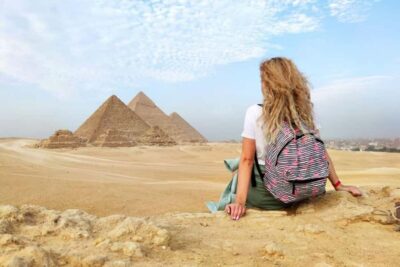
Pyramids & Great Sphinx Private Tour with Camel Ride
Read our review →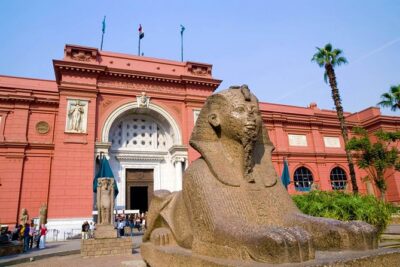
Tour to Giza Pyramids and The Egyptian Museum
Read our review →
VIP All inclusive Best of the best Giza Pyramids,Sakkara,Memphis
Read our review →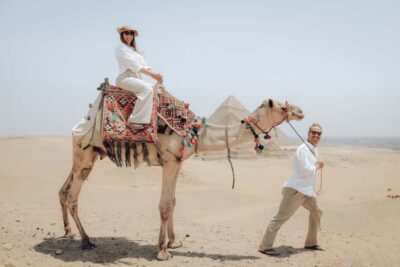
Pyramids of Giza, Sphinx, Saqqara & Memphis Tour
Read our review →
Cairo 8 Hour Private Tour of Pyramids, Egyptian Museum and Bazaar
Read our review →
Private ViP all-inclusive Giza Pyramids,Sphinx,Inside Pyramid
Read our review →