

Reviewed · EGYPTIAN MUSEUM TOURS
Egyptian Museum in Cairo: Private Guided Tour
Tutankhamun’s golden mask is the headline, but it is only one piece of a much larger story. Inside Cairo’s Egyptian Museum, you’ll see royal mummies, colossal statues, burial objects, and small figures linked to the people who built the pyramids. A private guide helps turn a crowded collection into a clear route through ancient Egypt.
I like the one-group-only format, which lets you ask questions and set the pace. I also like the convenience of private hotel transfers, especially in Cairo, where arranging a car can be more trouble than it is worth. The main catch is simple: museum admission is not included, and the four-hour booking may include transport time, leaving about two hours inside the galleries.
Key points at a glance
- Tutankhamun’s treasures: See the famous golden mask, coffin, and throne.
- Private Egyptologist guide: Guides such as Mohamed Gomaa, Hosni, Zizou, and Ahmed Salah have been praised for clear explanations and enthusiasm.
- Royal mummies and major statues: The route covers some of the museum’s most important ancient works.
- Private transport from Cairo: A private, air-conditioned vehicle is included for the standard pickup area.
- Flexible attention: You can ask questions and request a focus on particular periods, though you should make that request clearly at the start.
- Budget detail: The listed price is $50 per person, but entrance fees and some pickup charges are extra.
Why Tutankhamun is only the beginning

The Egyptian Museum in Tahrir Square is the kind of place where a single visit can feel both exciting and incomplete. More than 250,000 objects are associated with the collection, so no four-hour visit can cover everything. That is not a flaw in the museum. It is a reason to have a plan.
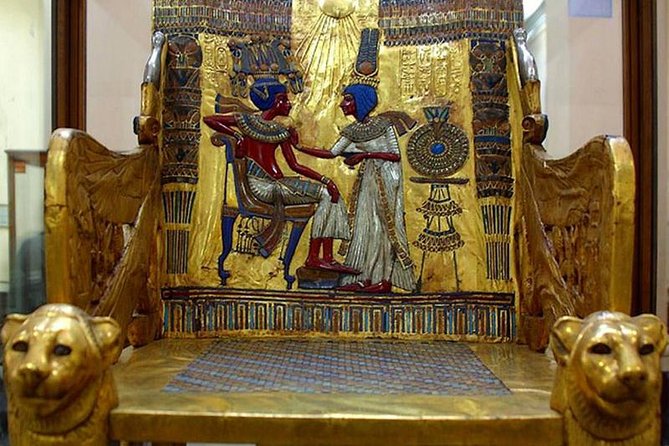
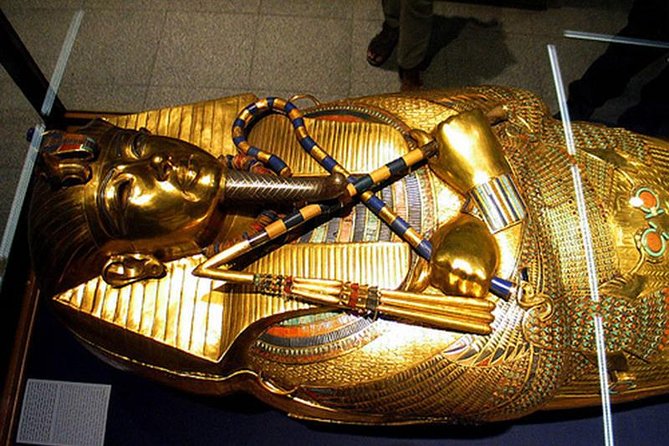
The most famous stop is the Tutankhamun collection. You can expect to see the young king’s golden mask, coffin, and throne, along with other objects connected to his burial. These pieces are visually striking, but the guide’s role is to explain what you are looking at and why royal burial objects mattered.
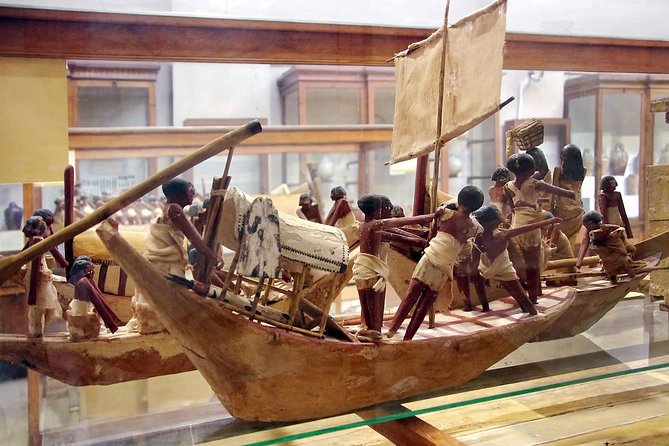
You will also see mummified pharaohs and statues from different periods of ancient Egyptian civilization. Smaller figures connected with pyramid construction help shift your attention away from kings alone. They give you a glimpse of the workers, servants, and rituals that supported royal life.
I would not treat this as a quiet, self-guided museum visit. The point is to move efficiently between the major rooms, get the basic story straight, and then spend extra time on the pieces that catch your eye.
Other museum visits people book in Giza:
- From Hurghada: Pyramids and Egyptian Museum Tour & Boat Ride
★ 4.4 · 381 reviews - Cairo: Egyptian Museum, Pyramids & Bazaar Tour
★ 4.8 · 298 reviews - Cairo: Grand Egyptian Museum QR Ticket
★ 4.7 · 243 reviews
What the four-hour schedule really means
The advertised duration is about four hours, while the museum portion described in the itinerary is about two hours. That difference matters. Your total time may include hotel pickup, the drive to Tahrir Square, entry procedures, and the return transfer.
If you want four full hours inside the museum, confirm the timing before booking. One family booked an 8 a.m. start but was later told that the museum opened at 9 a.m. The practical lesson is to check the opening time for your date and ask exactly how much time is planned in the galleries.
The timing can work well when handled properly. One guide arranged an early start that helped the group avoid much of the crowd, while another visitor found that the museum had emptied out considerably by about 10:30 a.m. That suggests the best time may depend on the day and the museum’s opening schedule, but an early slot is worth requesting.
A later morning can also have an advantage if large tour groups have already moved on. You should ask the operator which opening time applies and whether the four hours include transportation.
A private guide can make the old museum easier to read
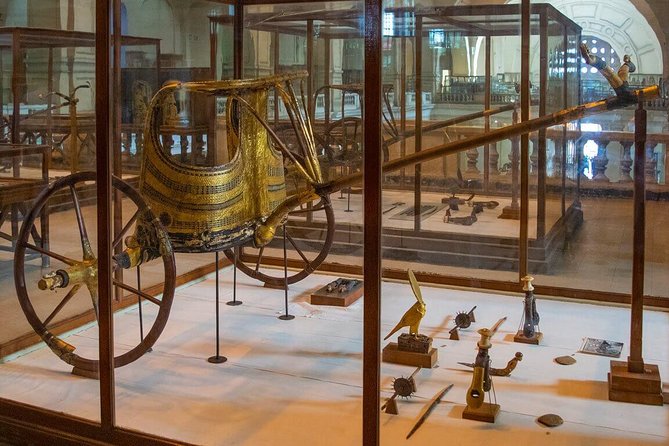
The museum’s displays contain plenty to see, but the labels may be brief. A guide can point out the most important objects and explain the links between pharaohs, religion, burial customs, art, and daily life.
The strongest guide experiences described here include Mohamed Gomaa, Hosni, Zizou, Ahmed Salah, Sharif, Abanoub, Mahmoud Badr, and Mohammed. The praise is especially strong for guides who combine factual detail with storytelling. Mohamed Gomaa, for example, was praised for clear English, broad knowledge of Egyptian history and culture, and his ability to keep a nine-year-old interested. Hosni was valued for picking out major objects without pushing the group into mummy-overload.
That last point is useful. A good museum guide does not simply march you past every case. The guide should help you see the most important works, explain enough context to make them memorable, and leave you with some time to look around.
You should also be direct about your interests. One person wanted to focus on a certain period but felt the guide followed a standard route instead. Tell your guide at the beginning if you want extra attention on a particular dynasty, burial practices, hieroglyphics, sculpture, or everyday life.
Guide quality can vary. Most of the feedback is very strong, but there are also reports of basic explanations, limited English, and gaps in artifact knowledge. If clear English or specialist detail is important to you, ask for an Egyptologist guide with strong English when you book, and confirm the guide’s language at pickup.
Tutankhamun’s mask, coffin, and throne
The Tutankhamun rooms are the obvious center of attention. The golden mask is instantly recognizable, but do not rush past the coffin and throne. Together, these objects show how royal power, religious belief, craftsmanship, and burial ritual were joined together.
Your guide should give you more than a name and a date. Ask about the symbols on the objects, the role of gold in royal burial, and how the pieces fit into the wider discovery of Tutankhamun’s tomb. The exact depth of the discussion depends on your guide, so this is a good place to ask questions rather than wait for a lecture.
The display is also a useful reminder that ancient Egypt was not only about pyramids. Tutankhamun lived much later than the pyramid builders, and his collection belongs to a different period of Egyptian history. A capable guide can help you understand those changes instead of blending every pharaoh into one vague picture.
A few more things to do in Giza worth a look
- Cairo: Grand Egyptian Museum Ticket w/ Opt. Guide & Transfer
★ 3.9 · 217 reviews - Tour to Giza Pyramids and The Egyptian Museum
★ 5.0 · 6,016 reviews - Cairo 8 Hour Private Tour of Pyramids, Egyptian Museum and Bazaar
★ 5.0 · 2,931 reviews - Cairo: Grand Egyptian Museum, Pyramids, Sphinx Tour & Lunch
★ 4.7 · 2,282 reviews
Royal mummies and the human side of kingship
The mummies provide a more personal encounter with the past. You are not just looking at statues or painted walls. You are looking at preserved human remains connected with rulers who once controlled a powerful kingdom.
Some people find this section fascinating, while others may prefer to spend more time with objects and sculpture. A private tour makes it easier to adjust the pace. You can ask for a shorter visit to the mummies or more time there, depending on your interest.
The collection also helps explain why burial preparation mattered so much. The objects around a dead ruler were tied to the afterlife, status, and religious practice. Even a short explanation can make the cases feel less like isolated exhibits and more like parts of a carefully planned burial system.
Statues, pyramid builders, and the wider collection
The museum’s statues give you the scale and formal style most people expect from ancient Egypt. You may see royal figures, religious images, and works connected with the people who built the pyramids.
The smaller figures are important because they broaden the story. Ancient Egyptian art often focuses on rulers, gods, and elite tombs, but miniature figures can show labor, service, ritual, and organization. Ask your guide to explain what these figures were made for and how they were used.
This is also where a private guide can save time. Instead of wandering through every room, you can follow a route built around the main highlights. Sharif was praised for providing context while keeping the visit focused, and another guide was valued for moving efficiently between exhibits. That is precisely the service you are paying for.
Do not expect every display to receive equal attention. With only a few hours, the guide will select the main rooms. If you have a particular interest, speak up early.
The drive, pickup, and private format
The tour includes transfer by private air-conditioned vehicle and pickup from your Cairo hotel within the standard service area. That is a real convenience. Cairo traffic and distances can make a museum visit feel tiring before you even enter, so having the driver handle the transfer keeps the outing simple.
The standard service is not unlimited. Pickup from hotels or points outside the city costs extra. Confirm your address and any surcharge before you pay, particularly if you are staying beyond central Cairo or in another area near Giza.
The private format means only your own group participates. This gives you more control than a large coach tour. You can ask the guide to slow down, repeat a point, spend longer at Tutankhamun’s objects, or move on from a section that does not interest you.
It also means the experience depends more heavily on the assigned guide. In a large group, a weak explanation can be diluted by the group dynamic. Here, you are paying for personal attention, so guide communication matters.
Is $50 per person good value?
At $50 per person, the tour can be a fair buy if you value transport and interpretation. You are paying for a private vehicle, an Egyptologist guide, and a planned route through a very large museum. For a first visit to Cairo, those services can save time and reduce the stress of handling transport and navigation alone.
The price is less attractive if you expect every cost to be covered. Museum admission is not included, and food and drinks are not included unless specifically stated. Pickup outside the city may also bring an extra charge. Add those costs before comparing this tour with a self-guided visit or a larger group excursion.
The value is strongest for families, first-time visitors, and anyone who wants context instead of simply walking past cases. It is also useful if you are combining the museum with another Cairo sight, such as the Citadel. One group paired the museum with the Citadel and found the combination worthwhile, though you should confirm how the added stop affects the schedule and price.
Solo visitors may find the per-person cost harder to justify. A private guide is most cost-effective when shared among several people, especially since group discounts are offered.
Who should book this museum visit?
I would recommend it to a first-time visitor who wants the main objects explained without spending hours planning a route. Families can benefit from the private setup because the guide can adjust the pace, and one guide was especially praised for keeping a child engaged and treating an older parent with patience.
It also suits people who want door-to-door transport. You do not need to arrange a taxi or negotiate every part of the trip yourself. The private car is comfortable, and the museum route is handled for you.
I would be more cautious if you are a specialist in Egyptology or already know the museum well. A basic guide may not offer enough new material. In that case, request a particular subject in advance and confirm that the guide can discuss it at the level you want.
This is also not the best choice for someone who wants a slow, independent museum day. The guided portion is designed around highlights. You can continue exploring on your own after the tour, but the main service is a focused introduction.
Practical advice before you go
Ask these questions before booking or at pickup:
- What time does the museum open on your date?
- How much of the four-hour duration is spent inside the museum?
- Is museum admission paid separately at the entrance?
- Is your hotel within the standard pickup zone?
- Can the guide focus on a specific dynasty or topic?
- Is the guide’s English level suitable for detailed explanations?
Bring your booking confirmation and allow some flexibility around Cairo traffic. The tour includes a private car, but traffic can still affect the timetable. If you want quiet viewing, request either the earliest available opening time or a time after the largest groups have moved on.
The experience has free cancellation up to 24 hours before the start time. Changes or cancellations made less than 24 hours before the start are not refunded, and the cutoff follows local time.
Should you book the Egyptian Museum private tour?
Book it if you want the museum’s major treasures explained by a guide and you value private transport. The best version of this tour gives you a clear route through Tutankhamun’s collection, royal mummies, statues, and smaller figures without drowning you in dates.
Before booking, budget for the separate entrance fee and confirm the actual museum hours. Ask for a guide with strong English, state your preferred historical focus, and check how much time you will spend inside.
For a first visit, a private tour is a sensible way to meet the museum. Just keep your expectations realistic: the four-hour total is not necessarily four hours in the galleries, and guide quality can vary. With the right timing and a strong guide such as Mohamed Gomaa, Hosni, Ahmed Salah, or Abanoub, the $50 price can be well spent.
FAQ
Where does the tour take place?
The visit is at the Egyptian Museum in Cairo, located in Tahrir Square.
How long does the experience last?
The tour lasts about four hours in total. The museum portion described for the visit is about two hours, so confirm how much time includes transportation.
Is the tour private?
Yes. Only your own group participates in the activity.
Is hotel pickup available?
Yes. Pickup from your Cairo hotel is offered, with an extra charge for hotels and points outside the city.
Is transportation included?
Yes. The tour includes transfers by private air-conditioned vehicle.
Is museum admission included in the price?
No. Entrance fees are not included and must be paid separately.
Are food and drinks included?
No. Food and drinks are not included unless specifically stated.
Can most people participate?
The tour information states that most people can participate.
Can I cancel for a full refund?
Yes. You can cancel at least 24 hours before the experience starts for a full refund. Cancellations or changes made less than 24 hours before the start are not accepted for a refund.
Just added in Giza
- Guided Tour to Giza Pyramids ,Sphinx, Camel & inside the pyramids★ 5.0 · 164 reviews
- Cairo: Half Day Pyramids Tour by Camel or Horse Carriage★ 4.8 · 168 reviews
- All inclusive :Pyramids, Sphinx ,lunch, ATV BIKE ,CAMEL,Shopping★ 5.0 · 125 reviews
- Giza Pyramids private tour, ATV bike, Lunch, Camel ride, shopping★ 5.0 · 96 reviews
- 2 hrs Unique Photo session (PhotoShoot) at the Pyramids of Giza★ 5.0 · 178 reviews
- Private Tour: Day Trip to the Pyramids and Sphinx from Cairo★ 5.0 · 202 reviews
- Cairo: Pyramids and Sphinx Tour with River Nile Felucca Ride★ 4.7 · 201 reviews
- Giza Pyramids Tour With Entry To Khufu Pyramid From Cairo★ 4.6 · 190 reviews
Egyptian Museum Tours, compared.

Tour to Giza Pyramids and The Egyptian Museum
Read our review →
Cairo 8 Hour Private Tour of Pyramids, Egyptian Museum and Bazaar
Read our review →
Grand Egyptian Museum, Pyramids, Sphinx Tour & Lunch
Read our review →
Cairo Pyramids, Sphinx & Egyptian Museum Day Trip
Read our review →
Private tour to Giza Pyramids,Sphinx,Egyptian Museum with Local Lunch
Read our review →
Best Private Giza Pyramids,Sphinx, New Grand Egyptian Museum
Read our review →
Egyptian Museum, Citadel, and Old Cairo Guided Tour
Read our review →
Egyptian Museum of Antiquities online QR Ticket
Read our review →Browse the lists this tour appears in