

Reviewed · ABU SIMBEL TOURS
Aswan, Nubian village & Abu Simbel & Luxor in 03 Days overland
The real prize here is the southern Egypt triangle: Aswan’s river islands, Abu Simbel’s enormous temples, and Luxor’s pharaoh-filled banks. In only three days, you cover a lot of ground without joining a large group, and the first-class train from Aswan to Luxor saves you from arranging that important connection yourself.
I like the private, air-conditioned transport and the room to adjust the pace with your guide. I also like the mix of famous monuments and time in a Nubian village, where a translator can help you speak with a local family rather than simply admire another ancient wall. The main drawback is the schedule: Abu Simbel means a pre-dawn start, and Day 3 packs five major sites into one long sightseeing day.
Key points to know before booking
- Philae begins with a boat ride: Reach the island temple by motorboat, then tour the sanctuary of Isis with free time afterward.
- Abu Simbel is an 11-hour day: Pickup is around 4:00 to 4:15 a.m., with roughly three hours each way by road.
- Your first-class train ticket is included: The Aswan to Luxor journey is arranged for you, but meals and accommodation are not.
- The Nubian village adds local context: You can enter a Nubian home, see colorful houses, shop for handicrafts, and take photographs with crocodiles.
- Luxor’s West and East Banks are both covered: The day includes the Valley of the Kings, Hatshepsut, Karnak, and Luxor Temple.
- Entrance fees are extra: Keep money ready for every archaeological site, as well as gratuities, meals, drinks, and personal costs.
A fast route through Egypt’s greatest southern sights

At $300 per person, this is a good-value option if you want a private guide and transport but do not want a fully packaged holiday. The price includes the first-class train ticket, drivers, fuel, parking, hotel pickup and drop-off, taxes, and an Egyptologist guide.
It does not include accommodation or admission to most sites. That distinction matters. The advertised price is not your final trip cost, so you should budget for entrance tickets, meals, drinks, tips, and any extra tombs or local purchases.
The tour is designed as a semi-independent arrangement. You choose or request your own accommodation, while the operator handles the complicated movement between sights. That suits you if you want control over your hotel but prefer not to negotiate taxis, find a driver in each city, or work out the Aswan to Luxor train on your own.
The experience is private, so only your group participates. That gives you a better chance to ask questions, stop for photographs, and ask for a little more or less time at a monument. Several visitors specifically praised guide Khaled for clear English, patient explanations, photography help, and careful attention to comfort and safety. Mohamed handled trip arrangements for some bookings and was praised for answering questions and helping coordinate train details.
Other Abu Simbel runs from Aswan:
- 4-Days Nile Cruise From Aswan To Luxor including Abu Simbel and Hot Air Balloon
★ 5.0 · 3,142 reviews - From Aswan: Abu Simbel Temple Day Trip with Hotel Pickup
★ 4.4 · 2,807 reviews - 4-Day 3-Night Nile Cruise from Aswan to Luxor&Abu Simbel+Balloon
★ 5.0 · 2,023 reviews
Day 1: Philae Temple and the Nile setting
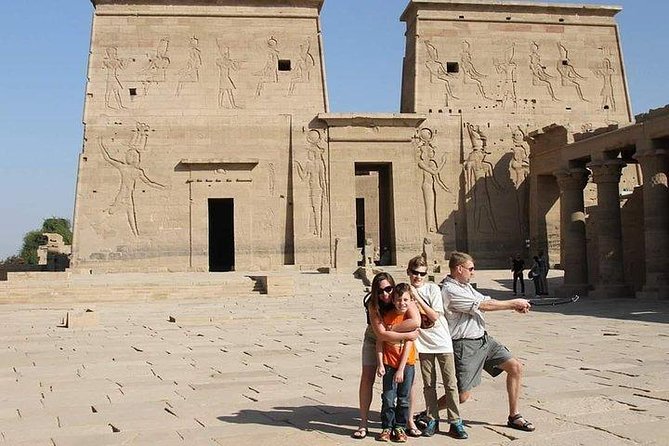
Your first day starts with Philae Temple, reached by a short motorboat ride. The boat is not just a practical transfer. It gives you an open view of the Nile and lets the temple appear gradually on its island setting.
Philae was moved when construction of the High Dam caused the surrounding water to rise. The sanctuary now sits about 500 meters from its original location, carefully reassembled on another island. That rescue effort adds an important modern chapter to an ancient site.
The temple is dedicated mainly to Isis, whose story is tied to Osiris and the wider family of Egyptian gods. Your guide leads a walking tour through the shrines and sanctuaries, then you get free time to look around independently.
I would use that free time for the details your guide cannot cover in one pass: carved figures, columns, inscriptions, and the way the buildings sit beside the water. The planned visit lasts about two hours. Entrance is not included, so ask your guide or booking contact how much local currency you should carry.
The High Dam and Lake Nasser
The next stop is the Aswan High Dam, a modern project built from 1960 to 1970. From here, you see Lake Nasser, one of the world’s largest artificial lakes, and cross the Friendship emblem area.
This stop works best when you connect it to Philae. The dam changed the Nile, created the huge reservoir, and forced the relocation of important ancient monuments. Abu Simbel, Philae, and other temples were saved through major engineering work because of the rising water.
The High Dam itself is a brief look at modern Egypt rather than a long archaeological visit. Some people will find it less gripping than the temples, but it helps explain why the ancient sites you see are still above water today. The stated visit lasts about an hour, and admission is separate.
A closer look at Nubian life

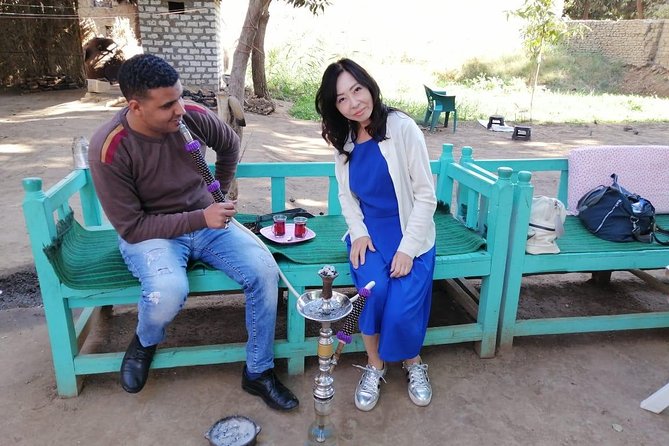
The Nubian village is the most human part of Day 1. You reach it by boat, passing Nile islands along the way. In the village, brightly painted homes and a slower pace offer a sharp contrast to the scale of the dams and temples.
You can enter Nubian houses, buy handicrafts and herbs, and learn about local life through an interpreter. One particularly useful detail is the chance to speak with a Nubian family in a more meaningful way, rather than treating the village as a quick photo stop.
You may also be invited to see or photograph crocodiles. Decide in advance how comfortable you are with that activity, and be polite about photography inside homes or around residents. The visit lasts about two hours and does not include admission or personal purchases.
The boat ride and village visit make this a worthwhile counterpoint to the monuments. If your main interest is ancient architecture, you may find the time long. If you want cultural contact and a break from formal ruins, this could be your favorite stop.
Other Nubian village visits from Aswan:
- Aswan: High Dam, Unfinished Obelisk, Philae & Nubian Village
★ 4.5 · 131 reviews - Aswan: Shared Half-Day Tour to the Nubian Village
★ 4.5 · 124 reviews - Nubian Village by Motorboat In Aswan
★ 5.0 · 97 reviews - Day Trip to Nubian Village with Camel Tour from Aswan
★ 5.0 · 80 reviews
Day 2: The long road to Abu Simbel
Abu Simbel is the day that tests your energy. Pickup is scheduled around 4:00 to 4:15 a.m., followed by an escorted convoy leaving Aswan at about 5:00 a.m. The drive takes roughly three hours each way, with around two hours at the temples.
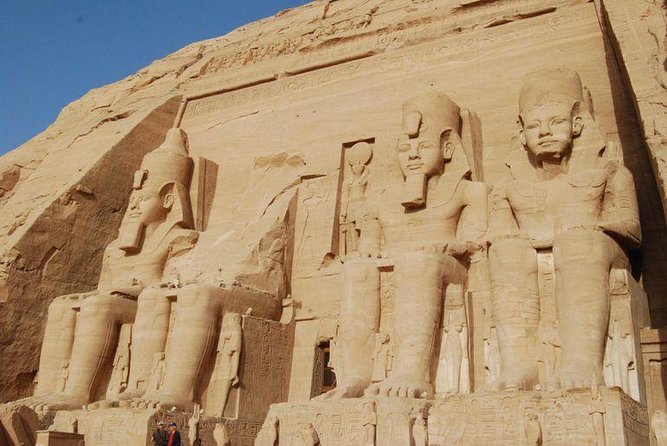
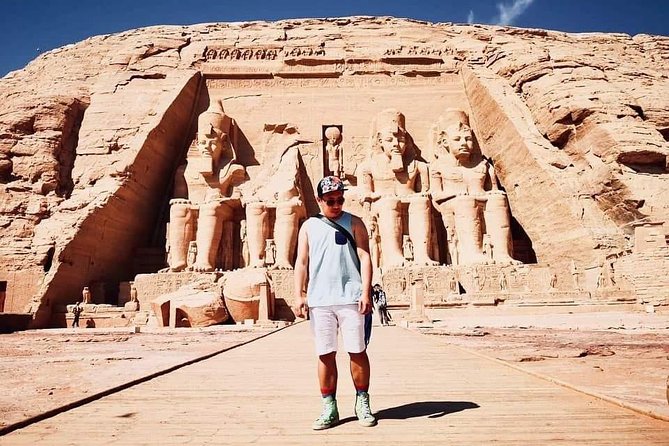
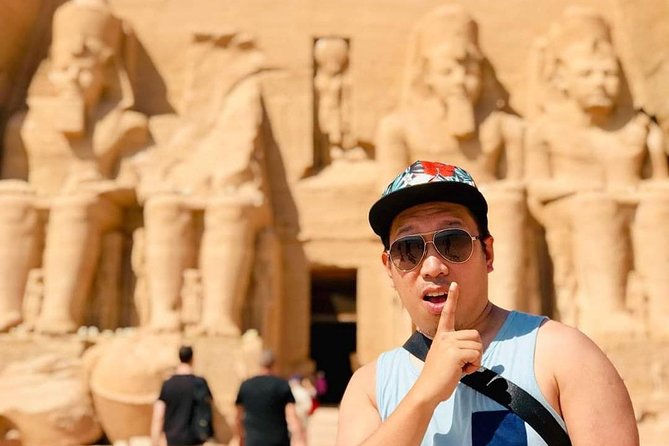
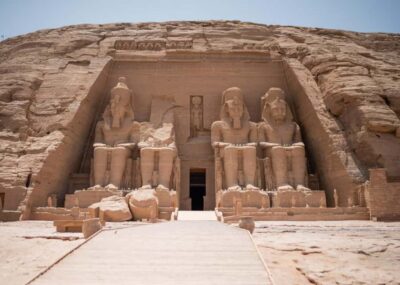
That is a lot of road for two hours on site, but Abu Simbel earns its place. The temples built by Ramses II are among Egypt’s most striking monuments, especially when you first see the massive seated figures cut into the rock face.
The early departure has one clear benefit: you can arrive in the morning light and see the temples before the worst heat of the day. It also means you should treat the previous evening as a quiet one. This is not the day to plan a late dinner or a relaxed morning.
Your Egyptologist should explain both the religious purpose of the temples and the rescue project that moved them before Lake Nasser rose. Ramses II’s temple is the larger and more famous structure, while the nearby temple honoring Queen Nefertari gives the complex a different mood and scale.
The guided portion is followed by free time. One point to confirm before setting out is exactly who will guide you inside Abu Simbel. Most of the arrangements describe Egyptologist-led commentary, but one published account found the Abu Simbel guide unclear or absent. That may have been an isolated coordination problem, but it is sensible to confirm the plan with the operator.
Admission is not included. The full day lasts about 11 hours, and the return drive brings you back to Aswan. You will want water, sun protection, comfortable shoes, and a phone or camera with enough battery for the long day.
The first-class train from Aswan to Luxor
The train ticket from Aswan to Luxor is included in the tour price and is one of the most useful practical features. The operator arranges first-class seating, while the private vehicle transfers you to and from the relevant points in each location.
The train breaks up the road travel and lets you move between the two historic cities without paying for another private transfer. Still, the package does not include meals or drinks, so prepare for your own food and refreshments.
Since accommodation is arranged by request rather than included by default, confirm where you will sleep in Aswan before Day 2 and where you will stay in Luxor before Day 3. This is a flexible setup, but it requires more attention from you than a package with hotels built in.
Day 3: The Valley of the Kings
Day 3 moves to Luxor’s West Bank, beginning at the Valley of the Kings. The visitor center provides a brief orientation, then you enter the area where rulers of ancient Thebes were buried.
Guides are not permitted inside the tombs. Your Egyptologist can explain the decoration and point out what to notice, but you will explore each permitted tomb on your own. This arrangement is common at the site and gives you time to study the painted walls without a running lecture beside you.
The basic entrance does not cover every tomb. If you want to visit King Tutankhamun’s tomb, you pay an additional fee directly. The tomb is famous, but it is not the largest or most richly decorated in the valley, so ask your guide which included tombs best fit your interests.
The scheduled stop lasts about 90 minutes. Wear practical footwear, and remember that the West Bank can feel exposed and hot. The value of having a private vehicle becomes clear here, since you are not trying to coordinate several separate rides between the valley and the other monuments.
Hatshepsut and the Colossi of Memnon
The Temple of Hatshepsut is one of Luxor’s most memorable monuments because of its broad terraces and strong vertical lines against the cliffs. Your guide explains how Hatshepsut ruled as a woman in a male royal tradition and used royal imagery associated with a male king.
You get time to walk through the courtyards and examine the hieroglyphic decoration. The visit is scheduled for about an hour, enough for a guided introduction and a short independent look, though you may wish you had longer if you enjoy inscriptions and architectural details.
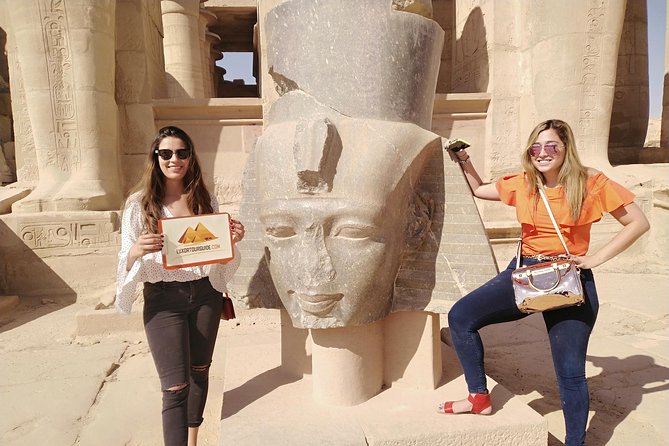
The Colossi of Memnon follow. These two giant statues once marked the entrance to the funerary temple of Amenhotep III. Only the statues remain from the complex, and the stop lasts about 15 minutes.
That short visit is appropriate. The colossi are impressive, but this is mainly a quick photo and orientation stop rather than a full temple visit. Admission is included here, unlike most of the other monuments on the route.
Karnak Temple and Luxor Temple
Karnak is the largest stop on the East Bank and deserves your full attention. You enter along the Avenue of Sphinxes, then move through a complex built and enlarged by successive pharaohs over more than 3,000 years.
The Great Hypostyle Hall is the visual high point. Its 134 columns rise like a stone forest, and the scale is hard to grasp until you walk among them. Your guide can help separate the different building phases and explain how the complex grew instead of presenting it as one single project.
You also see the Great Court, the deeper temple areas, and the sacred lake. The guided visit lasts about 90 minutes, followed by free time. Use that extra time to revisit the places that interested you most, since Karnak rewards slower looking.
Luxor Temple is smaller but has a different feel. It was once linked to Karnak by a two-kilometer Avenue of Sphinxes, part of which marks the entrance today. Ramses II’s statues and obelisk frame the approach, while the interior walls and columns carry layers of Egyptian and later history.
Your guide can point out how Alexander the Great inserted himself into the temple’s story. You can also see the surviving obelisk from the original pair, while its partner now stands in Paris. The visit lasts about an hour before you return to your East Bank hotel.
Admission to Karnak and Luxor Temple is extra. That is worth remembering because these are among the main costs on the final day.
What the $300 price really buys you
The strongest value is not the number of stops alone. It is the private logistics. You receive hotel pickup and drop-off, an air-conditioned vehicle, fuel and parking coverage, a driver, a guide, and the Aswan to Luxor first-class train ticket.
You are also paying for coordination across several locations. That matters in southern Egypt, where Abu Simbel requires an early convoy departure and Luxor’s monuments are spread across two sides of the Nile.
The price is less attractive if you expect an all-inclusive package. Accommodation, entrance fees, meals, drinks, laundry, personal expenses, and gratuities are excluded. Add those costs before comparing this tour with a cruise or hotel-based package.
The tour has a 4.9 rating from 16 listed reviews and a 100 percent recommendation figure. The strongest praise centers on friendly organization, clear explanations, safety, flexibility, and the work of guides such as Khaled. One account also praised the freedom to avoid crowded moments and shape the program with the guide.
Who should book this three-day route?
I would choose this for a first visit to Aswan and Luxor when you want to see the major sites quickly but still have a private guide. It suits couples, families, and small groups that value door-to-door transport and do not want to spend time arranging taxis or train tickets.
It is also a good fit if you want to choose your own accommodation. You retain more control than with a fixed package, while the operator handles the hardest transport pieces.
I would hesitate if you dislike early mornings, long road journeys, or tightly packed sightseeing. Abu Simbel is a demanding day, and Day 3 has five major stops. The program gives you breadth rather than long, quiet hours at each monument.
Book at least 24 hours before the start time if you need a full refund later. The experience requires good weather, and a weather cancellation offers either a different date or a full refund.
Final verdict: a strong route with costs to check
This is a smart way to link Aswan, Abu Simbel, and Luxor in three days. The private vehicle, first-class train, local village visit, and Egyptologist commentary give the route more substance than a simple transport package.
Before booking, ask for a written estimate of entrance fees, confirm your accommodation, and clarify the Abu Simbel guiding arrangement. If you accept the early start and understand that the $300 price excludes several important costs, I think this tour offers a practical and well-organized way to see southern Egypt’s essential sights.
FAQ
How long is the tour?
The tour lasts approximately three days.
Is the tour private?
Yes. Only your group participates in the private activity.
Is accommodation included?
No. Accommodation is available by request but is not included in the listed price.
Is the train from Aswan to Luxor included?
Yes. A first-class seating ticket from Aswan to Luxor is included.
What time does the Abu Simbel day begin?
Pickup is scheduled around 4:00 to 4:15 a.m., with the escorted convoy leaving Aswan at about 5:00 a.m.
Are entrance fees included?
No. Entrance fees to the sites are separate, except for the Colossi of Memnon, whose admission is included.
Can I visit King Tutankhamun’s tomb?
Yes, but visiting King Tutankhamun’s tomb requires an additional payment made directly at the site.
What happens if bad weather cancels the tour?
You can choose a different date or receive a full refund. For a normal cancellation, you must cancel at least 24 hours before the start time for a full refund.
Just added in Aswan
- 4-Days Aswan sails Nile Cruise Luxor &Abu Simbel.Hot air Balloon★ 4.5 · 77 reviews
- Sailing Nile Cruise from Aswan to Luxor for 2 Nights★ 4.5 · 139 reviews
- Private Tour in Aswan : Felucca and Nubian village★ 5.0 · 29 reviews
- Philae Temple and Aswan High-Dam Half-day tour★ 5.0 · 49 reviews
- (3-Nights Cruise From Aswan To Luxor & Balloon, Abu Simbel)★ 4.5 · 23 reviews
- Aswan Philae Temple, Obelisk, and High Dam Private Tour★ 4.5 · 17 reviews
- Day Tour to Abu Simbel from Aswan by Bus★ 4.5 · 25 reviews
- Abu Simbel Private Full-Day Tour from Aswan★ 5.0 · 114 reviews
Abu Simbel Tours, compared.
4-Days Nile Cruise From Aswan To Luxor including Abu Simbel and Hot Air Balloon
Read our review →
4-Day 3-Night Nile Cruise from Aswan to Luxor&Abu Simbel+Balloon
Read our review →
Abu Simbel Temple Private Guided Day Trip with Lunch
Read our review →
Private Day Tour to Abu Simbel Temples from Aswan
Read our review →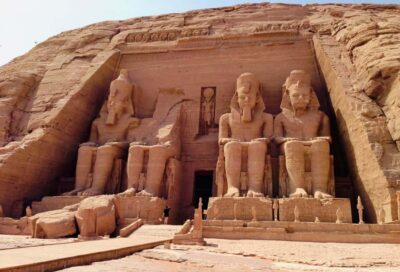
Abu Simbel Group Tour with Guide and Entrance Fees
Read our review →
4 Days Nile Cruise Luxor Abu Simbel & Air Balloon
Read our review →Browse the lists this tour appears in