
Reviewed · GIZA PYRAMIDS & SPHINX TOURS
Best Two-Day Guided Tours to the Ancient Cairo ,Giza Pyramids , Sakkara and More
The best thing about this two-day Cairo tour is how much ground it covers without asking you to wrestle with Cairo traffic or public transit. You move from the Giza Pyramids to Saqqara, Dahshur, Old Cairo, and the Egyptian Museum with a guide and driver handling the roads.
I like the direct hotel pickup and the small maximum group of 15. I also like the unusual pyramid mix: you see the famous Giza complex, then the older Step Pyramid and the Bent and Red Pyramids. The main drawback is that the $50 price does not include entrance fees, so your final cost will be higher.
Key points at a glance
- Three major pyramid areas in one day: Visit Giza, Saqqara, and Dahshur, including the Step Pyramid, Bent Pyramid, and Red Pyramid.
- Old Cairo gets proper attention: The second day includes the Citadel, Alabaster Mosque, Hanging Church, St. Sergius, and Ben Ezra Synagogue.
- Hotel transfers save time: Pickup and drop-off are provided for hotels in Cairo and Giza in an air-conditioned vehicle.
- Language choice matters: You can choose your preferred guide language, with Spanish guiding available through guides such as Mohamed and Rafa.
- Plan for extra admission costs: Every sightseeing entrance fee is separate from the advertised $50 price.
- Small-group format: The maximum is 15 people, giving you a more manageable setting than a large coach tour.
Why this two-day Cairo plan works
Cairo is spread out, noisy, and not especially kind to first-time drivers. The ancient sites sit in different parts of the city and surrounding desert areas, so arranging several of them by taxi or public transport can eat up time and patience.
This tour solves the basic transport problem. You are collected from a hotel in Cairo or Giza, ride in an air-conditioned vehicle, and return to your hotel after each day. That matters most on the first day, when Giza, Saqqara, and Dahshur form a long chain of sites rather than one compact attraction.
The pace is active. Day one is devoted to pharaonic monuments, while day two shifts to Islamic Cairo, Coptic Cairo, and downtown museums. You will not have hours to linger at every room or monument, but you get a useful first look at the city’s major sights.
The tour is capped at 15 people. That is not the same as a private tour, yet it is small enough to make questions and guide contact easier. The guide can also explain the burial customs and building traditions that connect the sites, rather than leaving you to identify one pyramid from another.
Other ways to see the pyramids from Cairo:
- Cairo: Pyramids & Great Sphinx Private Tour with Camel Ride
★ 4.9 · 6,335 reviews - Tour to Giza Pyramids and The Egyptian Museum
★ 5.0 · 6,016 reviews - VIP All inclusive Best of the best Giza Pyramids,Sakkara,Memphis
★ 5.0 · 3,164 reviews
Giza Pyramids and the Sphinx
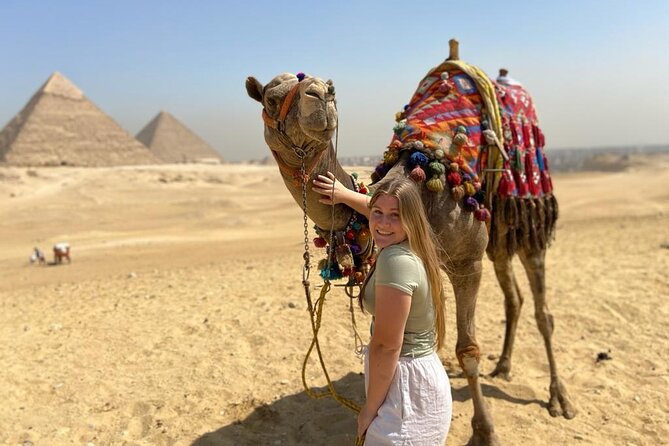
Your first morning begins at the Giza Plateau, where the pyramids of Cheops, Chephren, and Mykerinus dominate the visit. This is the classic Cairo sight, and the scale is still startling even after you have seen endless photographs.
The guide introduces the three main pyramids and explains their role in royal burial. That context is useful because the plateau is more than a row of giant stone triangles. The complex includes the Great Sphinx and the Valley Temple, giving you a better sense of how the burial grounds were organized.
The planned visit lasts about three hours. That gives you time to see the main monuments without treating Giza as a quick photo stop. You can expect walking and outdoor exposure, so comfortable shoes and sensible sun protection are practical choices.
Admission is not included. This is important because the base tour price looks low for a two-day program, but you must add the entrance charges at the sites. The supplied price also does not promise entry inside every pyramid. Ask your guide or booking contact which tickets are needed for the areas you want to enter.
Saqqara and the Step Pyramid of Djoser
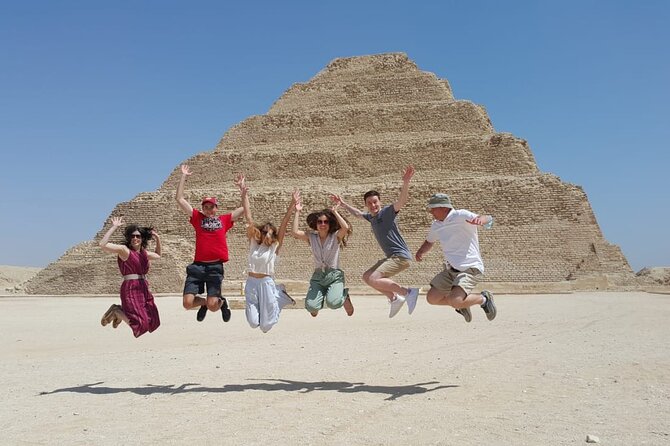
After Giza, the route continues to Saqqara, home of the Step Pyramid of King Djoser. The visit lasts about 90 minutes, and this is one of the most valuable stops for understanding how pyramid building developed.
The Step Pyramid was built around 2630 BC and is described as the world’s oldest major stone structure. Its stepped form looks very different from the smooth-sided pyramids at Giza, which makes the site more than another chance to see a pyramid.
I like the order of this day. You first see the famous finished image at Giza, then reach Saqqara and encounter an earlier design. A guide can connect those shapes to changing royal building ideas and burial practices. Without that explanation, Saqqara might seem less impressive simply because it is not as familiar.
The stop is shorter than Giza, so you should think of it as a focused archaeological visit rather than an open-ended exploration. Entrance fees remain separate here as well.
Dahshur, the Bent Pyramid, and the Red Pyramid
Dahshur brings a different kind of pyramid experience. The tour includes views of the Bent Pyramid and a chance to enter the Red Pyramid, followed by transport back to your Cairo or Giza hotel.
The Bent Pyramid is especially useful because its altered angle makes the problems of early pyramid design visible. It is not just another monument to photograph. Its shape helps you see that pyramid construction developed through experiments, revisions, and changing techniques.
The Red Pyramid adds the possibility of going inside. That can be physically demanding, and the provided information does not describe the interior route or conditions, so ask your guide before entering if you have concerns. The chance to go inside is still a strong reason to keep Dahshur on the plan.
This final pyramid stop gives day one a good rhythm: the best-known complex at Giza, the early stone design at Saqqara, and a more unusual site at Dahshur. The tradeoff is a full day with several transfers. If you prefer slow museum visits or long meals, this schedule may feel tight.
Other older-pyramid days out of Cairo:
- From Cairo: Pyramids of Giza, Sphinx, Saqqara & Memphis Tour
★ 4.7 · 3,110 reviews - Cairo: Pyramids, Sakkara & Memphis Tour with Lunch
★ 4.6 · 2,493 reviews - Private Day Tour Giza Pyramids, Sphinx, Memphis, and Saqqara
★ 4.5 · 904 reviews - Private tour: GIza Pyramids, Memphis City & Sakkara Pyramid
★ 5.0 · 637 reviews
The Citadel and Muhammad Ali Mosque
Day two begins with pickup at your hotel and a change of subject. You leave the pyramid fields behind and visit the Islamic and Coptic parts of Cairo.
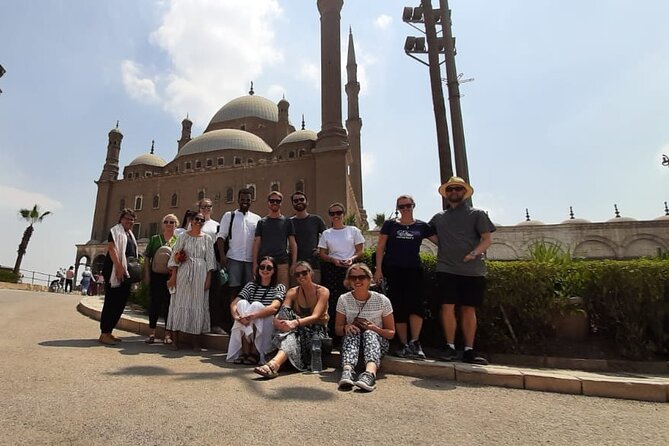
The first stop is the Citadel of Saladin, including the Muhammad Ali Alabaster Mosque and Al Gowhara Palace. The mosque is the main draw, with its large Ottoman-influenced design and alabaster surfaces. The Citadel setting also gives the morning a broader city context, linking religious buildings with Cairo’s long political past.
The planned visit lasts about one hour. That is enough for an introduction, but not enough for every corner of the Citadel complex. Entrance charges are separate, and you should remember that religious sites may require respectful clothing and behavior.
The guide is useful here because the Citadel contains more than one historic layer. You are not simply ticking off a mosque. You are seeing how rulers used this commanding site and how later buildings changed its appearance.
Coptic Cairo, the Hanging Church, and Ben Ezra Synagogue
The route then moves to Old Cairo and its Coptic sights. You visit the Roman fortress, the Hanging Church, St. Sergius, and the Ben Ezra Synagogue during a one-hour stop.
The Hanging Church, also called Al Mo’allaka Church, is one of the best-known Christian sites in Cairo. St. Sergius is linked with the Holy Family tradition, while Ben Ezra adds a Jewish site to the same compact historic area. Together, these stops show the city’s overlapping religious communities in a way a pyramid-only tour cannot.
The Roman fortress gives the visit a useful starting point. You can see that Old Cairo is not one single period or faith, but a small area shaped by Roman, Christian, and Jewish history. The guide’s explanations should help you keep those layers separate.
One hour will pass quickly. You may see the main interiors and hear the key background, but this is not a detailed art or architecture course. If you want extended time for quiet observation, ask about the exact order of stops and the time available at each one.
The Egyptian Museum and its 5,000 years of objects
The final major stop is the Egyptian Museum in downtown Cairo, planned for about three hours. This is the longest indoor visit of the second day, and it gives you a chance to place the outdoor monuments into a much wider story.
The collection covers roughly 5,000 years of Egyptian art, with objects from the Pharaonic and Roman periods. The stated program also includes the chance to see the Tutankhamen displays and tomb-related objects. The museum is large, so three hours is helpful, but you will still need to accept that you cannot absorb everything.
A guide makes a real difference in a collection of this size. Without direction, you can spend too long on the first room and lose track of the pieces that matter most to you. Tell the guide if you care most about royal burials, sculpture, daily life, or Tutankhamun, then use the available time carefully.
The museum visit also balances the outdoor first day. You get shade, a slower pace, and a chance to study objects close up. Still, the schedule includes three other major areas that day, so do not expect a leisurely museum-only experience.
Guides, languages, and the small-group setup
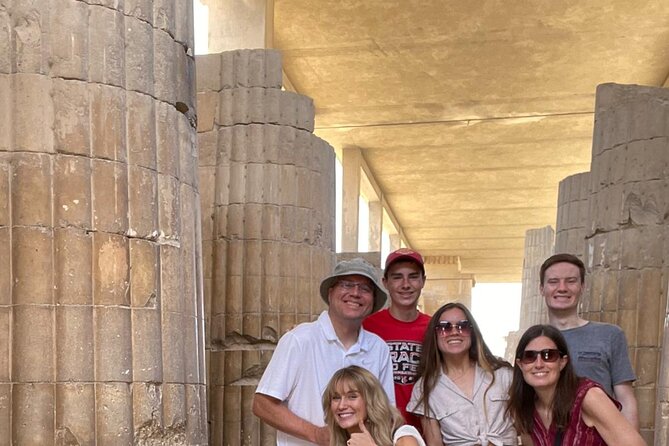
You can choose your preferred guide language when booking. Spanish-language guiding has included Mohamed and Rafa, and one Spanish-language booking also used Islam as the driver. That is useful if you want history explained in Spanish rather than relying on basic English.
The guide is not only there to point out monuments. At Giza, the focus includes burial rites. At Saqqara and Dahshur, the explanations can help you understand why the pyramids look different. In Old Cairo, the guide links the Citadel, churches, synagogue, and museum into a broader picture.
The group maximum is 15 people. That keeps the vehicle and walking visits more manageable than a large bus outing, though it does not guarantee a private pace. If you want total control over photo stops, meals, or museum time, a private arrangement would suit you better.
The strong practical point is the driver. Cairo traffic can be tiring even when you are only watching it from the passenger seat. Direct hotel transfers let you focus on the sites rather than negotiating streets and finding the correct entrance.
What the $50 price really covers
At $50 per person, the tour offers a low starting price for two days of guiding and transport. You receive pickup and drop-off, an air-conditioned vehicle, an expert guide, parking and landing fees, and the scheduled visits.
The important catch is that all sightseeing entrance fees are extra. That includes admission at the pyramids, Saqqara, Dahshur, the Citadel, Coptic sites, and Egyptian Museum. The final amount therefore depends on which entrances you choose and the current ticket prices.
Pickup from Heliopolis or Nasr City costs an additional $10 per person per day. That means the location of your hotel can change the value calculation. Hotels in Cairo and Giza fit the standard transfer plan, while those two areas require the stated surcharge.
For a visitor who wants the main sights with minimal transport planning, the base price is appealing. For someone counting every dollar, calculate the admission costs before booking. The tour is good value for structure and coverage, not because $50 is the complete cost.
Who should book this Cairo tour?
I would choose this tour if you have two full days, want the major ancient sites, and prefer a guide to explain what you are seeing. It suits first-time visitors who would rather not arrange several long transfers across Cairo and the nearby archaeological areas.
It also fits people who want more than Giza. Saqqara and Dahshur are important additions, and the second day brings in religious sites that many pyramid-focused plans leave out. The Spanish-language option may be especially helpful for Spanish speakers, with Mohamed and Rafa among the named guides used for that language.
You may want a different plan if you dislike full sightseeing days or need generous time at every monument. The schedule covers a lot, and entrance fees are not folded into the headline price. Travelers needing pickup from Heliopolis or Nasr City should also include the daily surcharge when comparing options.
Booking confirmation is provided at the time of booking. Most people can take part, but the tour depends on suitable weather and a minimum number of participants. Free cancellation is available up to 24 hours before the start time for a full refund. Cancellations or changes inside that 24-hour window are not accepted for a refund.
Should you book it?
Book this two-day tour if your priority is efficient coverage with a guide and hotel transport. The best feature is the combination of Giza, Saqqara, and Dahshur on day one, followed by the Citadel, Coptic Cairo, and the Egyptian Museum on day two.
The $50 rate is a useful starting point, not the final bill. Add entrance fees and, if needed, the Heliopolis or Nasr City transfer surcharge. If you accept the busy schedule and plan for those extras, this is a practical way to get a strong first look at ancient and historic Cairo without driving yourself through the city.
FAQ
Is hotel pickup included?
Yes. Pickup and drop-off are included for hotels in Cairo and Giza. Pickup or drop-off from Heliopolis and Nasr City costs an additional $10 per person per day.
Are entrance fees included in the $50 price?
No. Entrance fees to the sightseeing stops are paid separately.
How large is the tour group?
The activity has a maximum of 15 participants.
Can I choose the guide language?
Yes. You can choose your preferred guide language when booking. Spanish-language guiding has included Mohamed and Rafa.
Does the tour include the Giza Sphinx and Valley Temple?
Yes. The Giza visit includes the Great Sphinx and the Valley Temple, along with the pyramids of Cheops, Chephren, and Mykerinus.
What is the cancellation policy?
You can cancel at least 24 hours before the start time for a full refund. Changes or cancellations made less than 24 hours before the start time are not accepted, and poor weather or failure to meet the minimum number of participants may lead to a new date or a full refund.
Just added in Cairo
- White Desert Overnight Camping Sharing Tour in Egypt★ 5.0 · 15 reviews
- Cairo Best 2Days tour Pyramids, Saqqara & Old Cairo★ 5.0 · 15 reviews
- Giza Pyramids with (GEM) Grand Egyptian Museum★ 5.0 · 42 reviews
- visit the pyramids of Giza + the necropolis of Saqqara + the Memphis site.★ 4.5 · 20 reviews
- Tour to Giza pyramids Memphis Sakkara and Felucca on the Nile★ 5.0 · 16 reviews
- Private Giza pyramid,sphinx, Mummification temple& inside pyramid★ 5.0 · 32 reviews
- Monastery St Simon with Cave Church and Garbage City Private Tour★ 5.0 · 15 reviews
- sunset at Giza pyramids by camels★ 5.0 · 31 reviews
Giza Pyramids & Sphinx Tours, compared.
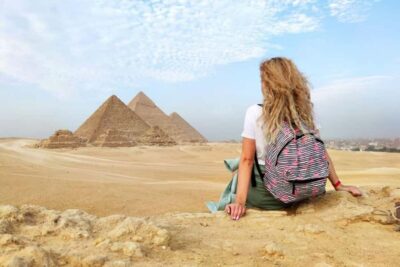
Pyramids & Great Sphinx Private Tour with Camel Ride
Read our review →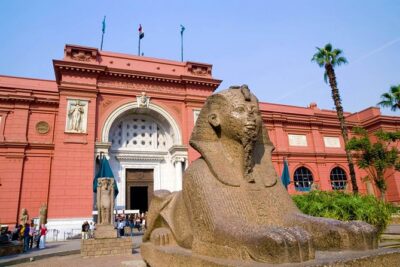
Tour to Giza Pyramids and The Egyptian Museum
Read our review →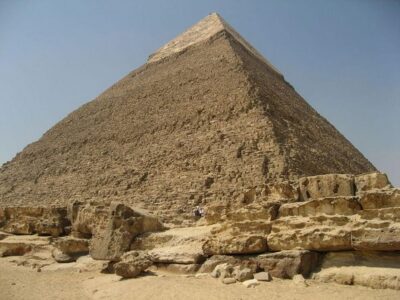
VIP All inclusive Best of the best Giza Pyramids,Sakkara,Memphis
Read our review →
Pyramids of Giza, Sphinx, Saqqara & Memphis Tour
Read our review →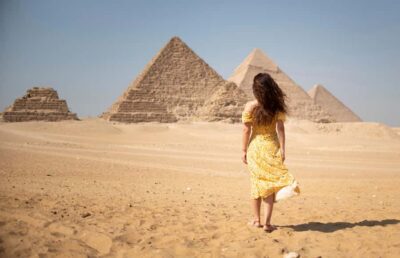
Half-Day Tour to Pyramids of Giza and the Sphinx
Read our review →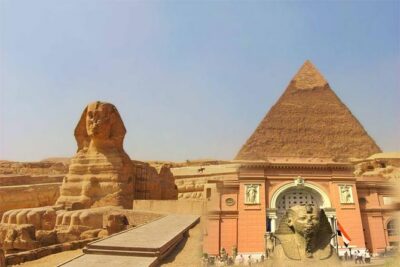
Private ViP all-inclusive Giza Pyramids,Sphinx,Inside Pyramid
Read our review →
Grand Egyptian Museum, Pyramids, Sphinx Tour & Lunch
Read our review →
Cairo Pyramids, Sphinx & Egyptian Museum Day Trip
Read our review →Browse the lists this tour appears in