
Reviewed · KHAN EL-KHALILI & BAZAAR TOURS
Cairo Shopping tour Private Papyrus Essential oils Bazar Cotton
Cairo’s shopping tour is really a guided retail circuit, not a free afternoon in the markets. You ride in a private car between a jewelry bazaar, papyrus shop, essential-oil house, and Egyptian cotton store, with help bargaining and choosing items. I like the papyrus-making demonstration and the chance to have a name written in hieroglyphics on a cartouche.
I also like the practical setup: hotel pickup, private transport, bottled water, and a simple Egyptian lunch are included. Guide Adelle has been praised for being friendly and helpful, but the main drawback is clear: several stops are commercial showrooms, and prices may be much higher than those found elsewhere in Cairo.
Key points to know before you book
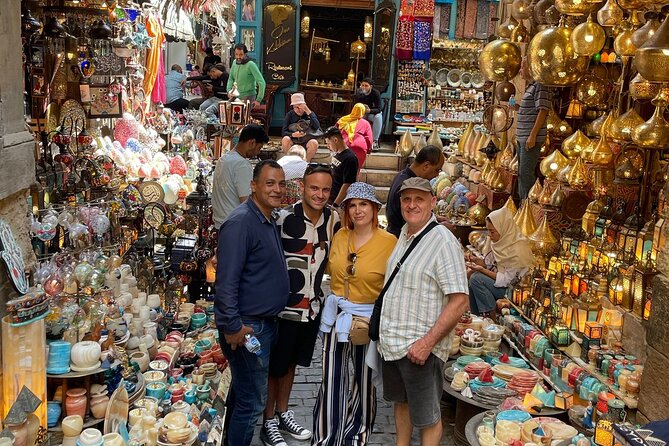
- Four shopping stops: Expect jewelry and cartouches, handmade papyrus, essential oils and perfumes, and Egyptian cotton.
- Private vehicle and guide: Your own group travels by car, with an English-speaking driver and local shopping assistance.
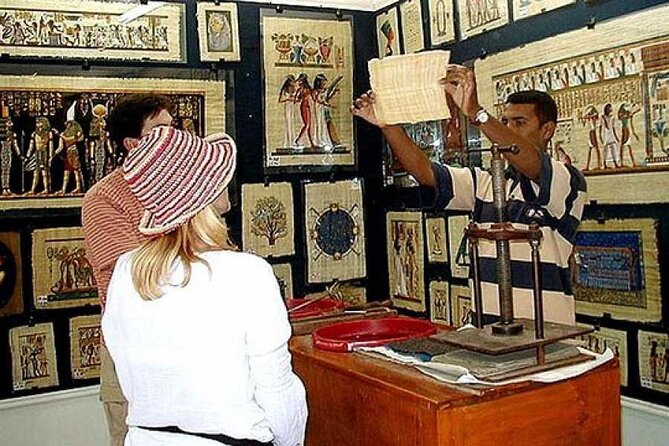
- Papyrus demonstration: You can watch how papyrus sheets and paintings are made by hand.
- Shopping prices vary sharply: Fixed or high showroom prices can reduce the value, especially for papyrus and cotton.
- Lunch is included: The meal is listed as local koshari or falafel, with drinks separate.
- Remote pickup costs extra: New Cairo, 6 October, airport areas, Heliopolis, Nasr City, Alexandria Desert Road, and other far-off areas may involve an added charge.
What this Cairo shopping tour is really like
This experience is designed for you if you want souvenirs without handling Cairo’s shops alone. A private car collects you from a hotel, hostel, or private house in Cairo or Giza, then takes you through a planned series of stores.
The advertised duration is about seven hours, though each stop is listed at roughly one to two hours. That gives you time to browse, ask questions, and compare products, but the actual pace can depend on how long you wish to shop and how much explanation you want.
I would treat this as a shopping orientation with demonstrations, not as an open-ended market adventure. You are taken to selected stores rather than dropped into a street market and left to work everything out yourself. That can feel reassuring if you dislike aggressive sellers, but limiting if your main goal is the lowest possible price.
The tour has a 4.8 rating from 41 ratings and is marked as recommended by 95 percent of customers. The most consistent positive point is the personal help from the guide. Adelle, in particular, is described as friendly and useful during the shopping. That matters in Cairo, where knowing what an item is, how it is made, and how much negotiation is reasonable can make the buying process less tiring.
Other shopping tours in Cairo people book:
- Giza pyramids, Sphinx, ATV bike, Lunch,Camel ride, Dinner cruise& shopping tour
★ 5.0 · 798 reviews - Cairo: Local Markets & Khan el Khalili Private Shopping Tour
★ 4.6 · 614 reviews - Giza Pyramids,Sphinx,Camel Ride,ATV Bike,Shopping, Dinner cruise
★ 5.0 · 479 reviews
Starting with Mamluk jewelry and Egyptian cartouches
The first stop focuses on jewelry, souvenirs, and cartouches. You may see Egyptian gold, silver pieces, statues, magnets, and other small gifts. The cartouche is the most distinctive purchase here: your name can be written in hieroglyphics on a silver or gold pendant.
This is a good stop if you want one personal souvenir rather than a suitcase full of small objects. A cartouche has a direct connection to ancient Egyptian writing, and the option of silver or gold gives you a choice at different price levels. Ask the guide to explain the spelling and symbols before you buy. Names written in hieroglyphics are approximations based on sounds, not modern alphabet letters.
The jewelry stop is also where you should stay alert about metal quality, weight, and documentation. The tour description presents these as trusted government bazaars, but you should still ask exactly what you are buying, what metal it contains, and whether a receipt is provided. Do not let the excitement of seeing gold or engraved cartouches replace basic shopping sense.
The private format helps here. You can ask questions quietly and take your time, rather than trying to make a decision in a crowded shop. Still, do not assume that a guided store automatically means the lowest price. If you care mainly about value, compare prices before committing.
Watching papyrus become a souvenir
The papyrus workshop is probably the most interesting educational stop. You can see how papyrus is processed into sheets and turned into painted artwork. The explanation connects a familiar Egyptian symbol with a practical craft, so this part feels less like ordinary shopping.
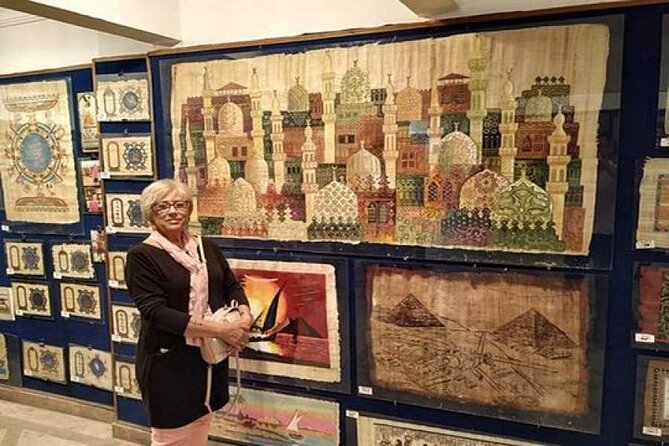
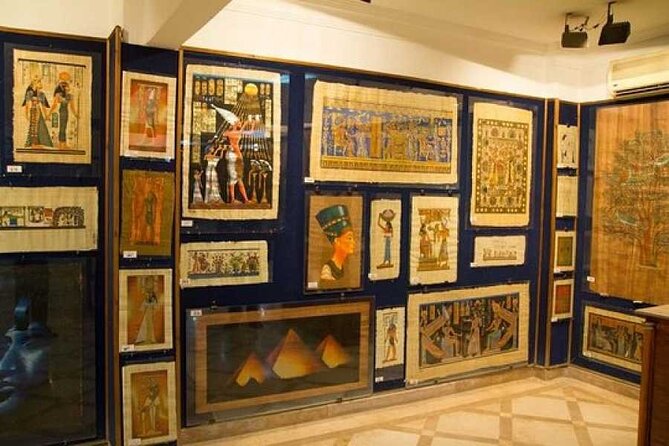
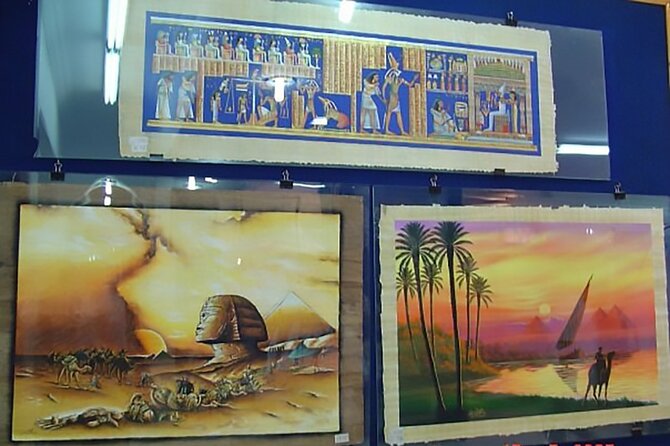
Papyrus paintings come in many colors and designs. Some show pharaohs, gods, hieroglyphic texts, or familiar scenes from ancient Egypt. The tour presents the pieces as handmade and authentic papyrus rather than simple printed paper. That distinction is important, since cheaper souvenir shops may sell printed or synthetic alternatives.
At the same time, the price concern deserves serious attention. One customer found papyrus elsewhere for about one-fifth of the price offered at the tour stop. That does not prove every item here is overpriced, but it is a strong warning to ask about size, material, hand painting, and production method before buying.
You should also ask whether the painting is made on genuine papyrus or a substitute material. Look at the weave, edges, and surface, and ask the guide to explain what makes one piece different from another. If you find a design you like, take a photograph and compare prices later if the shop allows you time to decide.
The best reason to visit this stop is the demonstration. Even if you buy nothing, you get a clearer idea of how papyrus is made and why finished paintings vary in price. If you already know you want a large wall hanging, set a budget before entering.
Essential oils, lotus scents, and the perfume stop
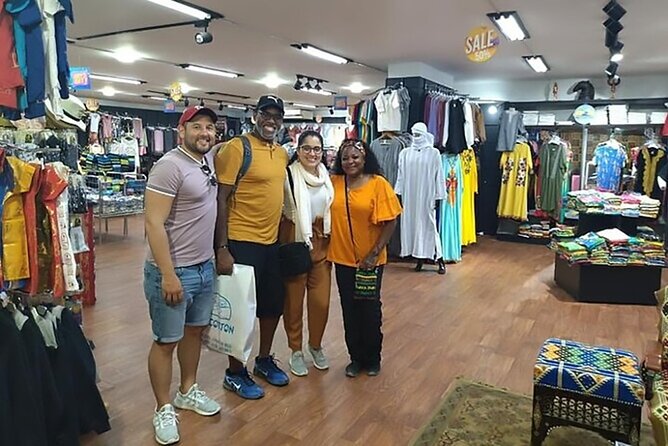
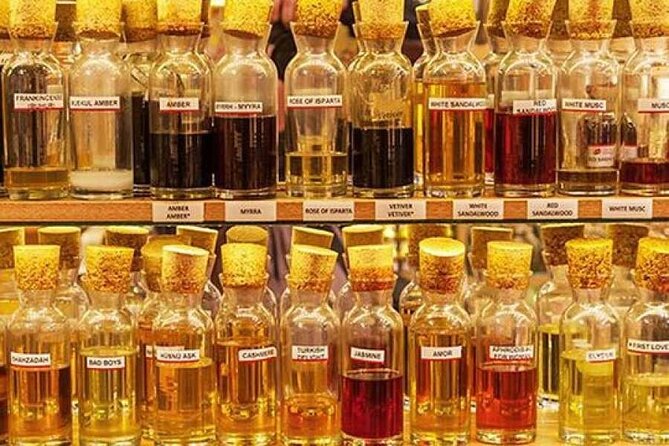
The essential-oil portion introduces lotus blue lily and scents associated with ancient Egypt. You can smell different oils and learn about the way flowers were used to create perfumes. The stop is described as taking place in a Bedouin family house, with a focus on pure oils and traditional methods.
A story connected to this section concerns seven sacred oils found in the tomb of Kagemni, a chief justice and vizier under King Teti. The tomb dates to Egypt’s Sixth Dynasty, around 2330 B.C. This gives the stop some historical context, though you should separate the ancient story from the modern products being sold today.
The range may include perfume oils, flower scents, and other essential oils. Smell carefully and avoid buying a large set too quickly. Scents can seem pleasant in a shop and feel very different after several hours on your skin. Ask about the ingredients, concentration, bottle size, and storage.
There is a practical quality concern here. One complaint noted oils stored in clear containers under strong light, which can affect some oils over time. You should ask how the oils are stored, check that bottles are sealed, and inspect the label before paying.
This is also a stop where prices may be hard to judge. The shop may present certain oils as rare, ancient, or specially prepared. That can make the presentation persuasive, but it does not tell you whether the price is fair. Buy only if you like the scent and understand the product, not simply because the story sounds impressive.
Other trips through the old bazaars in Cairo:
- Cairo 8 Hour Private Tour of Pyramids, Egyptian Museum and Bazaar
★ 5.0 · 2,931 reviews - Cairo: Private Pyramids, Museum & Bazaar Tour with Lunch
★ 4.6 · 744 reviews - Cairo Citadel, Old Cairo and Khan El Khalili: Private Tour
★ 4.6 · 741 reviews - Day Tour to Giza Pyramids Complex, Egyptian Museum & Bazaar
★ 5.0 · 530 reviews
Egyptian cotton and the Three Pyramids Bazaar
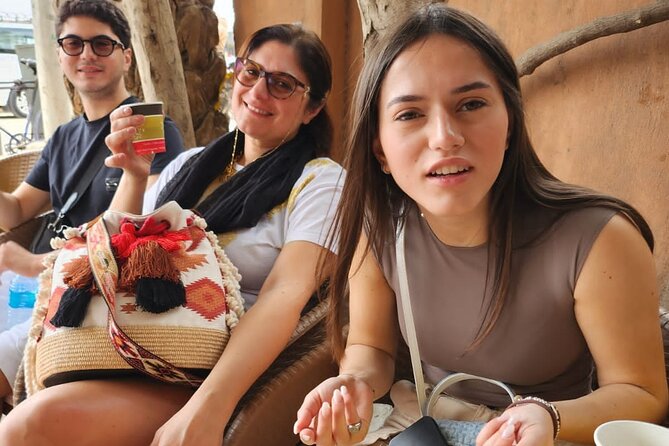
The cotton stop is built around Egypt’s reputation for long-staple cotton. You may see sheets, towels, clothing, scarves, and other cotton goods. Egyptian cotton is an important export for the country, but the name alone does not tell you the thread count, fiber content, or quality of the finished item.
Ask direct questions. Is the product made entirely from Egyptian cotton? What is the thread count? Where was it made? Can you open the package to inspect the weave? These details matter more than a label on the front of a box.
This stop has drawn some of the sharpest criticism. The shop has been described as poor and expensive, with limited room for negotiation. If you are shopping for bedding or larger cotton goods, compare prices in another store before buying. A private tour can save time, but it does not guarantee a bargain.
The Three Pyramids Bazaar also offers more cartouches, statues, magnets, and other souvenirs. This gives you another chance to buy small gifts if you did not find anything at the first bazaar. I would wait until you have seen all the options before purchasing. You may find similar magnets or small statues at several stops.
Lunch is optional in the schedule, but the included meal is listed as local koshari or falafel. Koshari is a filling Egyptian dish made with ingredients such as rice, pasta, lentils, and tomato sauce. Drinks are not included, so bring some Egyptian pounds or another accepted payment method for beverages.
The private transport and pickup details
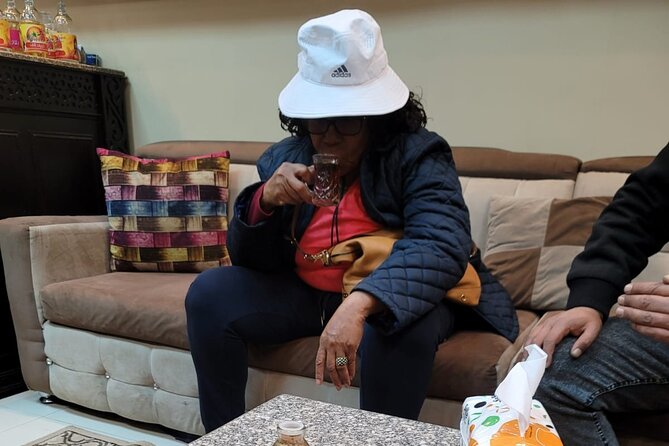
Private transport is one of the tour’s strongest practical features. Your group does not share the vehicle with strangers, and hotel pickup and drop-off are included for standard Cairo and Giza locations. This makes the tour easier to fit around a busy sightseeing schedule.
The listed driver speaks English. Additional guides are offered in languages including Spanish, Italian, German, French, Chinese, and Japanese, with no extra language charge stated. Confirm your preferred language at booking, especially if it is not English.
Pickup from distant areas may cost extra. The listed areas include New Cairo, 6 October, airport areas, Heliopolis, Nasr City, Alexandria Desert Road, and other locations far from central Cairo or Giza. Ask for the exact surcharge before confirming, since the five-dollar advertised price does not necessarily cover every pickup point.
The unusually low base price deserves a careful look. At $5 per person, the tour is remarkably cheap for a private car, guide, lunch, water, and several admissions. That price makes sense only if the shopping stops are part of the business model. You should therefore see the tour as low-cost transport and guided access to commercial stores, not as a guaranteed bargain-shopping service.
Group discounts may be available, which could improve the value for families or small parties. The activity is private, so only your group takes part. Most people can participate, and service animals are allowed according to the published information.
What the critical feedback means for you
The main problem is not the route itself. It is the difference between a guided shopping experience and a bargain hunt. If you expect the guide to take you to the cheapest papyrus, cotton, and perfume shops in Cairo, you may be disappointed.
The schedule can also feel longer than the actual shopping. One customer finished the shopping in about an hour and a half, despite the listed seven-hour duration. That suggests the time includes driving, explanations, meals, and transfers, not seven full hours of buying.
The shops may present products with confident claims about authenticity, ancient traditions, or official status. Listen to the explanation, but make your own decision. You can politely decline, ask for time, or buy nothing. A private tour should give you more freedom to do that than a large group excursion.
The positive side is that the guide can reduce confusion. Adelle has been singled out for being helpful, and the driver has also been described favorably. If you are nervous about shopping in Cairo, this human support may be worth more than a small price difference.
Who should book this experience
I would recommend it to you if you want a simple private shopping day with hotel pickup, a car, and someone to explain the products. It suits first-time visitors who want a cartouche, papyrus, oils, cotton, or small souvenirs but do not want to search for each shop alone.
It may also suit families, couples, and small groups who value a flexible private vehicle. The included lunch and bottled water make the day easier to manage, especially if you have already spent time sightseeing around Cairo.
I would be more cautious if your main goal is the lowest price. Independent shopping may give you more room to compare and negotiate, particularly for papyrus and cotton. You should also skip the tour if you dislike sales-focused stops or prefer wandering through local markets without a set route.
The tour is free to cancel up to 24 hours before the start time. Cancellations within 24 hours are not refunded, and changes during that period are not accepted. For last-minute bookings or bookings made one day before departure, contact the provider by WhatsApp or phone rather than relying on email.
Should you book the Cairo shopping tour?
Book it if convenience matters more than finding the absolute lowest price. The private car, hotel pickup, guide support, papyrus demonstration, cartouche option, essential-oil presentation, cotton store, lunch, and multilingual help create a useful introduction to Egyptian shopping.
Do not book it expecting every item to be a bargain. Set a budget, ask questions about materials, compare prices when possible, and feel free to leave a shop without buying. Used that way, the tour can be a comfortable and informative way to see several Egyptian products in one day.
FAQ
How long does the Cairo shopping tour last?
The tour lasts approximately seven hours. The planned stops are listed as about two hours at the jewelry bazaar, two hours at the papyrus shop, two hours at the Three Pyramids Bazaar, and one hour at the perfume factory.
Where does hotel pickup take place?
Pickup is offered from hotels, hostels, and private houses in Cairo and Giza. Extra charges may apply for New Cairo, 6 October, airport areas, Heliopolis, Nasr City, Alexandria Desert Road, and other distant areas.
Is the tour private?
Yes. This is a private activity, and only your group participates.
Is transportation included?
Yes. Transport by private vehicle, hotel pickup, and hotel drop-off are included.
What language does the driver speak?
The included driver speaks English. Guides are also offered in Spanish, Italian, German, French, Chinese, Japanese, and other languages according to the tour information.
What products can I buy?
You can shop for Egyptian gold and silver jewelry, cartouches, papyrus paintings, essential oils, perfume products, Egyptian cotton goods, statues, magnets, and other souvenirs.
Is lunch included?
Yes. Local Egyptian food is included, listed as koshari or falafel. Drinks are not included.
Is bottled water included?
Yes. Bottled water, coffee, and tea are included.
Can I watch papyrus being made?
Yes. The papyrus stop includes a demonstration of how papyrus is made by hand and an opportunity to see and buy papyrus paintings.
What is the cancellation policy?
You can cancel at least 24 hours before the experience for a full refund. Cancellations or changes made less than 24 hours before the start time are not accepted and are not refunded.
More shopping tours in Cairo
- Giza Pyramids, Camel Ride, ATV and Shopping Tour w/ Dinner Cruise
★ 5.0 · 280 reviews - Giza Pyramids, Sphinx, Sakkara Pyramid with Camel ride & Shopping
★ 5.0 · 157 reviews - Giza pyramids,Sphinx,ATV bike,Camel ride, Dinner cruise& shopping
★ 5.0 · 118 reviews - Cairo: Half Day Shopping tour
★ 4.6 · 59 reviews
Just added in Cairo
- White Desert Overnight Camping Sharing Tour in Egypt★ 5.0 · 15 reviews
- Cairo Best 2Days tour Pyramids, Saqqara & Old Cairo★ 5.0 · 15 reviews
- Giza Pyramids with (GEM) Grand Egyptian Museum★ 5.0 · 42 reviews
- visit the pyramids of Giza + the necropolis of Saqqara + the Memphis site.★ 4.5 · 20 reviews
- Tour to Giza pyramids Memphis Sakkara and Felucca on the Nile★ 5.0 · 16 reviews
- Private Giza pyramid,sphinx, Mummification temple& inside pyramid★ 5.0 · 32 reviews
- Monastery St Simon with Cave Church and Garbage City Private Tour★ 5.0 · 15 reviews
- sunset at Giza pyramids by camels★ 5.0 · 31 reviews
Khan el-Khalili & Bazaar Tours, compared.
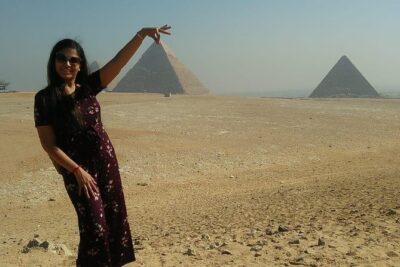
Cairo 8 Hour Private Tour of Pyramids, Egyptian Museum and Bazaar
Read our review →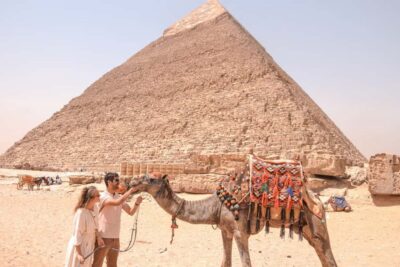
Private Pyramids, Museum & Bazaar Tour with Lunch
Read our review →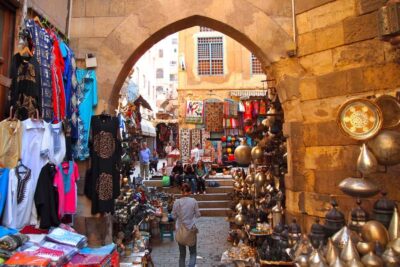
Cairo Citadel, Old Cairo and Khan El Khalili: Private Tour
Read our review →
Local Markets & Khan el Khalili Private Shopping Tour
Read our review →
Day Tour to Giza Pyramids Complex, Egyptian Museum & Bazaar
Read our review →
4-hours private Tour Islamic Mosque,Coptic Cairo &Khan el-Khalili
Read our review →
Cairo VIP Guided Tour to Khan El-Khalili Market with Lunch
Read our review →
The Egyptian Museum, the Citadel, Khan Khalil Bazaar & Old Cairo
Read our review →Browse the lists this tour appears in