
Reviewed · ABU SIMBEL TOURS
Egypt 9 Days- Cairo Pyramids and Nile Cruise from Luxor to Aswan and Abu Simbel
The big draw here is the sheer sweep of the trip. In nine days, you move from Cairo’s pyramids and bazaars to Luxor’s royal tombs, then cruise south to Aswan and make the long trip to Abu Simbel. The route gives you Egypt’s essential sights in one booking, without asking you to organize every transfer yourself.
I especially like the four-night Nile cruise, which turns a string of temple visits into a more relaxed journey, and the dependable airport, hotel, and port transfers. The main drawback is the pace. Cairo, Luxor, Edfu, Kom Ombo, Aswan, and Abu Simbel make for a full schedule, and the Abu Simbel outing is especially long.
Key points at a glance
- Giza, Saqqara, and Memphis in one day: You see Egypt’s most famous pyramid, the Step Pyramid, and the remains of its first capital.
- Four nights on a luxury Nile cruise: Full-board cruise accommodation links Luxor with Aswan and reduces the need to change hotels.
- A strong Luxor program: Karnak, Luxor Temple, the Valley of the Kings, Hatshepsut’s temple, and the Colossi of Memnon all appear.
- Abu Simbel is included: The remote temples near Lake Nasser are part of the program, not an optional extra.
- Small-group format: The group can include no more than 15 people, with an Egyptologist guide and arranged transfers.
- Mostly covered costs: Four nights in five-star hotels, four cruise nights, site admission, six lunches, eight breakfasts, and four dinners are included.
Why this Egypt route works so well
Egypt can be tiring to arrange on your own. Distances are long, airport transfers can be confusing, and major monuments often make more sense with a guide who can explain the rulers, gods, and burial customs behind them. This tour handles the main movement for you, from arrival in Cairo to the final airport transfer.
The plan also has a sensible geographic rhythm. You begin in Cairo, fly south to Luxor, travel downstream by Nile cruise, continue to Aswan, and then return to Cairo before flying home. That saves you from retracing the entire route by road.
The group limit of 15 is useful. It is small enough for a guide to explain details without addressing a huge crowd, but it is not a private tour. If you value complete control over meal times, photo stops, or the length of every visit, you may prefer a custom itinerary.
The tour is priced at $2,895 per person. That is a serious outlay, but the price includes accommodation for all eight nights, the cruise, guides, transfers, admission fees, and several meals. It offers better value for someone who wants one organized package than for someone who already has hotels and transport arranged.
Keep in mind that the meal plan is not literally every meal. Six lunches, eight breakfasts, and four dinners are listed, while tipping for guides and drivers is extra. Ask for the final hotel and cruise details before booking if room category or meal arrangements matter to you.
Other Nile cruises in Cairo people book:
- 6 Days Hypnotic Cairo & Nile Cruise Tour Package
★ 5.0 · 248 reviews - Egypt: Private 5-Day Tour, Nile Cruise, Flights & Balloon
★ 4.1 · 248 reviews - Cairo: 6-Day Egypt Tour with Flights and Nile Cruise
★ 3.8 · 177 reviews
Day 1: A soft landing in Cairo
Your arrival day is deliberately simple. An assistance representative meets you, helps with the arrival formalities, and takes you to your Cairo hotel.
There is no sightseeing scheduled, which is welcome after an international flight. Use the evening to rest, adjust to the time difference, and prepare for an early start. Since the tour includes hotel pickup and drop-off, you do not need to solve Cairo transportation immediately after landing.
Day 2: The pyramids, Saqqara, and ancient Memphis
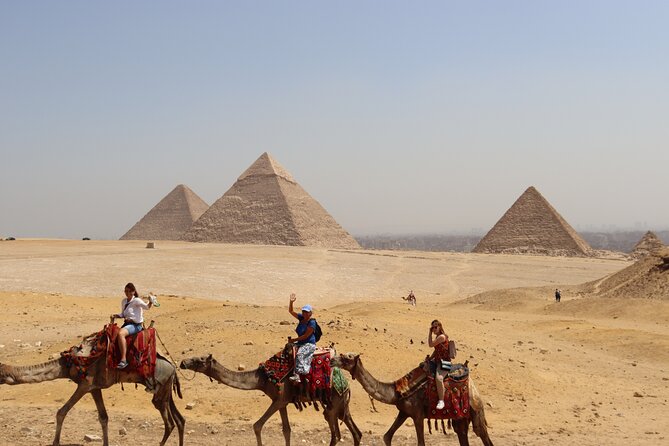
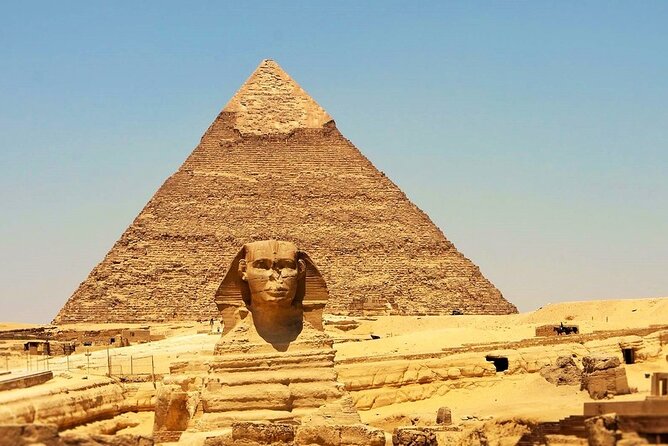
Day two packs three major archaeological areas into one program. You start at the Giza Plateau, home to the Great Pyramid and the Sphinx.
The pyramids were built during Egypt’s Old Kingdom, with the Great Pyramid dating to the period around 2590 to 2480 BC. The scale is difficult to grasp from photographs. Your guide can also help explain the difference between the large royal pyramid complex and the smaller queen pyramid included in the visit.
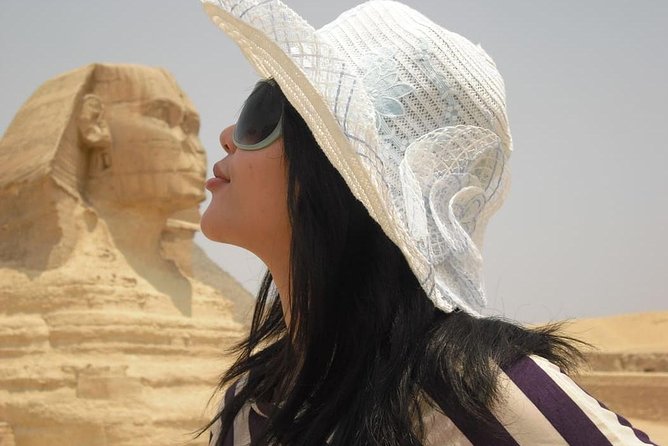
The Sphinx is nearby, carved as a lion with a human head. Allow time for photographs, but do not let the classic viewpoint become your entire Giza experience. The real reward is looking closely at the stonework and understanding how the pyramid, temples, causeways, and burial areas worked together.
Next comes Saqqara, where the Step Pyramid of Djoser rises in six stages. It is an important stop because it shows an early stage in pyramid design, built before the smooth-sided pyramids at Giza. The complex was developed under the architect Imhotep and is described as Egypt’s earliest major stone structure.
Saqqara tends to feel less instantly familiar than Giza, but it gives you a better sense of experimentation in early Egyptian building. The site is large, and three hours can pass quickly.
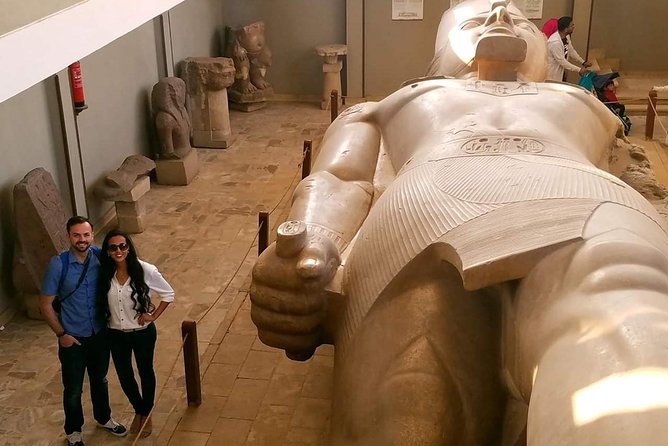
The final stop is Mit Rahina Museum, located near the ruins of Memphis. Memphis served as the first capital of Egypt and was once a major political and religious center. The museum helps connect the isolated ruins with the city that once occupied this area.
This is a demanding day, with three hours listed at Giza, three at Saqqara, and one at Memphis. Wear practical shoes and keep water close. You will be seeing a great deal of ancient stone under the Egyptian sun.
Day 3: Egyptian treasures, Cairo’s bazaar, and Coptic Cairo
The Egyptian Museum receives three hours, enough to see major pieces without trying to study all 120,000 objects in its collection. A guide is especially useful here because the displays cover thousands of years, and the connections between dynasties, burial practices, and royal power are not always obvious.
Do not expect to inspect every gallery in detail. Instead, ask your Egyptologist to focus on the objects that best explain the civilization you have been seeing at Giza and Saqqara.
After the museum, you visit Khan Al-Khalili, Cairo’s historic bazaar district. The market is a good change of pace after two days of monuments. You can browse shops, watch the flow of local commerce, and take a break from formal sightseeing. One hour is enough for an introduction, though it will feel short if you want to shop at length.
The day ends in Coptic Cairo, an area connected with Egypt’s Christian past. The program includes the Babylon Fortress, the Hanging Church, the Greek Church of St. George, and other historic sites. The area also includes the Church of Saints Sergius and Bacchus, associated with the Christian tradition of the Holy Family’s visit to Egypt.
Coptic Cairo adds needed variety. This is not only a tour of pharaohs and tombs. You also see the later religious layers that shaped Cairo.
Other Abu Simbel runs from Cairo:
- Our Exceptional 5 days Cairo, Luxor and Abu Simbel Tour Package
★ 5.0 · 212 reviews - From Cairo: 2-Day Abu Simbel & Luxor Tour
★ 3.9 · 136 reviews - 3 Night Luxor and Aswan Nile Cruise with Hot Air Balloon, Abu Simbel from Luxor
★ 5.0 · 76 reviews - Luxury Cruise from Aswan to Luxor 4 Days with Abu Simble Temple
★ 5.0 · 60 reviews
Day 4: Karnak and Luxor Temple
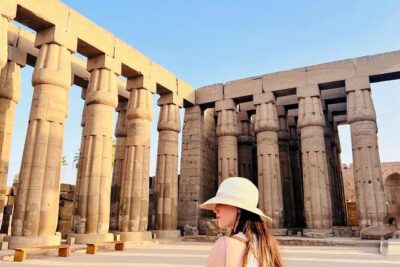
You move to Luxor for two of Egypt’s great east-bank monuments. Karnak receives three hours, which gives you time to walk through its huge complex and study its columns, courts, and inscriptions.
Karnak was dedicated mainly to Amun and developed over centuries, beginning as early as 2000 BC. It is less like a single building than a sacred city built and expanded by successive rulers. That long development is what makes the site rewarding, but it can also make it hard to follow without a guide.
Luxor Temple, scheduled for two hours, offers a more compact experience. Built around 1400 BC, it was known in ancient Egyptian as Ipet Resyt, the southern sanctuary. Its setting within modern Luxor makes the contrast between ancient monument and present-day city especially clear.
This is your first major temple day, and it sets up the cruise section of the journey. The program is full but not overloaded by additional minor stops.
Day 5: Royal tombs on Luxor’s west bank
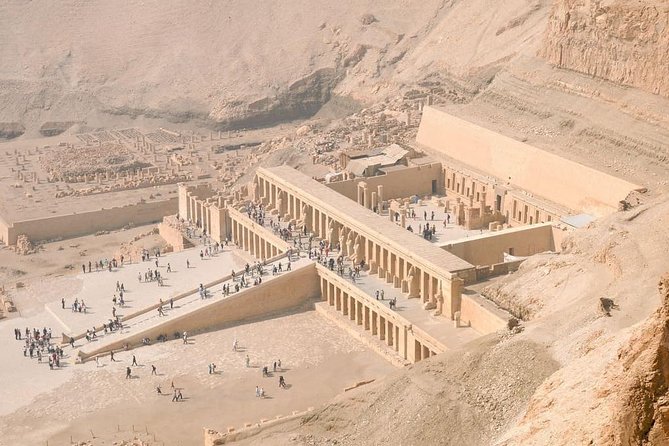
The west-bank program begins at the Valley of the Kings. The valley contains two main areas, the East Valley and West Valley, and served as a royal burial ground across generations of pharaohs.
The advertised three-hour visit matters because the tombs are not all alike. Some are compact and richly decorated, while others involve longer corridors and different burial plans. Entry rules for individual tombs can vary, so ask your guide which ones are available during your visit and whether any require an added ticket.
Hatshepsut’s mortuary temple at Deir el-Bahari follows. Its terraces sit beneath the cliffs, creating a very different visual experience from the enclosed tombs. The temple was built for the Eighteenth Dynasty ruler Hatshepsut, one of Egypt’s most notable female pharaohs.
You then stop at the Colossi of Memnon for about 40 minutes. These two huge statues of Amenhotep III have watched over the Theban Necropolis for roughly 3,400 years. This is a short stop, mainly for photographs and context, but it provides a striking finish to the west-bank circuit.
Day 6: Edfu and Kom Ombo by Nile
The Nile cruise becomes the center of the trip as you travel south toward Aswan. At Edfu, you visit the Temple of Horus, a Ptolemaic-era temple known for its preservation. Three hours allows time to study the reliefs and the large entrance structure.
The Temple of Horus is valuable because much of its layout and decoration remains clear. Even if you are beginning to feel monument fatigue, its scale and condition help make the visit memorable.
Kom Ombo follows, with two hours scheduled. This is an unusual double temple dedicated partly to Sobek, the crocodile god, and partly to other deities including Hathor and Khonsu. The divided design gives your guide a useful way to explain how different cults could share one sacred complex.
A cruise day is easier on the body than another full day of road transfers. You unpack once, watch the riverbanks pass, and reach the next monument without changing hotels each night. The cruise is listed as luxury accommodation with full board, though the wider package specifies four dinners rather than dinner every evening.
Day 7: Abu Simbel and Philae
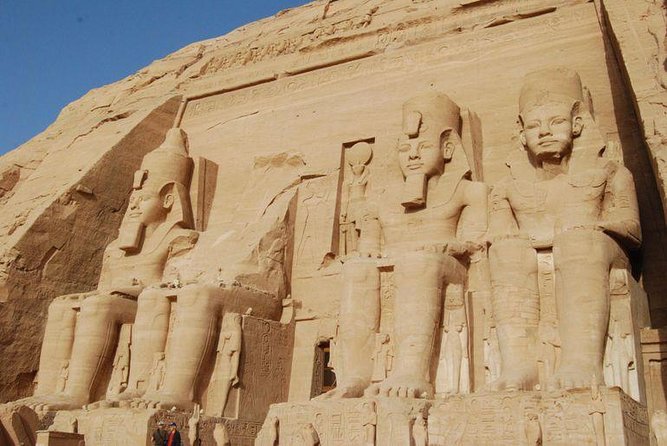
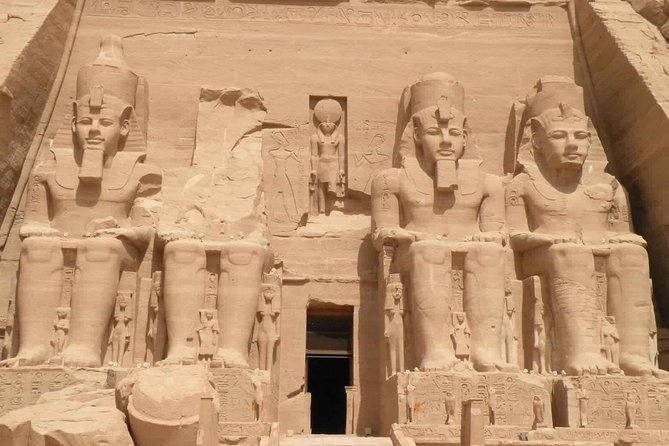
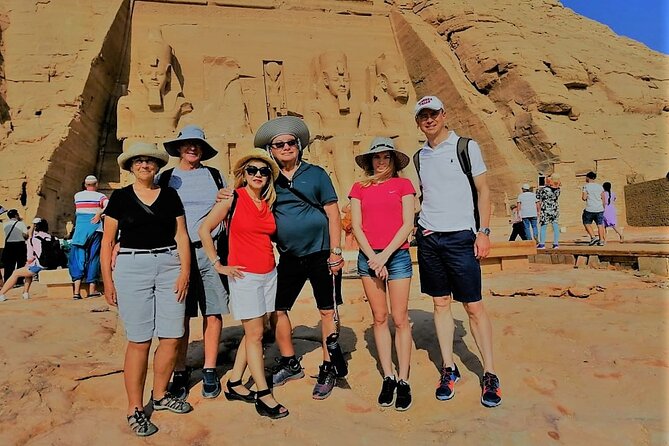
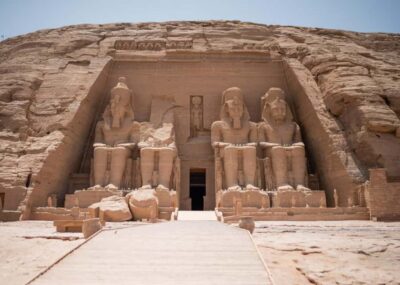
Abu Simbel is the most ambitious outing on the route. The temples sit near the border with Sudan, on the western bank of Lake Nasser, about 230 kilometers southwest of Aswan. Five hours are allotted to the complex, not including every part of the journey, so expect a long day.
The temples were carved into rock and built for Ramesses II and Queen Nefertari. The scale of the façades is the main visual shock, but take time inside as well, where the wall scenes and royal imagery carry the political message of the site.
Because Abu Simbel is far from Aswan, this stop is best for someone who wants Egypt’s major monuments rather than a slow holiday. If you dislike early starts or extended transfers, this is the part of the tour most likely to test you.
Back in the Aswan area, you visit Philae Temple for two hours. Philae originally occupied an island near the First Cataract of the Nile and was later moved to its present setting in the reservoir of the Aswan Low Dam. Its island location gives the visit a distinct feel after the desert and tombs of the previous days.
Day 8: Return to Cairo
After breakfast, you check out from the cruise and fly back to Cairo. A transfer takes you to your hotel for a final night.
This day is mainly logistical, but it protects your international departure from the uncertainty of a same-day connection from southern Egypt. You have a buffer night in Cairo rather than ending the cruise and immediately attempting the long chain of transfers needed for a flight home.
Day 9: Airport transfer and departure
The final morning is reserved for your transfer to Cairo International Airport. The transfer service is described as available around the clock, which helps when your flight leaves early or late.
The tour ends here, with no extra sightseeing planned. If your international flight is late in the day, do not assume additional activities are included. The schedule gives you transport to the airport, not a final Cairo excursion.
Guides, transfers, and group size
The strongest practical feature is the amount of organized movement. Airport, hotel, and port transfers are included, and one detailed account of the service described pickups as dependable and on time. That matters in Egypt, where a missed transfer can disrupt an entire day.
The qualified Egyptologist guide is another key part of the value. At the temples, inscriptions and artwork can look like a mass of symbols without explanation. A good guide gives you a way to read the scenes and link them to the rulers and gods you have already encountered.
Guides and drivers named in the tour feedback include Mahmoud, Remon, and Mustafa. Assignments can change, so treat those names as examples rather than a promise of who will lead your group.
The maximum group size is 15. Most people can participate, but children must travel with an adult. Tipping for guides and drivers is not included, so budget for that separately.
Who should book this nine-day Egypt tour?
I would choose this trip if you want the major ancient sites covered in a single, managed journey. It suits a first visit, especially if you prefer having transport, admission fees, hotels, and local guiding arranged together.
It is also a good match for someone who values the Nile cruise as part of the experience, not merely as transportation. The four cruise nights provide a change from Cairo traffic, long sightseeing days, and repeated hotel packing.
I would hesitate if you want long free periods, independent restaurant choices, or extensive time in each city. The schedule is efficient rather than leisurely, and Abu Simbel adds a demanding excursion to an already full week.
At $2,895, the package makes the most sense when you use nearly everything included: the hotels, cruise, transfers, guides, entries, and meals. Compare it with the combined cost of arranging four hotel nights, four cruise nights, internal flights, a southern Egypt vehicle, guides, and site tickets separately. The convenience is a substantial part of what you are paying for.
Should you book it?
Book this tour if your priority is coverage: Giza, Saqqara, Memphis, Cairo’s museum and old quarters, Luxor’s east and west banks, Edfu, Kom Ombo, Aswan, Philae, and Abu Simbel all appear within nine days.
Skip it if you want a slow Nile holiday or a highly flexible schedule. For everyone else, this is a strong first-Egypt itinerary, with excellent sightseeing coverage and useful logistical support. Just arrive ready for early mornings, long monument days, tipping costs, and the demanding Abu Simbel journey.
FAQ
How long is the Egypt tour?
The tour lasts approximately nine days, from arrival in Cairo through the final airport transfer.
Where does the tour begin?
The tour begins in Cairo, where assistance meets you on arrival and transfers you to your hotel.
How many nights are spent in hotels?
You receive four nights in five-star hotels on a bed-and-breakfast basis.
How many nights are spent on the Nile cruise?
The program includes four nights on a luxury Nile cruise with full-board service.
Which direction does the Nile cruise travel?
The cruise travels from Luxor to Aswan.
Is Abu Simbel included?
Yes. The Abu Simbel Temple Complex is scheduled on day seven, with five hours allocated to the visit.
Are entrance fees included?
Yes. Entry fees for all mentioned sites are included.
Are meals included?
The package includes eight breakfasts, six lunches, and four dinners. Tipping for guides and drivers is not included.
What is the maximum group size?
The group can have a maximum of 15 people.
What is the cancellation policy?
You can receive a full refund if you cancel at least six full days before the experience start time. Cancellation two to six full days before the start time may receive a 50 percent refund. Cancellations less than two full days before the start time are not refunded.
More Nile cruises elsewhere in Egypt
- Private Tour: 7 Nights Pyramids & Nile Cruise +Flights from Cairo
★ 4.5 · 157 reviews - 8-Day Private Tour Cairo, Aswan, Luxor and Nile Cruise Including Air Fare
★ 5.0 · 142 reviews - Egypt on Budget – 8 Days ( Cairo , Aswan , Nile Cruise – Luxor ) Sleeper Train
★ 4.5 · 121 reviews - From Cairo: 4-Day Nile Cruise to Luxor with Balloon Flight
★ 4.2 · 112 reviews
Just added in Cairo
- White Desert Overnight Camping Sharing Tour in Egypt★ 5.0 · 15 reviews
- Cairo Best 2Days tour Pyramids, Saqqara & Old Cairo★ 5.0 · 15 reviews
- Giza Pyramids with (GEM) Grand Egyptian Museum★ 5.0 · 42 reviews
- visit the pyramids of Giza + the necropolis of Saqqara + the Memphis site.★ 4.5 · 20 reviews
- Tour to Giza pyramids Memphis Sakkara and Felucca on the Nile★ 5.0 · 16 reviews
- Private Giza pyramid,sphinx, Mummification temple& inside pyramid★ 5.0 · 32 reviews
- Monastery St Simon with Cave Church and Garbage City Private Tour★ 5.0 · 15 reviews
- sunset at Giza pyramids by camels★ 5.0 · 31 reviews
Abu Simbel Tours, compared.
4-Days Nile Cruise From Aswan To Luxor including Abu Simbel and Hot Air Balloon
Read our review →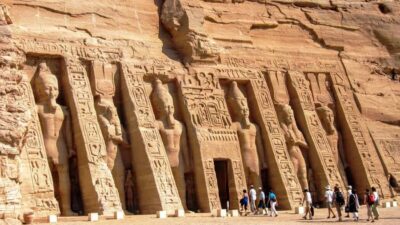
4-Day 3-Night Nile Cruise from Aswan to Luxor&Abu Simbel+Balloon
Read our review →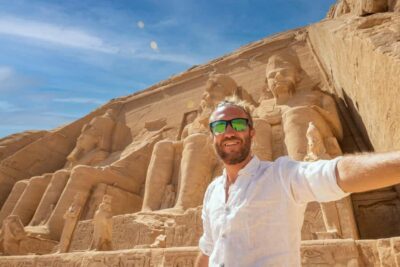
Abu Simbel Temple Private Guided Day Trip with Lunch
Read our review →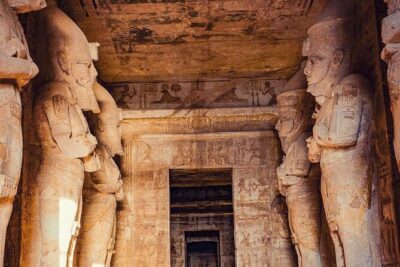
Private Day Tour to Abu Simbel Temples from Aswan
Read our review →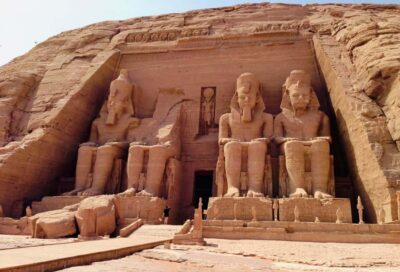
Abu Simbel Group Tour with Guide and Entrance Fees
Read our review →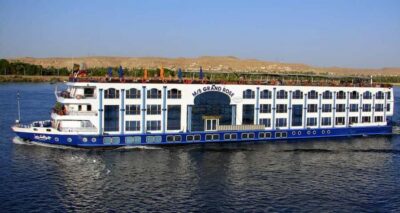
4 Days Nile Cruise Luxor Abu Simbel & Air Balloon
Read our review →Browse the lists this tour appears in