
Reviewed · TOURS IN LUXOR
From Hurghada: Luxor Private Guided Day Tour with Lunch
Luxor gives you ancient Egypt at full scale: vast temple courts, royal tombs cut into rock, and statues that have watched the Nile valley for more than 3,000 years. This private day tour packs the main sights into one long outing from Hurghada, with an Egyptologist guide to explain what you are seeing.
I like the private format, since you can personalize the pace and ask questions without keeping up with a large group. I also like that lunch, bottled water, entrance tickets, and air-conditioned transport are included. The drawback is the long road day, and the heat, sales stalls, and poorer areas along the drive may not suit everyone.
Key points to know before booking
- A full Luxor circuit in one day: Visit Luxor Temple, Karnak, the Valley of the Kings, Hatshepsut’s temple, and the Colossi of Memnon.
- Private transport from Hurghada: The trip covers about 240 kilometers each way in an air-conditioned vehicle.
- Guides make a real difference: Hani, Hosam, Mohammad Hisham, and Adel are among the guides associated with especially warm, informative service.
- The West Bank brings the biggest contrast: Royal tombs, desert cliffs, and Hatshepsut’s terraces feel very different from the grand temples on the East Bank.
- Lunch and water are included: This matters on a hot day when you have several open-air sites to cover.
- Value depends on your priorities: At $223 per person, it costs more than a basic shared outing, but it includes private transport, guide service, tickets, lunch, water, and facility fees.
The long road from Hurghada to ancient Thebes
The tour begins with pickup from your hotel or airport at the time you request. From there, you travel roughly 240 kilometers to Luxor. This is not a quick side trip. It is a serious road day, but it takes you from a Red Sea resort base to Egypt’s great ancient capital zone.
The exact drive time depends on your starting point and road conditions. From Makadi Bay, the journey took about three hours after a new highway opened, though you should still expect a full day away from your hotel. The private vehicle makes the road more manageable, since you are not sharing the ride with a large group.
I appreciate the chance to see more of Egypt beyond the resort corridor. The drive also brings a less polished view of the country, including poorer areas and ordinary communities. That can feel uncomfortable, but it is part of the real setting around Luxor, not a neatly packaged theme park.
Your guide meets you at the start and remains with you through the main visits. Guide quality matters here. Hani has been praised for being friendly and full of information, while Hosam, Mohammad Hisham, and Adel have been singled out for clear explanations and thoughtful care during the hot parts of the day.
A few more things to do in Luxor worth a look
- Luxor : Full Day Tour to Luxor West and East Banks & Lunch
★ 5.0 · 870 reviews - Luxor: Karnak Temple and Luxor Temple Tour with Lunch
★ 4.4 · 658 reviews - From Luxor: Guided Tour to East or West Banks with Lunch
★ 4.5 · 604 reviews
Luxor Temple and the story of the East Bank
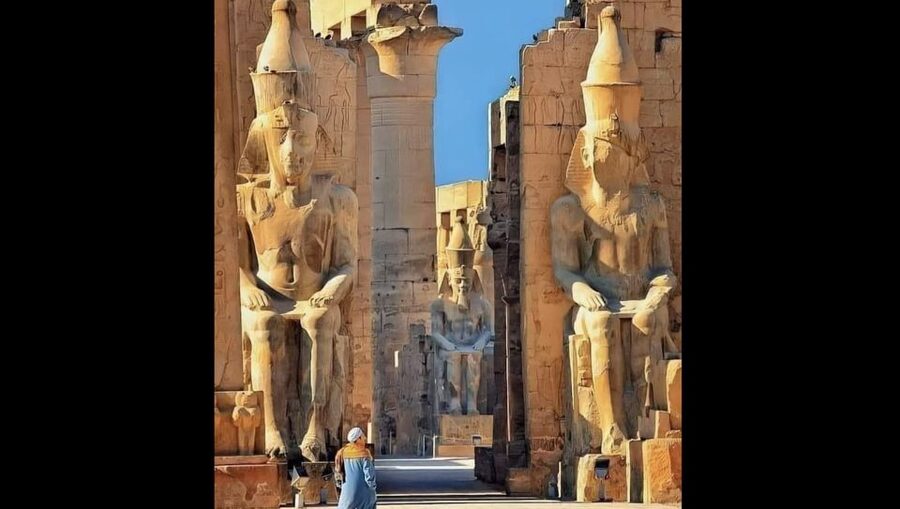
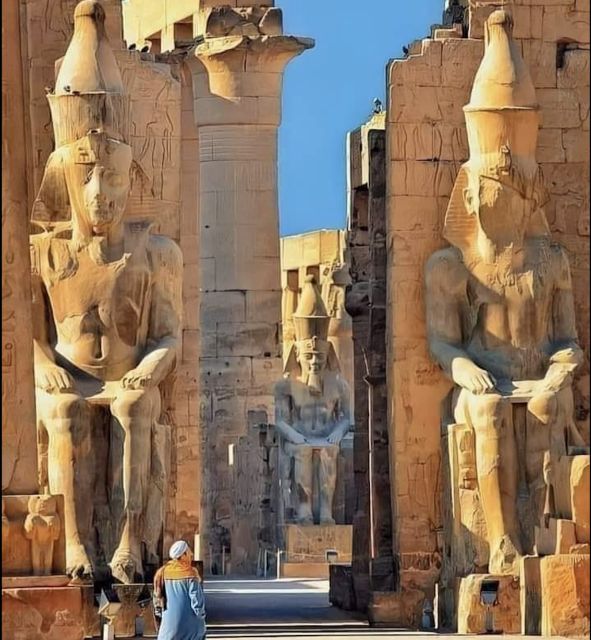
The first major stop is Luxor Temple, on the East Bank of the Nile. Construction began around 1400 BCE, and the site was known in ancient Egyptian language as Ipet Resyt, or the southern sanctuary.
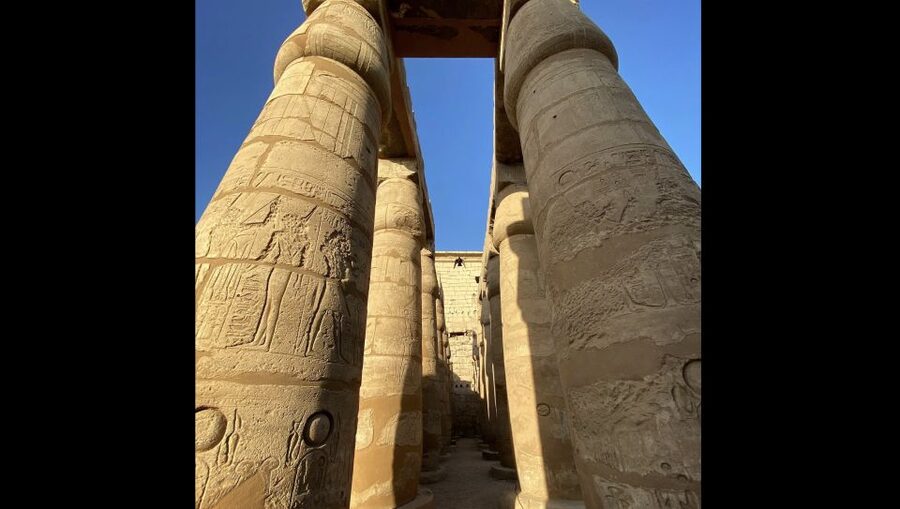
This temple is not simply a collection of old stones. Its courtyards, columns, statues, and ceremonial spaces show how Egyptian rulers added to and reused major religious centers across many centuries. Your guide can help you connect the surviving architecture with the political and religious role of the temple.
The scale is easy to appreciate even if you are not an Egypt specialist. You walk through spaces built to impress, with large columns and monumental entrances designed to make ordinary people feel small beside royal power.
Take time to look closely at the carved surfaces. The most memorable details are often not the biggest ones, but the reliefs and inscriptions that give clues about gods, rulers, rituals, and public ceremony. Without explanation, much of this can blur into stone walls. With a good guide, each section has a clearer purpose.
Because this is a private tour, you have some room to ask for extra explanation or slow down at a detail that interests you. That flexibility is one of the better reasons to choose this option over a tightly managed group excursion.
Karnak Temple, where size becomes the story
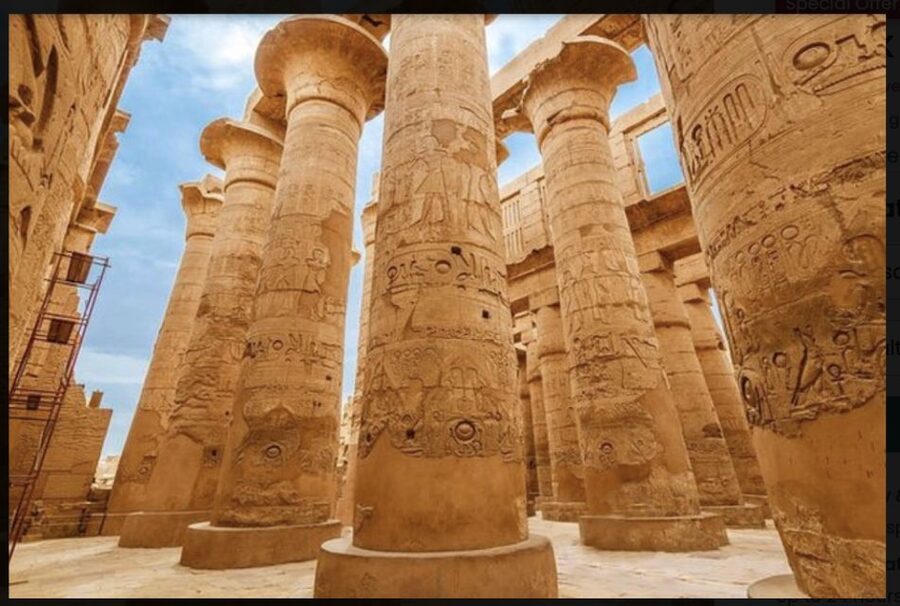
Next comes the Karnak Temple Complex, a huge collection of temples, chapels, pylons, and other buildings near Luxor. Work began under Senusret I during the Middle Kingdom, around 2000 to 1700 BC, and continued through the Ptolemaic period, from 305 to 30 BC.
Karnak is best understood as a long record of Egyptian rulers adding their mark to one important religious center. Instead of one single building from one short period, you see a huge mix of construction from different eras. That gives the site its power, but it can also make it hard to understand without help.
Your guide should point out how the complex is organized and explain why the pylons, courts, columns, and chapels matter. Look up often. Karnak’s scale only makes sense when you stand among the columns and see how much stone surrounds you.
This is also a site where the heat can catch up with you. Wear comfortable clothes, use the bottled water provided, and keep a steady pace. You do not need to race from one photo stop to the next. A private guide can usually adjust the visit better than a large group can.
The difference between Luxor Temple and Karnak is useful. Luxor feels more compact and focused. Karnak feels like an enormous religious district built up over generations. Seeing both in one day gives you a better sense of how ancient Luxor worked.
Lunch with Egyptian food between the banks
Lunch is included at an Egyptian restaurant. That gives you a proper pause between the East Bank and the West Bank sites, rather than forcing you to push through the day on snacks.
The supplied information does not name the restaurant or list the dishes, so you should not expect a fixed menu description in advance. The important practical point is that a meal is built into a demanding schedule, along with bottled water.
On a hot day, food and shade are not minor comforts. Hosam and Mohammad Hisham were especially attentive about keeping people supplied with water, food, and shade. That sort of care can make a major difference when you still have royal tombs and a large temple to see afterward.
If you have dietary needs, ask your tour provider before departure. The tour describes the meal as Egyptian cuisine, but it does not provide specific options.
Same base, a different sort of day:
- Hurghada: Luxor Valley of the Kings & Tutankhamun Tomb Trip
★ 4.7 · 13,208 reviews - Luxor Day Trip from Hurghada Small Group & Tutankhamun Tomb
★ 4.8 · 5,366 reviews - Hot Air Balloon Ride in Luxor Egypt with Transfers Included
★ 5.0 · 4,319 reviews - Luxor: Shared Full-Day Tour to Luxor West and East Banks
★ 4.5 · 1,812 reviews
The Valley of the Kings and its painted tombs
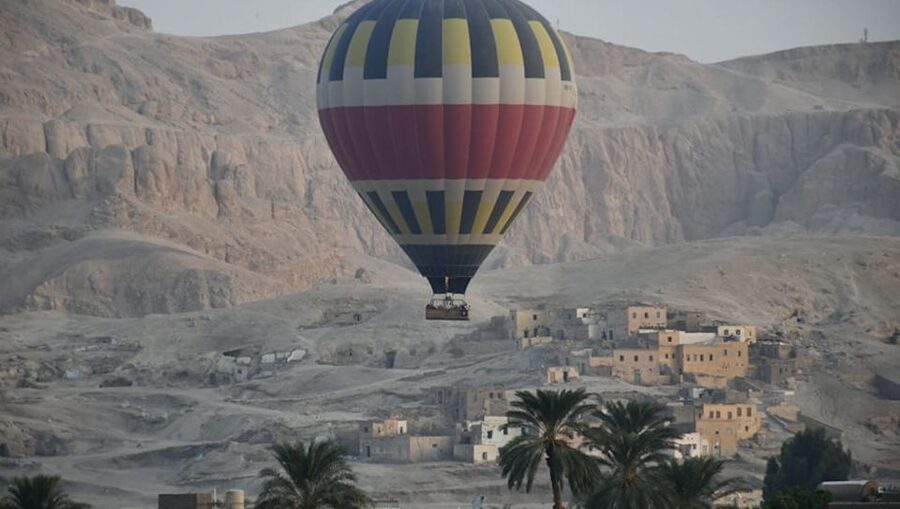
After lunch, the tour crosses to the West Bank and continues to the Valley of the Kings. The valley, also called the Valley of the Gates of the Kings, contains rock-cut tombs made over nearly 500 years, from the 16th to the 11th century BC.
This stop changes the mood completely. At Karnak, royal power is displayed in huge open structures. In the Valley of the Kings, the focus moves underground, into tombs cut into the dry hills for pharaohs and powerful nobles of the New Kingdom.
The entrance ticket to the mentioned sites is included, but the supplied details do not say how many individual tombs are included or whether special tomb tickets cost extra. Ask your guide what is covered before entering if a particular tomb matters to you.
Inside, you may find painted corridors and burial chambers with scenes and symbols tied to the afterlife. The spaces can feel narrow and enclosed, especially after time outside in the sun. Comfortable shoes and light, practical clothing will make the visit easier.
The Valley is one of the places where an Egyptologist guide adds real value. Names, dates, symbols, and royal succession can become a jumble. A good explanation gives shape to what you are seeing, rather than leaving you with a series of colorful walls and hard-to-pronounce names.
Keep your expectations sensible. You are seeing a major ancient cemetery, not a quiet private ruin. The site is famous, and the approach can include stalls and vendors. One part of the experience includes an uncomfortable amount of sales pressure around the sights, so stay polite, firm, and focused on your visit.
Hatshepsut’s temple beneath the cliffs
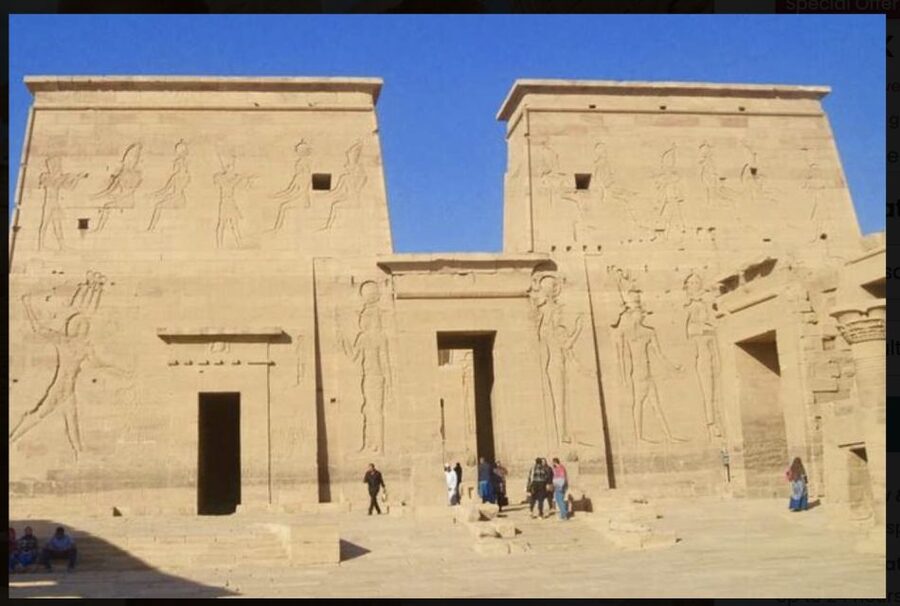
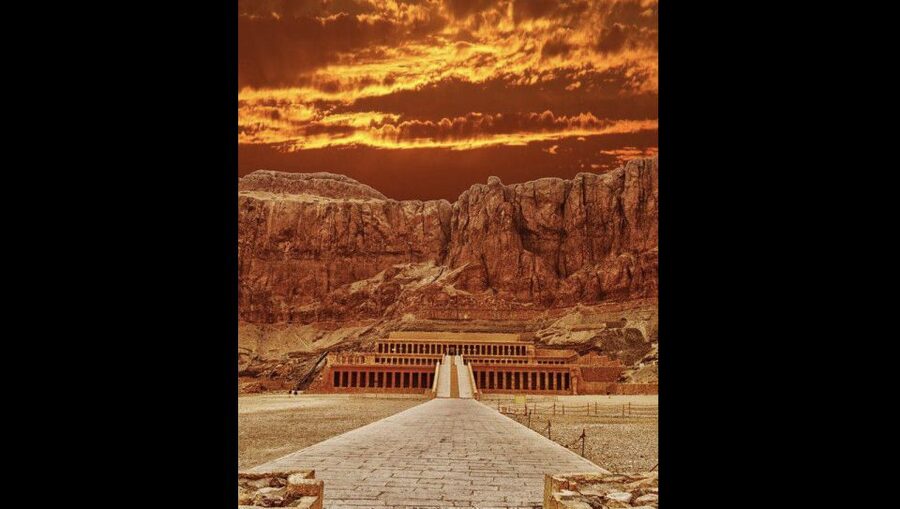
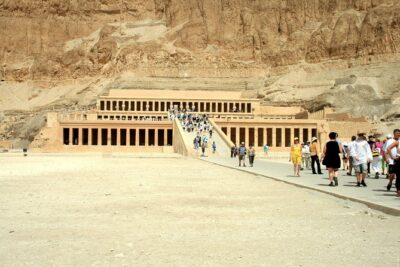
The Mortuary Temple of Hatshepsut, also called Djeser-Djeseru, sits beneath the cliffs at Deir el-Bahari on the West Bank. It was built for the Eighteenth Dynasty pharaoh Hatshepsut, who died in 1458 BC.
Its setting gives it a strong visual identity. The temple rises in terraces beneath the rock face, creating a clear contrast with the enclosed tombs in the Valley of the Kings. The wide stone levels and cliff backdrop also make this one of the easiest stops to remember later.
Hatshepsut’s story adds another layer. She ruled as pharaoh during the Eighteenth Dynasty, and the temple was designed to honor her after death. Your guide can explain the political setting and the purpose of a mortuary temple, which was part of the wider system of royal worship and remembrance.
Expect a lot of sun and open space here. The site offers little relief from the heat, so bring water, wear comfortable shoes, and take shade whenever it is available. The tour’s air-conditioned vehicle becomes especially welcome after this visit.
This is another point where a private itinerary helps. If you want to spend more time understanding the terraces, reliefs, or the story of Hatshepsut, you can ask. Julia’s experience particularly praised the ability to personalize the tour, and that is one of the clearest benefits of booking privately.
The Colossi of Memnon as a final stop
The final sightseeing stop is the Colossi of Memnon, two massive stone statues of Amenhotep III. They have stood in the Theban Necropolis west of the Nile since about 1350 BCE.
The statues are a quick visit compared with Karnak or the Valley of the Kings, but their size makes them worthwhile. They give you one last reminder of how much ancient Egypt depended on monumental scale.
Amenhotep III ruled during the Eighteenth Dynasty. The statues once formed part of a larger mortuary setting, but what remains today is still striking. Their worn surfaces and damaged surroundings tell a different story from the carefully preserved reliefs inside the tombs.
This stop also works well at the end of the route because it does not require another long, complex visit. You can see the statues, hear their story, take a few photographs, and then begin the return drive to your Hurghada hotel or airport.
What the $223 price really covers
The listed price is $223 per person. That is not a bargain-basement day trip, but it includes several costs that can add up: private transportation, an air-conditioned vehicle, an Egyptologist guide, entry tickets to all mentioned sites, lunch, bottled water, landing and facility fees.
The value is strongest for two or more people who want control over the pace and do not want to share every stop with a big group. You are paying for the long private road transfer as well as the sightseeing. If you mainly want the lowest possible price, a shared trip may look better, but it will not offer the same flexibility.
For a couple, family, or small private party, the package is easier to justify. You get the principal Luxor sights in one carefully arranged day, and you do not need to arrange separate transport, tickets, food, and guide service.
The guide is a major part of the value. Hani, Hosam, Mohammad Hisham, and Adel have received particularly positive attention for information, company, flexibility, and practical care. The best version of this tour is not simply a driver taking you between monuments. It is a guided explanation of why each place matters.
Heat, stalls, and the practical side of the day
Bring comfortable shoes and comfortable clothing. That advice sounds basic, but the itinerary includes extensive walking at open-air temple sites, rougher ground, stairs or sloping paths, and exposed areas.
Bottled water is included, but you should still use it steadily. Luxor’s heat can turn a fascinating visit into an endurance test if you wait until you feel thirsty. Shade is especially valuable at Hatshepsut’s temple, Karnak, and the open areas around the West Bank sites.
You should also prepare for a busy commercial side to the sightseeing. Stalls around the monuments can feel messy and distracting. Keep your attention on your guide and the site, and remember that you can decline purchases without getting drawn into a long exchange.
The road journey is another consideration. This tour is ideal if Luxor is high on your list and you are willing to give up a full day from your Hurghada stay. It is less suitable if you want a slow beach holiday or dislike long drives.
The provider lists English, Spanish, German, Italian, and Arabic as available languages. Confirm the language you need when booking, since the guide’s ability to explain the details clearly will shape the whole day.
Booking can be made with payment later, and cancellation is allowed up to 24 hours in advance for a full refund. Those terms are useful if your schedule may change, though you should still check the conditions at the time of booking.
Who should choose this private Luxor day tour?
I would choose this tour if you have limited time in Egypt and want the main Luxor sights handled in one private day. It suits couples, families, and small groups who value a flexible schedule more than the lowest price.
It is also a good fit if you want context, not just transport. Karnak, Luxor Temple, the Valley of the Kings, Hatshepsut’s temple, and the Colossi of Memnon all reward explanation. A strong Egyptologist guide can turn a long list of monuments into a connected story.
I would think twice if you dislike long road transfers, intense heat, or aggressive stalls near famous sites. The day is packed, and the drive from Hurghada takes real energy.
For most people, the deciding question is simple: do you want to see Luxor badly enough to trade one long day for it? If the answer is yes, the private format, included lunch, entrance tickets, water, and guide service make the $223 price reasonable. If you can spend more time in Egypt, staying in Luxor would be gentler. If you cannot, this is an efficient way to reach the ancient capital and see its essential sites.
FAQ
Where does the tour start and finish?
Pickup is provided from your hotel or airport in Hurghada at a requested time. At the end of the tour, you are driven back to your Hurghada hotel or airport.
How far is Luxor from Hurghada?
The drive is about 240 kilometers each way. From Makadi Bay, the journey took about three hours after a new highway opened.
Which sites are included?
The tour includes Luxor Temple, Karnak Temple Complex, the Valley of the Kings, the Mortuary Temple of Hatshepsut, and the Colossi of Memnon.
Is the transportation private?
Yes. Private transportation in an air-conditioned vehicle is included.
Is lunch included?
Yes. Lunch at an Egyptian restaurant and bottled water are included.
Are entrance tickets included?
Yes. Entry tickets to all the mentioned sites are included, along with landing and facility fees.
Which languages are available?
The listed guide languages are English, Spanish, German, Italian, and Arabic.
Can I cancel the tour or pay later?
You can reserve and pay later. Cancellation up to 24 hours in advance qualifies for a full refund.
Just added in Luxor
- Private Full Day West Bank: Valley of kings Hatshepsut &More★ 4.9 · 40 reviews
- Luxor: Karnak and Luxor Temples Private Half-Day Tour★ 4.7 · 27 reviews
- From Luxor: 3-Day Nile Cruise to Aswan with Private Guide★ 4.2 · 147 reviews
- Marsa Alam : Over Day Tour to Luxor & Balloon Ride & Felucca★ 4.4 · 29 reviews
- Marsa Alam: Snorkeling with Sea Turtles Marsa Mubarak★ 4.9 · 26 reviews
- Luxor: Habu, Deir El Medina, Shared tour, Guide, and Lunch★ 4.7 · 21 reviews
- Luxor: Valley of The Kings and Hatshepsut Temple Day Trip★ 4.3 · 55 reviews
- Luxor: Skip-the-Line Valley of the Kings Tombs QR Ticket★ 4.8 · 17 reviews
Tours in Luxor, compared.
Luxor Valley of the Kings & Tutankhamun Tomb Trip
Read our review →
Luxor Day Trip from Hurghada Small Group & Tutankhamun Tomb
Read our review →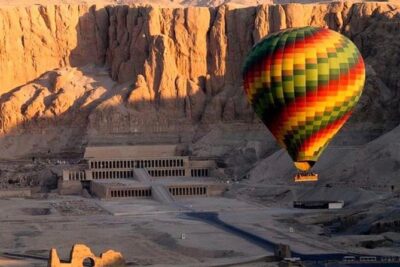
Hot Air Balloon Ride in Luxor Egypt with Transfers Included
Read our review →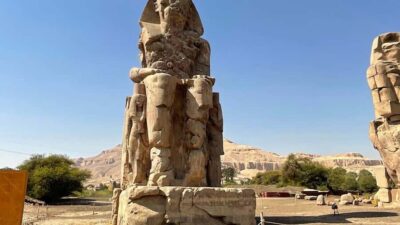
Shared Full-Day Tour to Luxor West and East Banks
Read our review →
Luxor Day Tour: Valley of Kings & Queens & Hatchepsut Temples
Read our review →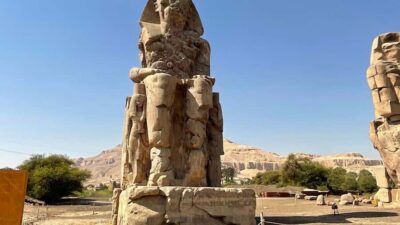
Valley of the Kings and Hatshepsut Temple Day Tour
Read our review →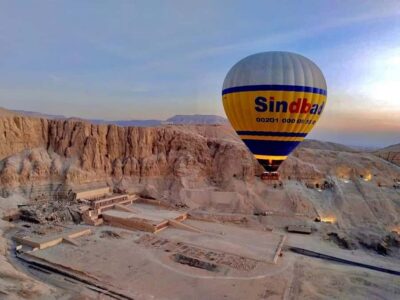
2-Day Luxor Tour with Hotel, Balloon, & Boat Ride
Read our review →Browse the lists this tour appears in