
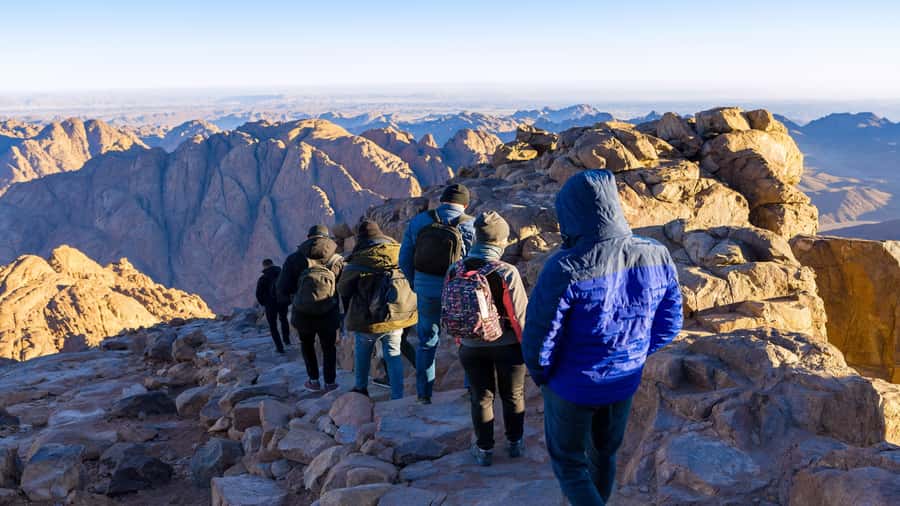
Reviewed · MOUNT SINAI & ST CATHERINE TOURS
From Sharm: Mount Moses Trekking, Sunrise & Monastery Visit
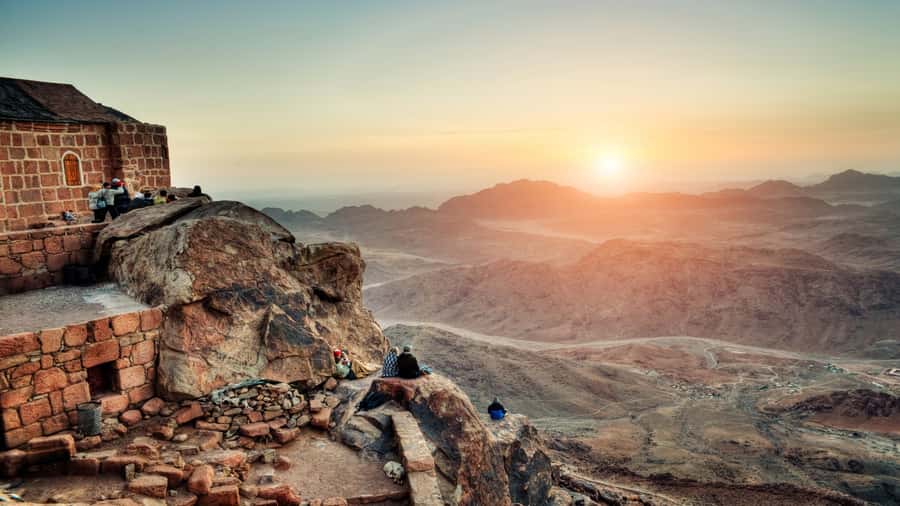
Mount Sinai is at its best before dawn. You climb through the darkness, under stars, toward a summit tied to the story of Moses and the Ten Commandments. Then the sun spills across the Sinai mountains. The sunrise is the main event, and it earns the early start.
I like the patient Bedouin support on the mountain and the chance to pair a physical challenge with St. Catherine’s Monastery. Guides such as Ashrof, Ibrahim, Amr, and Ali have been praised for their warmth, language skills, and care. The drawback is simple: this is a very long, tiring day, with a cramped transport segment possible and little time or energy left after the climb.
Key points to know before booking
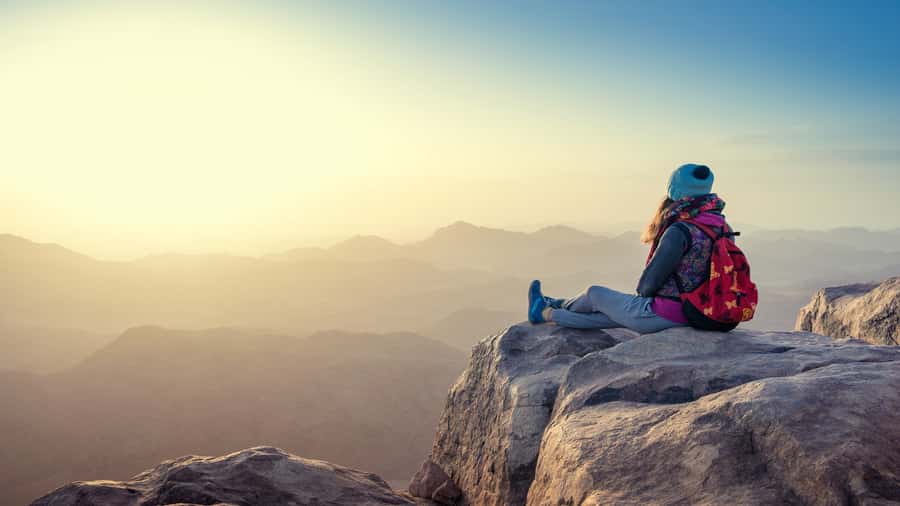
- The climb starts at night: Plan on roughly 2 to 3 hours uphill, followed by about 2 hours down.
- The final 750 steps are the hardest part: They are uneven stones and boulders, not a neat staircase.
- The summit can be bitterly cold: Bring layers, gloves, a hat, and money for a rented blanket.
- The sunrise views are exceptional: You look over wide desert mountains as daylight slowly arrives.
- St. Catherine’s Monastery adds real historical value: The visit includes the church, old manuscripts, icons, and the area linked with the burning bush.
- The $50 price is strong value: Transport, guides, water, and hotel pickup are included, but food, drinks, toilets, blankets, and personal costs are extra.
Leaving Sharm El Sheikh after dark
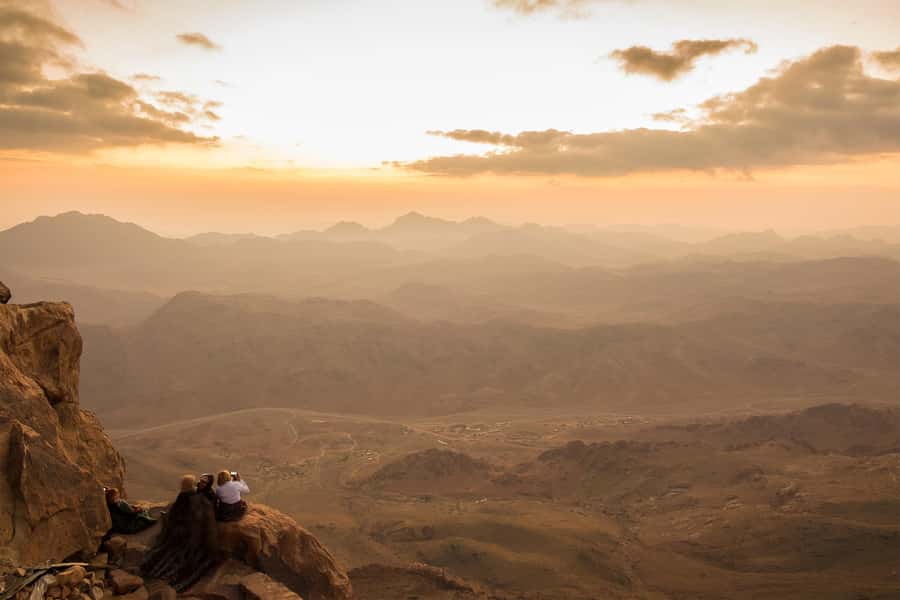
Pickup usually takes place between 8:00 and 9:00 PM, with the exact time confirmed on the day. You wait at your hotel’s main gate along the highway, not at the reception desk. That detail matters, since a driver may not come looking inside the hotel.
The journey to Mount Sinai takes about four hours. In practice, the full road operation can take longer because of hotel pickups, vehicle changes, police checks, and security procedures. Some departures use a smaller vehicle first, followed by a larger air-conditioned coach.
Transport is the least predictable part of the experience. Some departures run smoothly, while others involve long waits, crowded buses, limited legroom, or an uncomfortable folding seat in the aisle. One group had 17 people in a minibus before transferring to a larger coach. Most of the positive feedback centers on the mountain guides rather than the road journey, so set your expectations accordingly.
The drive is not a sightseeing tour. It is a necessary night transfer that gets you to the trailhead. Take a small travel pillow if you have room, keep water and warm layers within reach, and do not count on a full night of sleep.
Other mountain and monastery trips from Sharm El Sheikh:
- Sharm El Sheikh: Mount Sinai & St. Catherine Monastery Tour
★ 4.2 · 237 reviews - Mount Sinai Climb And St Catherine Monastery From Sharm El Sheikh
★ 4.5 · 177 reviews - Mount Sinai Climb and St Catherine Tour from Sharm El Sheikh
★ 4.0 · 71 reviews
The Mount Sinai climb begins in darkness
The walking distance is roughly 7 kilometers each way, although the exact route and timing can vary. You begin on a steep, uneven path. It is dark, dusty, and shared with camels, so a torch or headlamp is useful. A phone flashlight works in a pinch, but it leaves both hands less free and gives a narrow beam.
The group normally moves at a slow pace with regular breaks. Small stops along the way sell hot drinks, water, snacks, and sometimes warm clothing. Toilets also appear along the route, but they are basic and usually cost around 5 to 20 Egyptian pounds. Carry tissues and small notes or coins.
This is not a technical climb, but it is a serious physical effort. The combination of an overnight drive, no proper sleep, cold air, darkness, and sustained uphill walking makes it feel harder than the distance suggests. People who exercise regularly but do little hiking have found the climb more demanding than expected.
The guide at the base camp may explain the route and general history, but the Bedouin guide assists you during the actual trek. This arrangement is worth understanding before you book. The Bedouin guides know the trail, manage the pace, point out hazards, and help keep the group together. Several guides have been praised for encouragement and for checking on people who are struggling.
Some accounts describe a brisk pace, while others describe a steady climb with many stops. Your experience can depend on the group and the guide assigned that day. If you need a slower pace, say so early rather than waiting until you are exhausted.
Camels can help, but they do not reach the summit
A camel option may be available during the first section of the climb. It can help if you have a medical limitation or cannot manage the initial steep trail, but it does not take you all the way to the top.
You must dismount before the final 750 steps and complete that section on foot. The operator does not recommend relying on the camel unless you genuinely need it. Prices reported for the ride range from about 650 Egyptian pounds to roughly $25, depending on the trip and negotiation. Treat this as an extra cost, not part of the $50 tour price.
The camel route also means you are sitting above an uneven trail in darkness, so it is not automatically more comfortable. If you have shortness of breath, bone pain, or another condition that makes steep walking unsafe, this trip is not a good choice. It is also not suitable for children under 14, pregnant women, wheelchair users, or elderly people who struggle with extended exertion.
The final 750 steps require patience
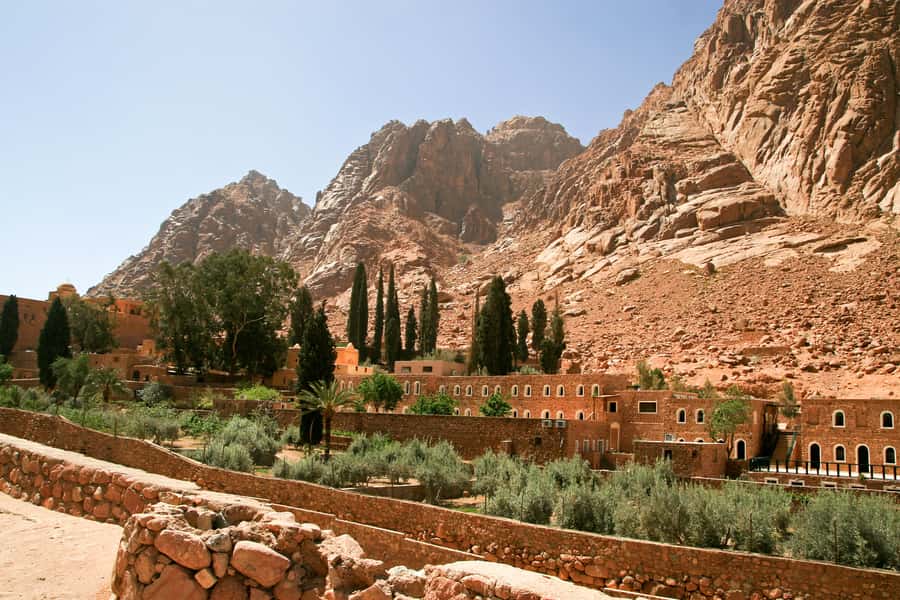
The last section is where many people feel the real strain. The so-called steps are irregular stones of different heights, with some boulders requiring careful foot placement. It is a short section in distance, but it can take more effort than the longer path below.
Wear proper hiking shoes or sturdy trainers with a good grip. Flip-flops are a poor idea. You will want both hands free, so pack lightly and keep your phone, water, and warm clothing in a small backpack.
Most groups arrive at the summit before sunrise. That early arrival gives you time to find a place, catch your breath, and wait for the light. It also means you may sit still for an hour or two in freezing wind. The wait is part of the experience, but it is not comfortable without enough clothing.
Same base, a different sort of day:
- Sharm El-Sheikh: Ultimate ATV Quad, Stargazing & BBQ Dinner
★ 4.7 · 4,084 reviews - Sharm El-Sheikh: Jeep Adventure to Blue Hole, Canyon & Dahab
★ 4.7 · 3,759 reviews - From Sharm: White Island and Ras Mohamed Snorkeling Trip
★ 4.7 · 3,194 reviews - Sharm El Sheikh: White Island and Ras Mohamed Cruise Adventure
★ 4.5 · 1,824 reviews
Sunrise from 2,285 meters
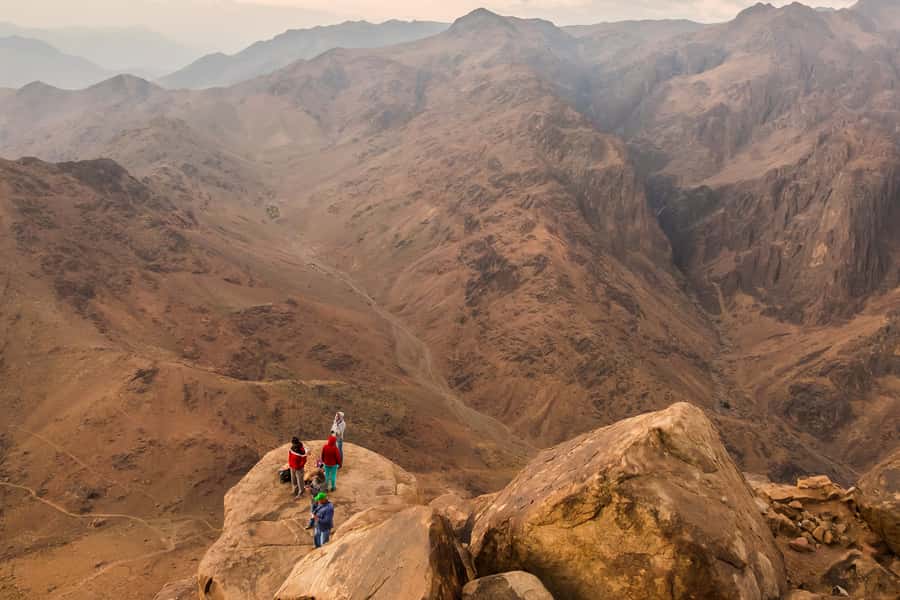
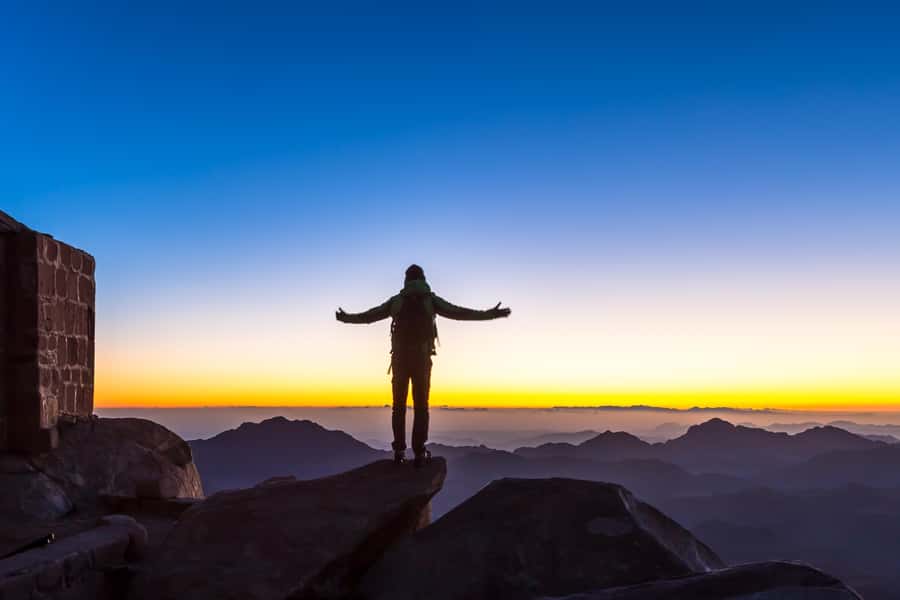
Mount Sinai rises to about 2,285 meters. From the top, the view opens across layered ridges and broad desert valleys. Before dawn, the scene is mostly darkness, scattered lights, and stars. Then the mountain edges turn grey, pink, and gold as the sun appears.
This is the moment that makes the long night worthwhile. You can take photographs, pray, or simply sit quietly while the light reaches the surrounding peaks. The religious meaning is central to the experience, but you do not need to be on a pilgrimage to appreciate the setting and the effort involved.
The cold deserves more attention than many people expect. In winter, temperatures at the summit can fall below freezing, with reports of around minus 2 to minus 10 degrees Celsius. Even in warmer months, wind can make the summit feel cold while you wait.
Bring:
- Thermal or long-sleeved layers
- A fleece or sweater
- A warm jacket and windproof outer layer
- Hat, gloves, and thick socks
- Hiking shoes
- Headlamp or strong flashlight
- Water and food
- Small cash in Egyptian pounds, euros, or US dollars
Blankets can usually be rented near the summit. They are not essential for everyone, but they make the waiting period much easier. Carrying a compact sit mat would also be useful, though it is not listed as a tour inclusion.
The descent is easier, but not easy
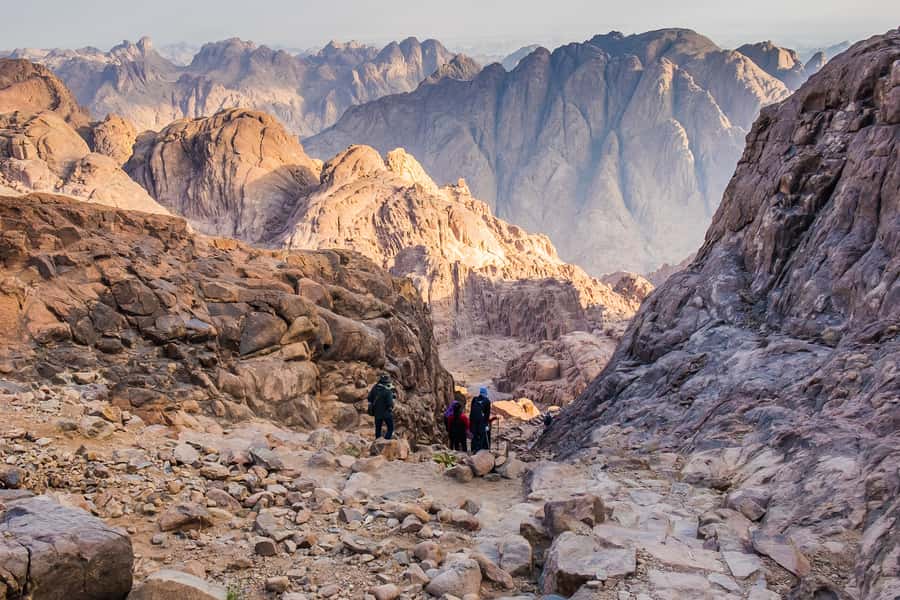
After sunrise, you walk down the same general route. The descent takes about two hours, though tired legs can make it slower. Daylight helps you see the stones, camel droppings, and uneven ground that were hidden on the way up.
Going down is generally less demanding on your breathing, but it places stress on knees and ankles. Use walking poles if you already own them, though they are not supplied. Take your time on the final steps and do not rush simply because the summit is behind you.
The trail can become crowded. Camels have priority on narrow sections, and you may need to move aside. There can also be children asking for money or selling items along the route. Carry small notes if you plan to buy drinks or snacks, but do not feel pressured to purchase anything.
Once back at the base, you have time to rest and eat breakfast. Breakfast is not automatically supplied as part of the tour, so order a breakfast box from your hotel before leaving Sharm and collect it before pickup. This is one of the most useful preparations you can make.
St. Catherine’s Monastery after the climb
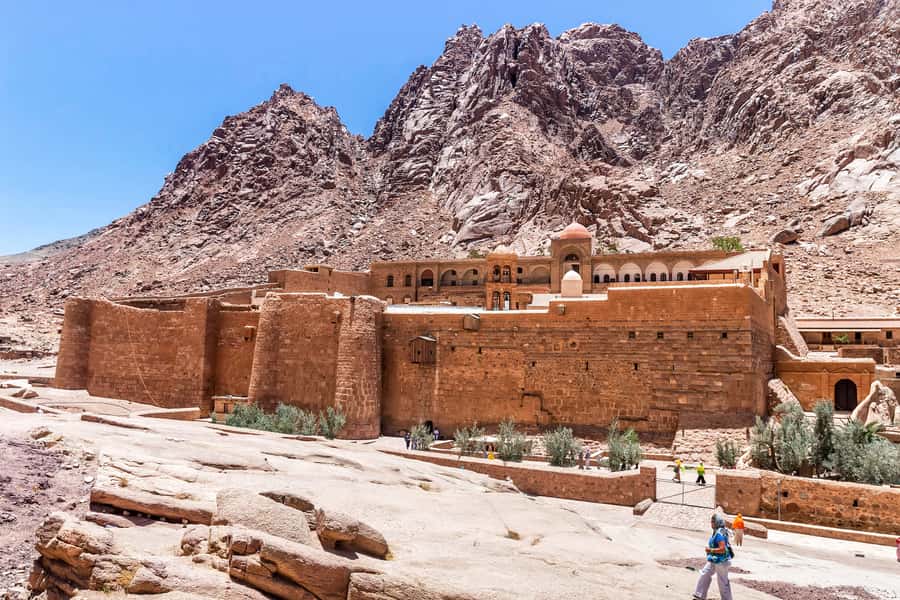
The monastery visit follows the mountain. The timing can feel awkward because you have been awake all night and walked for several hours. Some people have enough energy to enjoy it, while others sit outside and rest. That is a genuine limitation of combining the two attractions in one overnight outing.
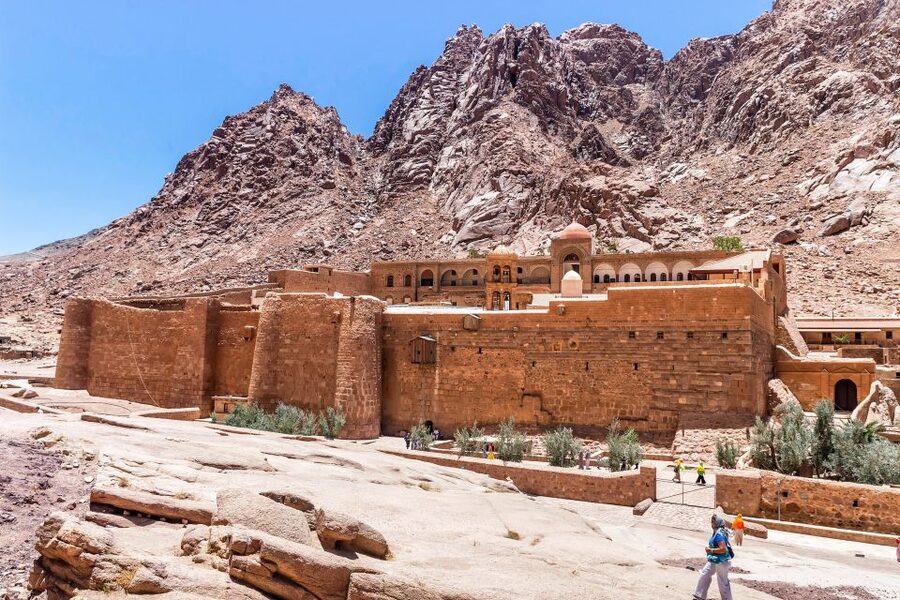
St. Catherine’s Monastery is a UNESCO World Heritage Site and one of the oldest functioning Christian monasteries in the world. The site includes a sixth-century church beside the traditional location of the burning bush. The monastery’s museum and library display old manuscripts, religious icons, and other historic objects.
The visit gives meaning to the mountain beyond the physical challenge. You move from the open, rugged setting associated with Moses to a protected religious center that has served worshippers for centuries. Guides explain the main sites and religious traditions, though the time inside can be short.
Opening days are important. The monastery closes on Sundays and on certain Christian holidays, with dates that can vary. Confirm that it will be open on your planned date. If the monastery is closed, the tour will lose one of its two main parts.
The guide accompanying the bus may provide historical context in English, Russian, or Arabic. The mountain section is handled by a Bedouin guide, so do not expect one person to lead every part of the day. This split works well practically, since the local mountain guide handles the trail while the Egyptologist guide focuses on the religious site.
What the $50 price really covers
At $50 per person, the tour offers a lot for a 16 to 17-hour day. The price includes hotel pickup and drop-off in Sharm El Sheikh, air-conditioned transport, water, an Egyptologist guide, and a Bedouin mountain guide.
You are also getting access to a difficult-to-arrange sunrise climb and a monastery visit without having to organize transport, permits, local assistance, or the overnight timing yourself. For many people, that is better value than arranging separate transfers and guides.
The price does not cover extra drinks, food, camel rides, toilet fees, blankets, or personal spending. Drinks and snacks along the trail can cost more than expected, so take your own water and food. Water is included, but one bottle may not be enough for the full climb and return.
The main compromise is comfort. A crowded vehicle or a long wait during hotel pickups can reduce the value for anyone who dislikes group transport. Still, the included guide support and complicated logistics make the price reasonable, especially for a first visit to Sinai.
Free cancellation is available up to 24 hours before departure, and you can reserve now and pay later. Pickup instructions should be read carefully because the meeting point is at the hotel’s main gate along the highway.
Who should book this Mount Sinai tour?
I would choose this trip if you want a demanding cultural experience rather than a relaxed day out. It suits people with a reasonable level of fitness who can handle several hours of night walking, uneven stones, cold exposure, and very little sleep.
It is also a good choice if the religious importance of Mount Sinai interests you. The sunrise is beautiful on its own, but the experience has extra weight when you understand the connection with Moses, the Ten Commandments, the burning bush, and St. Catherine’s long Christian tradition.
I would not choose it if you need a comfortable coach ride, a flexible personal pace, or a full night’s sleep. I would also avoid it if you have breathing trouble, significant joint or bone pain, or doubts about managing the final steps. The camel can help only for part of the ascent and does not remove the hardest section.
Should you book it?
Book this Mount Sinai sunrise tour if you can accept the hard climb and the exhausting schedule. The sunrise, the Bedouin guidance, and the visit to St. Catherine’s Monastery create an experience that feels more meaningful than a standard sightseeing trip.
Prepare properly: order your hotel breakfast box, wear hiking shoes, bring a headlamp, carry warm layers and small cash, and keep food and water in your daypack. If you do that, the $50 cost is a fair deal for a full day of transport, guiding, mountain support, and two major Sinai sights.
FAQ
How long does the Mount Sinai tour take?
The tour lasts about 16 to 17 hours, including pickup and drop-off in Sharm El Sheikh. Security checkpoints, hotel pickups, and transport changes can extend the day.
How difficult is the Mount Sinai climb?
The climb is demanding rather than technical. The uphill walk takes about 2 to 3 hours, followed by roughly 750 uneven steps near the summit. The descent takes around 2 hours.
How cold is it at the summit?
The summit can be very cold and windy, especially in winter. Temperatures reported for winter departures range from around minus 2 to minus 10 degrees Celsius. Bring several warm layers, gloves, a hat, and a jacket. Blankets can be rented near the top.
Can I ride a camel to the summit?
No. A camel may be available for the first section of the climb, but you must walk the final 750 steps and return on foot. The camel ride costs extra and is not recommended unless you need assistance.
Is breakfast included?
No. You should pre-order a breakfast box from your hotel and collect it before the night pickup. Water is included, but extra drinks and food are not.
Is St. Catherine’s Monastery open every day?
The monastery is closed on Sundays and on listed Christian holidays. Opening dates may change, so check availability for your visit date before booking.
Just added in Sharm El Sheikh
- Horseback Riding with Pickup and Drop-off from Sharm El Sheikh★ 5.0 · 59 reviews
- Sharm El Sheikh Horseback Riding with Pickup and Drop-off★ 5.0 · 92 reviews
- Horseback Riding with Pickup and Drop-off from Sharm El Sheikh★ 5.0 · 122 reviews
- Mount Sinai Climb and St Catherine Tour from Sharm El Sheikh★ 4.0 · 71 reviews
- Mount Sinai Climb And St Catherine Monastery From Sharm El Sheikh★ 4.5 · 177 reviews
- Private SSH Airport Transfer Services★ 5.0 · 177 reviews
- Sharm El Sheikh Guided City Sightseeing Tour★ 5.0 · 171 reviews
- From Sharm El Sheikh: Cairo Pyramids Full-Day Tour by Plane★ 4.2 · 192 reviews
Mount Sinai & St Catherine Tours, compared.
Mount Sinai Climb And St Catherine Monastery From Sharm El Sheikh
Read our review →Browse the lists this tour appears in