
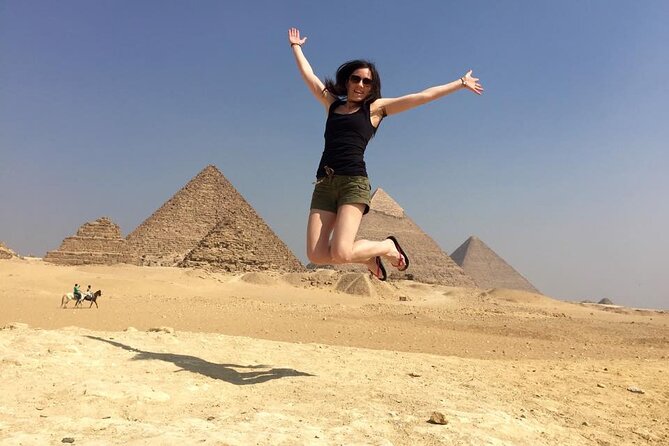
Reviewed · GIZA PYRAMIDS & SPHINX TOURS
Giza pyramids, Sphinx, and the big museumum
The most unusual feature here is the full pyramid story. Instead of stopping at Giza, you follow royal tomb design from Djoser’s Step Pyramid to Snefru’s Bent and Red pyramids, then finish with Cheops, the Sphinx, and Cairo’s big museum. It is a long day, but the route gives you a useful way to see how pyramid building changed.
I like the private transport and hotel pickup, which save you from sorting out Cairo traffic on your own. I also like the chance to enter more than one pyramid, including the Red Pyramid and, when available, the pyramid of Cheops. The main drawback is that the $40 price does not include entrance fees or tips, so your final cost will be higher.
Key points at a glance
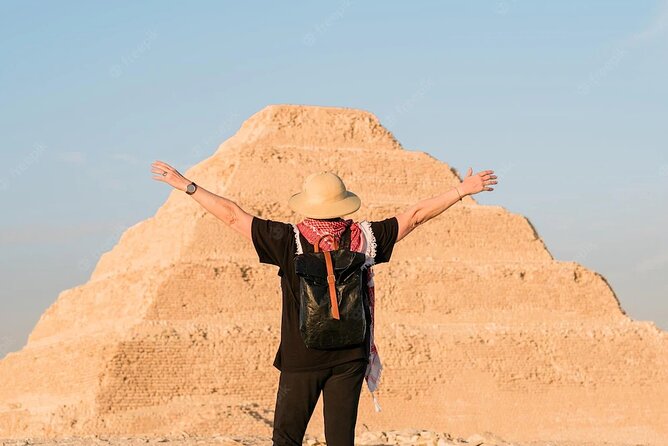
- See three stages of pyramid design: Djoser’s Step Pyramid, Snefru’s Bent Pyramid, and the Red Pyramid show how builders moved toward the smooth-sided form at Giza.
- Spend about eight hours on a private tour: Your group has its own vehicle, guide, hotel pickup, and hotel drop-off.
- Meet the Giza icons: The route includes the pyramids of Giza, the Great Sphinx, the sun temple area, and the famous stone pillars.
- Enter pyramids for an extra challenge: The Bent and Red pyramids are listed with interior visits, and the Cheops pyramid may also be available depending on the ticket you buy.
- Add Cairo’s big museum: Expect coffins, jewelry, gold, statues, masks, and objects connected with several ancient Egyptian gods.
- Plan for extra charges: Admission tickets and tipping are not included in the $40 tour price.
Why this route tells a better pyramid story
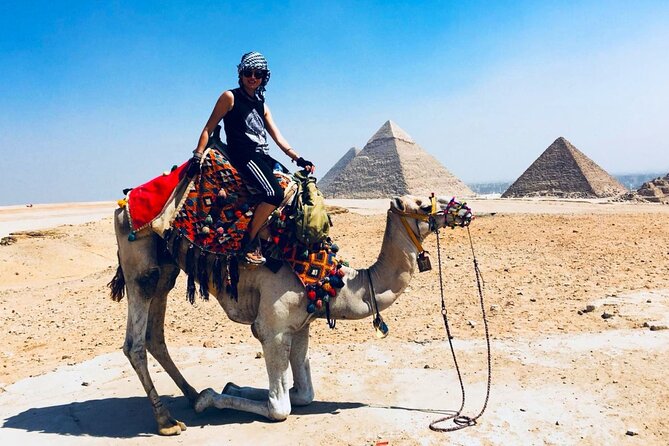
Many Cairo day tours rush straight to Giza. That gives you the famous photographs, but it skips the trial-and-error that came before the final pyramid form.
This tour begins with the Step Pyramid of Djoser at Saqqara. The six-level structure is presented as an early attempt to move from traditional royal tombs toward the pyramid shape. From there, you continue to the Bent Pyramid and Red Pyramid at Dahshur, both linked with King Snefru.
That sequence matters. You can look at Giza with fresh eyes after seeing the earlier designs. The Bent Pyramid shows what happened when builders began with a steep angle and changed it partway up. The Red Pyramid represents a more regular smooth-sided form and is described here as the first successful pyramid with that shape for Snefru.
The guide’s explanation also connects the pyramid shape with Raa, the sun and creation god. The idea is that the pointed form gave the king a path toward the sun and helped preserve the mummy forever. Some of this is offered as religious interpretation rather than a modern archaeological conclusion, so listen for the story while keeping in mind that ancient beliefs and modern explanations are not always the same thing.
Other ways to see the pyramids from Cairo:
- Cairo: Pyramids & Great Sphinx Private Tour with Camel Ride
★ 4.9 · 6,335 reviews - Tour to Giza Pyramids and The Egyptian Museum
★ 5.0 · 6,016 reviews - VIP All inclusive Best of the best Giza Pyramids,Sakkara,Memphis
★ 5.0 · 3,164 reviews
Saqqara and the Step Pyramid of Djoser
The Step Pyramid is the first major stop in the development of the royal tomb. It is linked with King Djoser and the architect Imhotep, and the tour describes it as dating to about 3000 BC.
You’ll see six rising levels rather than the smooth faces you expect at Giza. The shape makes the building look like a series of steps climbing toward the sky. That is the visual clue that makes this stop useful, not just another old monument on a long day.
The tour’s explanation says Imhotep was trying to reach the ideal pyramid form but had not yet achieved it. I would treat this as a simple guide to the evolution of the design, not as a complete account of the building process. Ancient construction was more complicated than a single failed experiment.
The itinerary gives Saqqara about two hours. That is enough time to see the pyramid and hear the explanation, but you should not expect an exhaustive visit to every tomb and monument in the area. The practical advantage is that the stop gives you a clear starting point before the larger pyramids appear.
The tour also promises a look at the oldest writing. The supplied details do not identify exactly where that writing will be shown, so ask your guide at the start of the day which monument or inscription is included.
The Bent Pyramid and Snefru’s experiment
The Bent Pyramid is one of the most memorable stops because its shape is easy to read from a distance. The lower section rises at a sharp angle, then the upper section becomes noticeably flatter.
The tour explains that builders began with a large angle and changed it in the middle. That adjustment created the unusual profile. You are also scheduled to see the interior tomb area, although it is described as empty.
The Bent Pyramid is valuable because it makes ancient engineering feel practical rather than mythical. You can see that the builders were testing proportion, weight, and stability on a huge scale. The monument is not simply a perfect object. It records a change in plan.
The schedule allows about one hour here. That sounds reasonable for photographs, an explanation, and an interior visit, but the experience can feel tight if you move slowly or if access takes time. Entrance is not included, so confirm the exact ticket arrangements before you set out.
Walking into the Red Pyramid
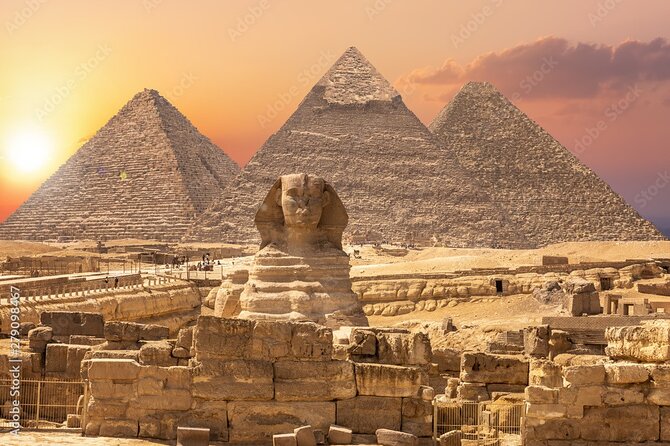
The Red Pyramid is the next step in the sequence and is described as Snefru’s first pyramid with a successful regular angle. Its reddish stone gives it a different character from the pale limestone monuments at Giza.
The interior visit is one of the tour’s strongest features, but it is also the part that requires the most physical effort. The supplied information describes a very cold interior and a good adventure inside the pyramid. You may find narrow passages, steep movement, and a plain interior rather than decorated chambers, so this stop is about structure and atmosphere more than painted scenes.
I like the Red Pyramid because it helps you understand what the outside shape was meant to do. After seeing the Bent Pyramid, the Red Pyramid feels like a solution to a problem. After seeing the Step Pyramid, it feels like the next stage in a long building experiment.
Again, admission is extra. The exact access arrangements can change, so ask the guide whether the interior entrance is available on your date and what ticket you need. If you are uncomfortable in enclosed spaces, you should think carefully before paying for the interior visit.
Same base, a different sort of day:
- From Cairo: Pyramids of Giza, Sphinx, Saqqara & Memphis Tour
★ 4.7 · 3,110 reviews - Cairo 8 Hour Private Tour of Pyramids, Egyptian Museum and Bazaar
★ 5.0 · 2,931 reviews - Cairo: Pyramids, Sakkara & Memphis Tour with Lunch
★ 4.6 · 2,493 reviews - Private ViP all-inclusive Giza Pyramids,Sphinx,Inside Pyramid
★ 5.0 · 2,448 reviews
Giza and the Great Pyramid of Cheops
Giza is the grand finale, and the scale changes at once. The tour focuses on the Great Pyramid of Cheops, also called Khufu, and presents it as the most complete expression of the pyramid form.
The explanation connects Cheops’s pyramid with his father’s Red Pyramid. It also presents the structure as being made from roughly one million stones and weighing about two million tons. The guide may discuss how stone was moved along the Nile, including the striking idea of bringing material from the Luxor area to Giza.
The key point is not just the number of stones. It is the planning needed to place a huge monument with a stable, sloping profile. After the earlier stops, the Giza pyramids make more sense as the final result of several generations of testing.
The itinerary gives Giza about two hours. That should allow time for the exterior, explanations, and photographs. If you want to enter Cheops, buy or confirm that ticket separately. The tour description refers to an interior visit in the reviews of the experience, but the main inclusions clearly say that entrance fees are not covered.
Do not assume that every pyramid ticket is part of the $40 price. This is the most important budgeting point. The base price covers private transportation, the guide, hotel pickup and drop-off, and bottled water. You pay the attraction fees and tip separately.
The Sphinx, sun temple, and photo stops
The Great Sphinx gets its own hour. You’ll see the human face associated with King Khafre and the body of a lion, a combination the guide explains as royal intelligence and power.
The tour also discusses the missing nose and beard, the periods when sand covered the monument, and the nearby sun temple area. You may see large hand-cut stones, broad pillars, and a wishing well where visitors can toss a small amount of money.
The Sphinx stop is excellent for photographs, but it is not a quiet, slow museum visit. Your guide will need to manage the time between the viewing area, explanations, and pictures. If you want a very specific photo angle, say so early. Guide Morsi has been praised for taking good photographs, so request help if he is the person assigned to your group.
One detail needs care: the Sphinx admission is listed as not included. The broad tour terms also exclude entrance fees, so set aside money for this stop rather than assuming the Giza visit covers everything.
The big museum and its ancient objects
The final museum visit adds a different kind of experience after a day of open-air monuments. Here, you can expect displays of coffins, jewelry, gold, statues, masks, and objects tied to different gods and ancient stories.
The museum section is described broadly rather than with a detailed room-by-room plan. That means your guide will likely shape the visit around the time available and the exhibits open on the day. Ask how long you will spend inside and which collections are included before you begin.
This stop is especially useful if the pyramid sites leave you wanting more human detail. Tombs and pyramids show royal power and burial customs. Museum objects show the small things people made, wore, used, and placed with the dead.
Because the tour already covers Saqqara, Dahshur, Giza, and the Sphinx, the museum may come late in the day. You will have absorbed a lot by then. I would treat it as a focused introduction rather than trying to see every object in one tired sweep.
What the $40 price really covers
At $40 per person, this tour offers good potential value if you want several major sites in one day and prefer private transport. A private vehicle is more useful in Cairo than a low price alone, since moving between distant archaeological areas takes time and road conditions can be tiring.
The price includes:
- Private transportation
- A tour guide
- Hotel pickup and drop-off
- Bottled water
It does not include entrance tickets or tipping. Since the itinerary contains several paid sites, the final amount can rise well above the advertised price. You should ask for a full estimate before departure, especially if you plan to enter the Red Pyramid, Bent Pyramid, or Cheops.
The tour is private, so only your own group participates. That gives you more freedom to ask questions and adjust the pace than a large coach tour. It also means the quality of the day depends heavily on the guide assigned to you.
Guide Morsi is a useful name to request if he is available. His strengths are clear explanations and helping with photographs. Another practical point: the operator is described as active in keeping in touch before the tour, but you should not feel obliged to answer repeated messages instantly. Confirm the pickup time once, then keep your phone available for essential updates.
Timing, comfort, and who should book
The advertised start time is 8:00 in the morning, and the day lasts about eight hours. That is a full schedule with several stops, so wear comfortable shoes and keep water close, even though a bottle is provided.
The interior pyramid visits are the most demanding parts. You should be ready for awkward movement and enclosed spaces. If your priority is a relaxed morning at Giza, this route may feel too packed.
I think the tour suits you best if you want:
- A private day rather than a shared group outing
- A clear comparison of Step, Bent, Red, and Giza pyramids
- Hotel pickup and drop-off
- Time in both archaeological sites and a museum
- Help with photographs
- A guide-led explanation rather than independent sightseeing
It may not suit you if you want long, unhurried time at each monument or if you dislike extra admission costs appearing after booking. The route is ambitious. Its strength is variety, not a slow pace.
Free cancellation is available up to 24 hours before the start time. Changes or cancellations inside that window are not refunded, and the experience can be changed or refunded if the minimum number of participants is not met.
Should you book this pyramid tour?
I would book it if you have one Cairo day and want to understand the development of pyramid building, not just pose in front of Giza. Saqqara, Dahshur, Giza, the Sphinx, and the museum create a strong outline of ancient Egyptian royal culture.
Before paying, confirm three things: the total entrance fees, the exact museum visit, and whether the Red Pyramid and Cheops interior visits are available on your date. If those costs fit your budget, the private vehicle and wide range of sites make $40 a reasonable starting price.
Choose this tour for breadth, private transport, and a guide such as Morsi who can explain the story and help with photos. Choose another arrangement if you prefer a shorter visit focused only on Giza.
FAQ
What is included in the $40 tour price?
The price includes private transportation, a tour guide, hotel pickup and drop-off, and bottled water.
Are entrance fees included?
No. Entrance fees are not included, and the Sphinx, Bent Pyramid, and Red Pyramid are specifically listed with admission not included. Tipping is also extra.
How long does the tour last?
The tour lasts approximately eight hours and begins at 8:00 am.
Is this a private tour?
Yes. Only your own group participates in the activity.
Which pyramids are included?
The route includes Djoser’s Step Pyramid, the Bent Pyramid, the Red Pyramid, and the pyramids of Giza, including the Great Pyramid of Cheops.
Does the tour include the Great Sphinx?
Yes. The itinerary includes about one hour at the Great Sphinx, along with discussion of the nearby sun temple area and photo opportunities.
Can I cancel for a full refund?
You can cancel at least 24 hours before the start time for a full refund. Cancellations or changes made less than 24 hours before the experience are not refunded.
Just added in Cairo
- 2 days 1 night Luxor,Aswan & Abu simbel by flight from Cairo★ 4.5 · 20 reviews
- CAIRO LAYOVER EXCURSION TO GIZA PYRAMIDS SPHINX COPTIC CAIRO and BAZAAR★ 5.0 · 34 reviews
- Cairo Layover Tours To Giza Pyramids Memphis Sakkara Dahshur Pyramids And Bazaar★ 5.0 · 35 reviews
- Giza Pyramids Sound & Light Show At Night★ 4.0 · 74 reviews
- Islamic Cairo Walking Tour: Khan el Khalili, Al-Azhar Mosque★ 5.0 · 96 reviews
- Cairo Food Tours & adventures +30 Tastings★ 5.0 · 146 reviews
- All Inclusive Private Cairo Layover Tour from Cairo Airport★ 5.0 · 50 reviews
- Professional Photo Shoot & Authentic Cairo Walking Tour★ 5.0 · 78 reviews
Giza Pyramids & Sphinx Tours, compared.

Pyramids & Great Sphinx Private Tour with Camel Ride
Read our review →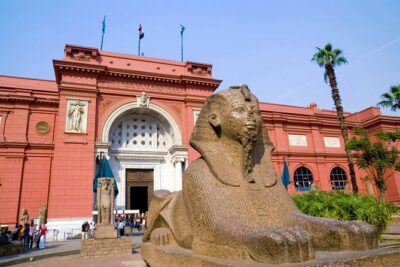
Tour to Giza Pyramids and The Egyptian Museum
Read our review →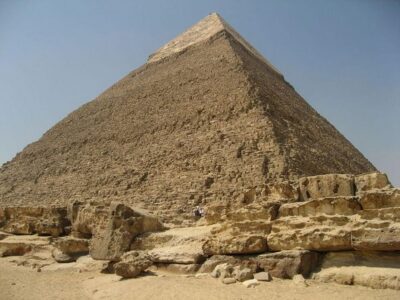
VIP All inclusive Best of the best Giza Pyramids,Sakkara,Memphis
Read our review →
Pyramids of Giza, Sphinx, Saqqara & Memphis Tour
Read our review →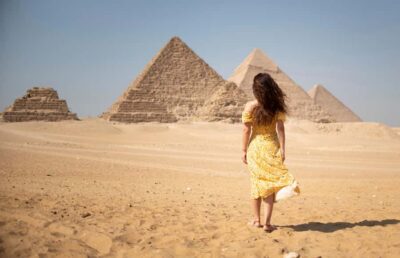
Half-Day Tour to Pyramids of Giza and the Sphinx
Read our review →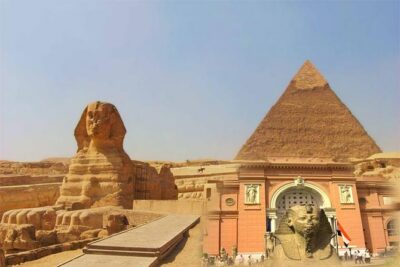
Private ViP all-inclusive Giza Pyramids,Sphinx,Inside Pyramid
Read our review →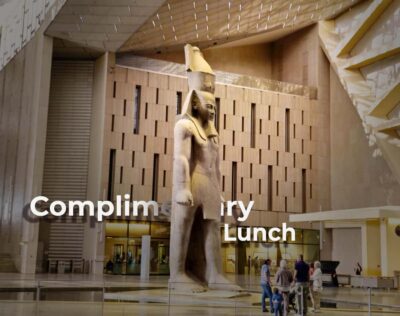
Grand Egyptian Museum, Pyramids, Sphinx Tour & Lunch
Read our review →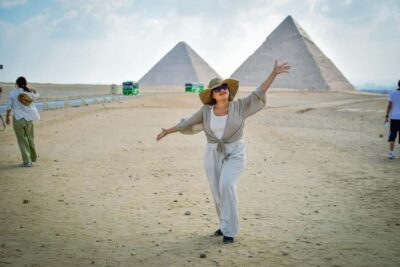
Cairo Pyramids, Sphinx & Egyptian Museum Day Trip
Read our review →Browse the lists this tour appears in