
Reviewed · VALLEY OF THE KINGS & LUXOR WEST BANK
Luxor: Valley of the Kings and Hatshepsut Temple w/Nile Boat
Luxor’s great reward is simple: in one long day, you can walk among the columns of Karnak, enter royal tombs in the Valley of the Kings, and face the statues at the Colossi of Memnon. I especially like the small-group format and the chance to have a guide such as Nana, Ahmed, Doa, or Shaban explain the temples instead of leaving you to guess at the carvings. The optional Nile crossing also gives the day a welcome change of pace.
The drawback is the distance. From the Red Sea resorts, you may spend about four hours each way in the vehicle, with an early morning start and a hot day on foot. Still, the sites are among Egypt’s greatest, and the $90 price includes transport, entries, lunch, refreshments, and guiding, making it a fair deal if you want Luxor in one concentrated visit.
Key points to know before booking
- Four major Luxor sights in one day: Karnak Temple, the Valley of the Kings, Hatshepsut Temple, and the Colossi of Memnon.
- Guides make the difference: Nana is known for lively stories and humor, while Ahmed, Doa, and Shaban have been praised for clear explanations and careful help.
- Expect a very long day: The drive from Hurghada can take around four hours each way, depending on hotel pickups.
- The Nile boat crossing is optional: It offers a pleasant route from Luxor’s East Bank to the West Bank, but confirm if it is included in your chosen option.
- Tutankhamun’s tomb costs extra: It is available only if you choose the relevant option or add-on.
- Pack for heat and walking: Comfortable shoes, a hat, sunglasses, water, cash, and your passport or ID are sensible basics.
A long road from Hurghada to ancient Luxor
This is not a quick excursion. You leave early, collect other people from their hotels, and travel by air-conditioned vehicle toward Luxor. Some departures have taken more than an hour just to gather everyone, so the first part of the morning can feel slow before the highway journey even begins.
The drive itself may run about four hours each way. That is the main cost of seeing Luxor from the Red Sea coast. If you have only a short holiday, the journey is tiring. If you care about ancient Egypt, the payoff is substantial.
Your vehicle is meant to be comfortable and air-conditioned, and snacks, cold drinks, and water are provided during the day. Bring your own breakfast box from the hotel. You should ask reception for one the evening before, since the departure is early and the tour should not be treated as a substitute for breakfast.
A small group is useful here. It makes it easier to hear the guide, ask questions, and stay connected at busy sites. It also gives the day a more personal feel than a large coach tour, although pickup times can still vary.
Other west bank days out of Hurghada:
- Small group Hurghada to Luxor, Valley of the Kings by Van
★ 4.5 · 2,470 reviews - Hurghada: Small-Group Luxor Highlights & Tut Tomb Day Tour
★ 4.6 · 928 reviews - Hurghada: Luxor Highlights & King Tut Tomb Tour with Lunch
★ 4.7 · 902 reviews
Karnak Temple, where scale does the talking
Karnak is usually the first major stop, and it is a strong opening. The temple complex is famous for its huge columns, long processional spaces, carved hieroglyphs, and the Avenue of Sphinxes. You are not looking at one tidy building. You are walking through a vast religious center built and altered by generations of pharaohs.
Your guide helps you read the place as more than a field of stones. Look closely at the column surfaces and wall carvings. The shapes, figures, and symbols were part of a carefully ordered religious language, not random decoration.
The size of Karnak can be hard to grasp in photographs. In person, the columns create a powerful sense of scale, especially as you move through the great halls. This is one stop where a good explanation matters. The site has many layers, and without context you may remember only the biggest columns.
Allow yourself time to look up, not just ahead. The strongest moments often come from small details in the carvings, traces of color, and the way the guide connects the buildings to Egyptian rulers and religious practice.
Crossing the Nile to Luxor’s West Bank
The tour may include a boat crossing from the East Bank to the West Bank. This part is optional, so confirm your exact booking choice before departure. When available, the crossing gives you a short break from the vehicle and a different view of Luxor.
The Nile is not just scenery here. It explains the shape of ancient Luxor. The East Bank was linked with temples and city life, while the West Bank became the setting for royal tombs and funerary monuments. A boat ride makes that division easier to understand.
Do not expect a long cruise. Think of it as a practical and scenic transfer, with time to watch the river and reset before the next group of monuments. After the heat and crowds of Karnak, that pause can be one of the more relaxing parts of the day.
The Valley of the Kings and its painted tombs
The Valley of the Kings is the emotional center of the excursion. Here, pharaohs were buried in rock-cut tombs, away from the open temples and public spaces. Your entry includes the Valley of the Kings, with selected tomb access according to the standard ticket.
Inside, the mood changes at once. The tombs are narrow, enclosed, and covered with painted scenes and hieroglyphs. The colors and symbols describe the pharaoh’s passage into the afterlife. Even if you know little about Egyptian religion, the artwork makes clear that these rooms were designed for a serious ritual purpose.
The heat is stronger on the West Bank, and some walking surfaces are uneven. Wear shoes with a firm sole, carry water, and keep your hat and sunglasses ready for the open areas between tombs. Large bags and luggage are not allowed, and smoking is not permitted.
Tutankhamun’s tomb is not part of every package. You need the relevant option or add-on. If the young king’s burial place is a personal priority, check that it appears in your booking rather than assuming it is included with the general Valley of the Kings entry.
A guide such as Nana or Ahmed can make this stop much more rewarding. The best explanations connect the tomb paintings with the beliefs behind them, rather than simply pointing out names and dates. The guide can also help you use your time well when the day includes several tombs and more monuments ahead.
Same base, a different sort of day:
- From Hurghada: Cairo and Giza Highlights Full-Day Tour
★ 4.5 · 6,014 reviews - Hurghada: Luxury Cruise Trip to Orange Bay with Lunch
★ 4.9 · 5,451 reviews - Hurghada: Orange Bay Island Boat Trip w/ Breakfast and Lunch
★ 4.9 · 5,345 reviews - Hurghada: Royal Seascope Submarine Cruise with Snorkel Stop
★ 4.4 · 4,637 reviews
Hatshepsut Temple and the story of a female pharaoh
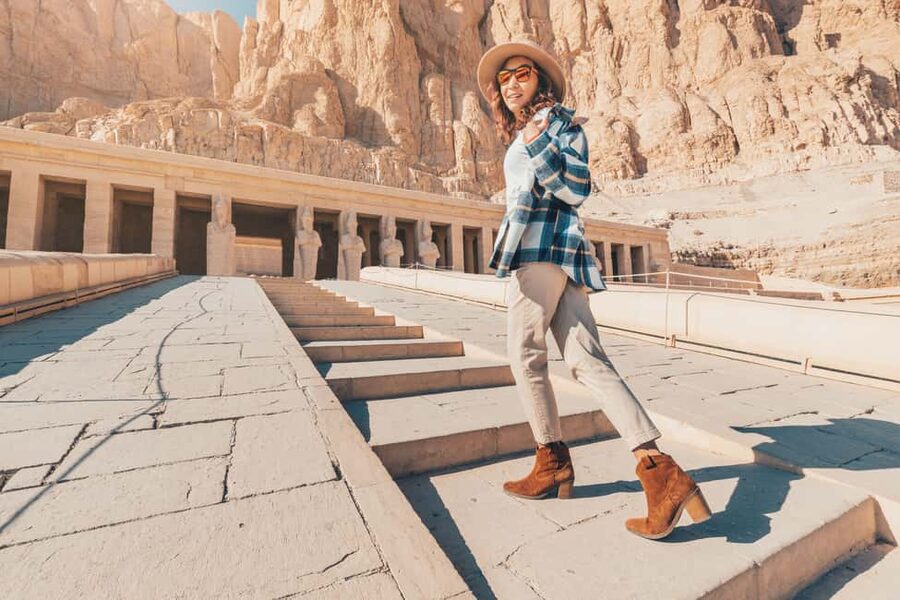
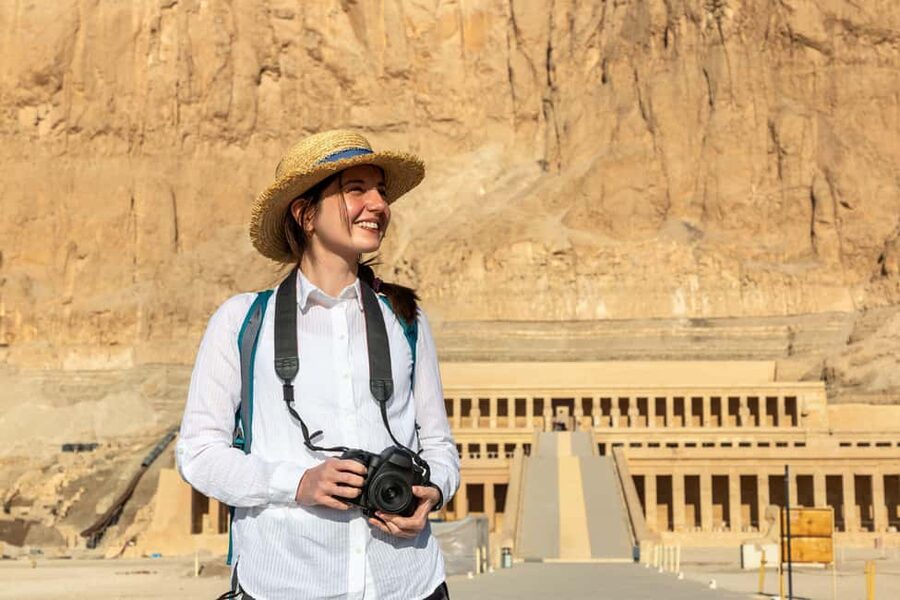
The Temple of Hatshepsut has a different character from the Valley of the Kings. Its broad terraces rise against the cliffs, creating a strong, almost theatrical setting. The design is more open and geometric, and the approach gives you time to see how the temple fits into the surrounding rock.
Hatshepsut was one of ancient Egypt’s most notable female rulers. The temple reflects her power, religious role, and public image. Your guide can explain the scenes and symbols that support that message, along with the unusual position Hatshepsut held as a woman ruling as pharaoh.
This stop is exposed, with little shade in the open areas. I would save some water for it and avoid rushing straight from one sunny platform to the next. A hat is not optional in practice, especially in the hotter months.
The temple is also one of the most photogenic stops, but try to give yourself time beyond the standard viewpoint. The terraces, cliffs, columns, and carved scenes work together. You will get more from the visit if you listen first, then take your photos.
The Colossi of Memnon, a quick but worthwhile stop
The Colossi of Memnon are two enormous seated statues that once guarded the entrance to the temple complex of Amenhotep III. The surrounding temple is largely gone, which makes the statues feel even more isolated.
This is usually a shorter stop, but it is not filler. The scale of the figures gives you a clear sense of how grand the royal monuments of the West Bank once were. You can get close, study the worn surfaces, and take in the desert setting.
Do not expect a full temple visit here. The value is in the statues themselves and in the guide’s explanation of what stood around them. It is a useful pause between the more demanding visits to the Valley of the Kings and Hatshepsut Temple.
Lunch, drinks, and the practical rhythm of the day
Lunch is served at a local Luxor restaurant. It is a useful break rather than a long dining event, giving you a chance to sit down and refuel before more sightseeing.
The tour includes refreshments such as snacks, cold drinks, and water. Several people have appreciated having water available through the hot day, and that matters in Luxor. Even so, bring some personal cash for any extra drinks, souvenirs, or small purchases.
A hotel breakfast box is still important. The pickup can be early, and the tour information specifically advises you to request one from reception the night before. One person noted that breakfast was not provided on the road, so plan on using the box rather than waiting for a meal stop.
Guides are the strongest part of the experience
The guide can change this from a fast monument checklist into a day you remember. Nana is known for mixing clear history with jokes and stories about Egyptian kings and queens. Ahmed has been praised for explaining temples and tombs in a patient, easy-to-follow way, while Doa and Shaban have also been singled out for their care and helpfulness.
Guide assignments can change, so you should not book on the assumption that you will receive one specific person. Still, the repeated emphasis on humor, clear explanations, safety, and personal attention suggests that the guiding is a major strength of the experience.
A good guide also helps with the small pressures of Luxor. Some people may approach you around major sights, and a guide can help you stay focused and avoid unwanted hassle. You should still keep your belongings secure and carry cash only as needed.
English, German, and Arabic are available. French and other languages may be arranged as an add-on, so ask before booking if language support is important to you.
Is $90 a fair price?
At $90 per person, the value is solid if the listed inclusions apply to your booking. You receive hotel transport in an air-conditioned vehicle, entry to Karnak, the Valley of the Kings, and Hatshepsut Temple, a stop at the Colossi of Memnon, lunch, refreshments, and a guide.
The price also saves you from arranging a private vehicle, finding each monument, and working out the route between the East and West Banks. That matters on a long day when time and energy are limited.
Check the details before you pay. Pickup from Makadi, Sahl Hasheesh, El Gouna, Soma Bay, and Safaga may not be included, despite the wider pickup wording for Red Sea resorts. The Nile crossing is optional, and Tutankhamun’s tomb requires the correct add-on. These are small points, but they can change the final cost.
The tour can also be booked with the option to reserve now and pay later. Cancellation is allowed up to 24 hours in advance for a full refund, which gives you some flexibility if your plans change.
Who should book this Luxor day trip?
I would choose this tour if you are staying at a Red Sea resort and want to see the major ancient sites without arranging a private trip. It suits first-time visitors who prefer a guide, a fixed route, and the efficiency of seeing several important places in one day.
It is also a good match for people who enjoy history but do not want to spend hours researching every temple before arrival. The guide supplies the framework, while you focus on the monuments.
I would think twice if you dislike long road journeys, early starts, intense heat, or a full sightseeing schedule. The day is demanding. It is not suitable for pregnant women or people with back, heart, or mobility problems, according to the tour information.
You must also return to Hurghada with the group. You cannot leave the tour and stay in Luxor, so this is not a flexible one-way transfer.
Should you book it?
Book this experience if Luxor is high on your Egypt list and you want the major sights handled in one organized day. The strongest reasons are the small-group setting, the certified Egyptologist, the included entries and lunch, and the quality of guide support associated with names such as Nana and Ahmed.
Skip it only if the four-hour road journey each way would outweigh the value of seeing Karnak, the Valley of the Kings, and Hatshepsut Temple. For most people staying on the Red Sea coast, the day will be tiring, hot, and worth it. Pack light, request breakfast early, confirm your pickup zone and optional extras, and you will be ready for one of Egypt’s biggest history days.
FAQ
How much does the Luxor tour cost?
The listed price is $90 per person.
Where does the tour depart from?
The tour is described as departing from Hurghada, with information also referring to Makadi and Sahl Hasheesh. Pickup from Makadi, Sahl Hasheesh, El Gouna, Soma Bay, and Safaga may not be included, so confirm your pickup point before booking.
Which attractions are included?
The tour includes Karnak Temple, the Valley of the Kings, Hatshepsut Temple, the Colossi of Memnon, and a Luxor city tour.
Is Tutankhamun’s tomb included?
Tutankhamun’s tomb is included only if you select the relevant option or add-on.
Is the Nile boat ride included?
The Nile crossing is described as optional. Confirm whether it is part of your selected package.
How long is the journey from Hurghada?
The journey may take around four hours each way, based on the timing described for the road trip and hotel pickups.
Is lunch included?
Yes. Lunch at a local restaurant in Luxor is included.
Are drinks and snacks provided?
Snacks, cold drinks, and water are provided during the tour. You should also request a breakfast box from your hotel reception the evening before.
Which languages are available?
English, German, and Arabic are available. French and other languages may be arranged as an add-on.
What should I bring?
Bring your passport or ID card, comfortable shoes, sunglasses, a hat, and cash. Large bags and luggage are not allowed, and smoking is prohibited.
Is the tour suitable for people with mobility or medical concerns?
The tour is not suitable for pregnant women or people with back problems, mobility impairments, or heart problems.
Can I cancel the booking?
You can cancel up to 24 hours in advance for a full refund.
Just added in Hurghada
- Hurghada: 6-Hour Jeep Desert Safari, Dinner, and Show★ 4.3 · 175 reviews
- Desert Sunset Quad Bike ATV for 50Km, Oriental Show, Dinner,★ 3.9 · 178 reviews
- Hurghada: Full Body Therapeutic Massage with Transfer★ 4.2 · 176 reviews
- Hurghada: Dolphin Cruise with Snorkeling & Buffet Lunch★ 5.0 · 177 reviews
- Mahmya Island: Red Sea Sailing Experience★ 4.7 · 169 reviews
- Makadi Bay: BADU Luxury Bedouin Dinner Experience & Stargaze★ 4.7 · 175 reviews
- Hurghada: Cairo and Giza Highlights by mini Van with BBQ Lunch★ 4.5 · 172 reviews
- Paradise island full day snorkeling trip★ 5.0 · 172 reviews
Valley of the Kings & Luxor West Bank, compared.
Luxor Valley of the Kings & Tutankhamun Tomb Trip
Read our review →
Luxor Day Trip from Hurghada Small Group & Tutankhamun Tomb
Read our review →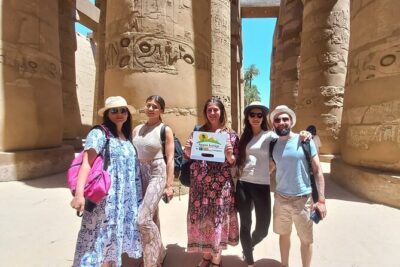
Small group Hurghada to Luxor, Valley of the Kings by Van
Read our review →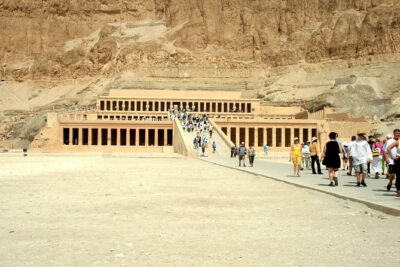
Luxor Day Tour: Valley of Kings & Queens & Hatchepsut Temples
Read our review →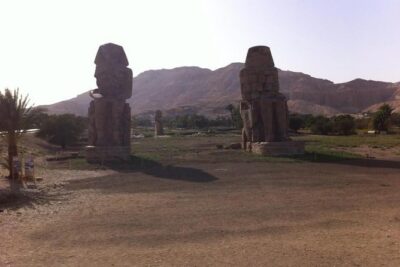
Full Day Tour to East and West Banks of Luxor
Read our review →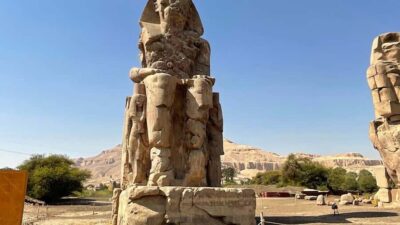
Valley of the Kings and Hatshepsut Temple Day Tour
Read our review →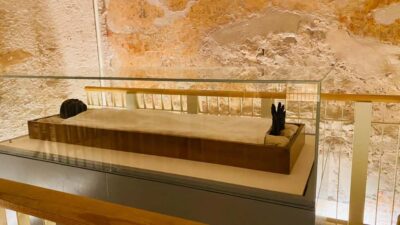
Luxor Tour with Valley of Kings, Karnak & Tut Tomb
Read our review →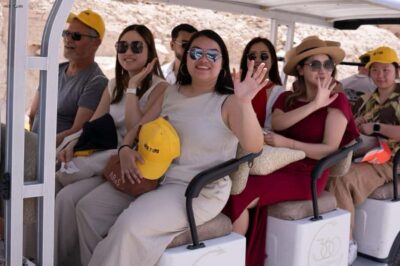
Small-Group Luxor Highlights & Tut Tomb Day Tour
Read our review →Browse the lists this tour appears in