
Reviewed · NILE CRUISES
Nile cruise between Aswan and Luxor: Sail the best temples in Egypt
The best part of this Aswan to Luxor Nile cruise is the rhythm: ancient temples in the morning, quiet river views later, and meals back aboard ship. You get the major sights without rebuilding the trip around separate taxis, trains, and day tours. The river is not just scenery here. It is the route that links Egypt’s greatest monuments.
I especially like the included transfers from an Aswan airport, station, or hotel, followed by a Luxor drop-off wherever you need to go. I also like the guide-led visits, particularly if Mohamed Gaber, often called Moha, is leading in Spanish. His approach is lively, with clear explanations and theatrical storytelling that help sort out Egypt’s many gods and pharaohs.
The main thing to check before paying is the schedule and ship details. The experience is described as about four days, yet the inclusions also state four nights aboard the cruise. Abu Simbel is optional and not included, drinks and tips cost extra, and the early starts can make this a full sightseeing trip rather than a lazy river holiday.
Key points to know before booking
- Aswan to Luxor by river: You travel in one direction through Egypt’s classic temple route instead of arranging each site separately.
- Abu Simbel is optional: It is a powerful addition, but its admission ticket is not included in the price.
- Mohamed Gaber, or Moha: The guide is praised for Spanish-language explanations, humor, and simple theatrical demonstrations.
- Four-night cruise details need confirming: The trip is advertised as approximately four days, while the inclusions mention four nights aboard ship.
- Major entrance tickets are covered: Philae, Kom Ombo, Edfu, Karnak, Luxor Temple, the Valley of the Kings, and Hatshepsut’s temple are included.
- The price covers useful basics: At $500 per person, you receive accommodation, four lunches, four dinners, sightseeing, and transfers, but not drinks or gratuities.
Why this Nile route works so well
A Nile cruise gives you a useful middle ground between a fully planned group tour and an independent trip. You do not need to find a driver for every temple, negotiate each transfer, or work out how to connect Aswan with Luxor. The boat becomes your moving base.
That matters in southern Egypt, where the attractions are spread along the river and the heat can make repeated road journeys tiring. You can visit a temple, return to the boat, eat lunch, and spend part of the afternoon watching the river pass. The contrast is the point: huge stone monuments followed by a quiet deck and open water.
The itinerary is busy, but it is sensibly arranged. Day two focuses on Aswan and the temples farther north, day three handles Edfu and Luxor’s major sanctuaries, and day four finishes on the west bank of Luxor. You see a lot in a short time, though you should not expect long, unplanned visits at every site.
The group can reach a maximum of 30 people. That is not an intimate private tour, but it is still small enough for a guide to manage a structured visit. Ask in advance how many people are expected for your departure and which guide will accompany your group.
Other Nile cruises in Aswan people book:
- 4-Days Nile Cruise From Aswan To Luxor including Abu Simbel and Hot Air Balloon
★ 5.0 · 3,142 reviews - 4-Day 3-Night Nile Cruise from Aswan to Luxor&Abu Simbel+Balloon
★ 5.0 · 2,023 reviews - 4-Day 3-Night Nile Cruise from Aswan to Luxor including Abu Simbel, Air Balloon
★ 4.5 · 612 reviews
Day one in Aswan: board, settle in, and slow down
Pickup begins in Aswan at the time and location you provide. The stated options include the airport, train station, or hotel, which makes the first day easier if you arrive by rail or plane. You are taken to the boat, shown to your room, and served meals according to the ship’s schedule.
The first day is intentionally light. You can rest by the pool or explore Aswan independently. That free time is useful after a long journey, but it also means you should not assume a guided Aswan city tour is part of the package.
I like this soft opening. Many Egypt itineraries begin with a rush from one monument to the next, while this one gives you a chance to get your bearings and enjoy the boat. If you want to see more of Aswan on day one, plan that independently and leave enough time to return for meals and departure arrangements.
The trip begins at 6:00 a.m., according to the supplied details. Because the exact boat schedule is not explained, confirm when pickup occurs and when the ship actually sails. Also confirm the room category and what four nights means in practice, since the stated duration and accommodation details do not line up perfectly.
Abu Simbel: the optional detour worth serious thought
Abu Simbel is the one major addition that can change the character of the trip. The temples were cut into the rock during the reign of Ramses II. One is dedicated to Ramses himself, while the other honors his wife, Queen Nefertari.
You should treat this as more than a quick extra stop. Abu Simbel is far from Aswan, so the visit adds transport time and another early start. The supplied schedule allows about two hours at the temples, and the admission ticket is not included. Ask exactly how the optional excursion is arranged and what it costs before you commit.
I would make room for Abu Simbel if ancient Egyptian architecture is a top reason for your trip. The scale and setting are very different from the river temples later in the itinerary. If you would rather keep day two relaxed, skipping it gives you more time for Aswan and the boat.
Philae Temple and the island setting
Philae is dedicated to Isis and sits on an island, so you reach it by boat. That short water crossing gives the visit a special sense of arrival. Instead of stepping straight from a road into a monument, you approach the temple across the Nile, with the stone complex coming into view as you near the island.
The visit is scheduled for about one hour, and admission is included. That is enough for a guided introduction and photographs, but you may feel pressed if you want to inspect every carving. Listen closely to the guide, since the story of Isis is central to understanding the temple’s purpose and the wider Egyptian religious world.
This is a good place to notice how the cruise blends transport and sightseeing. The boat ride is not a separate attraction added to the day. It is part of how you reach the monument.
Other cruises leaving from Aswan:
- From Aswan: 4-Day Nile Cruise from Aswan to Luxor with Guide
★ 4.1 · 593 reviews - 4-Days Nile Cruise From Aswan To Luxor including Abu Simbel and Hot Air Balloon
★ 4.5 · 509 reviews - 4-Day 3-Night Nile Cruise from Aswan to Luxor – Private Tour
★ 5.0 · 369 reviews - 4 Days Nile Cruise from Aswan to Luxor including Abu Simbel and Hot Air Balloon
★ 4.5 · 356 reviews
Kom Ombo: two gods, one unusual temple
Kom Ombo is built for two gods, Sobek and Haroeris. That pairing gives the site its distinctive character. Instead of presenting one god’s sacred world, the temple reflects two religious traditions within a single complex.
The scheduled visit lasts about an hour, with admission included. This is another stop where a guide adds real value. Without context, the paired dedication can seem like a curious design choice. With a clear explanation, the layout becomes easier to read.
Kom Ombo is also a reminder that this cruise is not only about the most famous monuments. The route works because several different kinds of temples appear one after another, each with its own religious purpose.
Edfu Temple: one of Egypt’s best-preserved sanctuaries
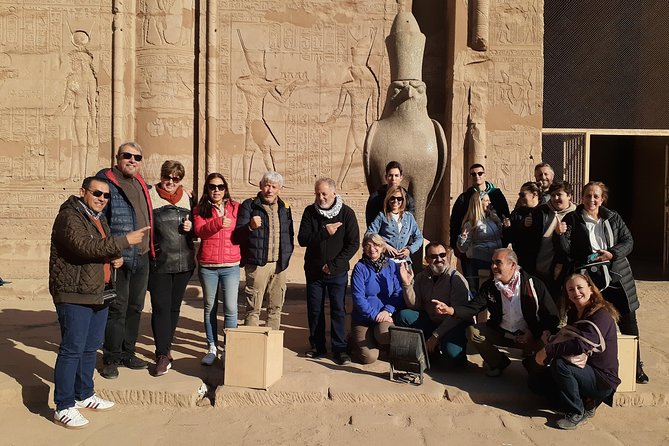
On day three, you visit Edfu Temple, dedicated to Horus. About two hours are allotted, and the entrance ticket is included. Its strong preservation makes it especially rewarding for anyone who wants to see temple architecture without having to picture too much of the original structure.
Take your time with the reliefs and the large formal spaces. This is a place where the guide’s explanation can help you understand how Egyptian gods, kingship, and temple ceremonies fit together. The tour’s Spanish-language guiding is a major advantage for Spanish speakers, especially if Moha is leading and offering the humorous explanations praised by past clients.
The schedule is efficient, but not leisurely. You will want comfortable clothing, water, and shoes suited to walking over stone. Drinks are not included, so budget for them separately.
Karnak Temple: the largest day of sightseeing
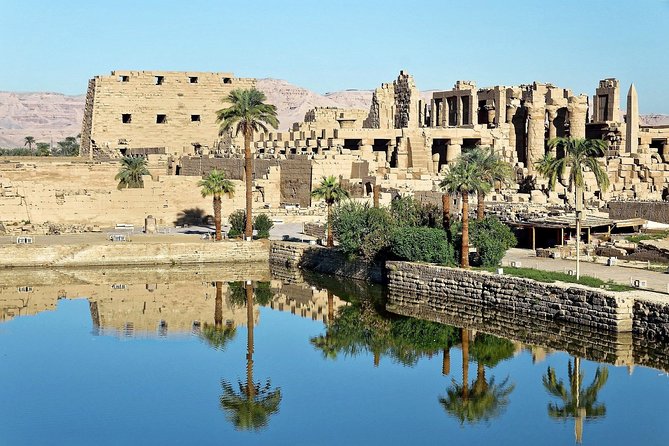
Karnak receives about two hours, and that is enough to make a strong first visit, though not enough to see every corner. The complex was developed over more than 2,000 years by different pharaohs. Its famous features include the avenue of sphinxes, the columned hall, and the avenue of rams.
This is one of the day’s biggest moments, but it can also be tiring. The scale is immense, and the heat can be intense. Stay with the group at the beginning so you do not miss the guide’s explanation, then use any free time to take photographs and look more closely at the carvings.
I like the order of the day. After Edfu, Karnak introduces you to a much larger sacred complex. The progression helps you appreciate the range of Egyptian building projects instead of treating every temple as a similar pile of stones.
Luxor Temple after dark or in the evening schedule
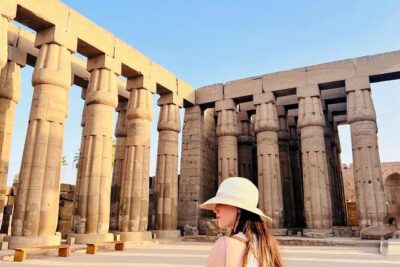
Luxor Temple is dedicated to Amun Ra, one of ancient Egypt’s greatest gods and a figure closely linked with kingship. The visit lasts about two hours and includes admission.
The temple’s setting in modern Luxor gives it a different feel from the island and riverbank sites. It is easier to connect the ancient monument with the living city around it. Look for the formal avenues and massive stone elements, then let the guide explain how the temple functioned within the religious life of ancient Egypt.
The exact time of this visit is not provided, so do not assume it will be after sunset. Ask the operator about the planned timing. That matters for photographs, temperature, and how much energy you will have after Edfu and Karnak.
The Valley of the Kings: choose three tombs
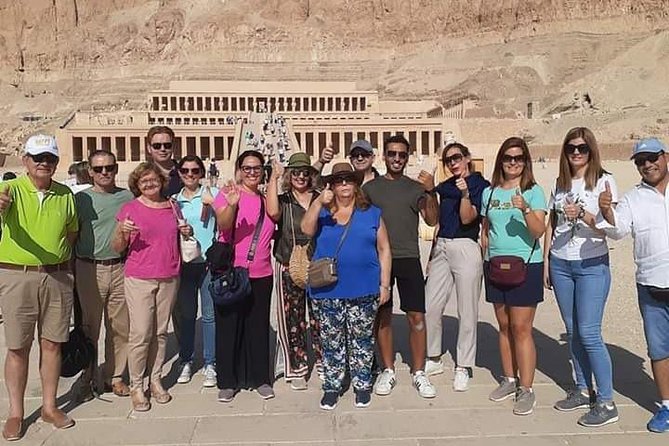
Day four moves to Luxor’s west bank and begins with the Valley of the Kings. This vast cemetery contains the tombs of many rulers of the New Kingdom, as well as the tomb of Queen Hatshepsut. The admission included in the tour allows entry to three tombs of your choice.
That choice is important. You may want to research the available tombs before arriving, since the best selection depends on what is open on the day. Three interiors can feel like plenty after several days of temples, but the rooms are worth seeing for their painted decoration and burial purpose.
The valley can be hot and exposed. Bring water and listen for the guide’s instructions about which tombs are included in your ticket. The package states that three tombs are covered, but it does not specify whether any special tomb has an additional charge.
Hatshepsut’s temple and the Colossi of Memnon
The Mortuary Temple of Hatshepsut receives about one hour. Hatshepsut was one of Egypt’s most important queens, and the temple is known for its striking terraces and formal design against the cliffs.
One hour is a short visit, so focus on the main structure and the guide’s explanation of Hatshepsut’s rule. The stop is valuable because it adds a powerful female ruler to an itinerary that otherwise centers heavily on male pharaohs and gods.
The final monument is the Colossi of Memnon, two enormous stone statues of Amenhotep III. Only 15 minutes are scheduled here, and admission is listed as free. This is mainly a quick photo stop, not a full site visit. Keep your expectations in line with the timing.
Afterward, you check out and have up to five hours of free time in Luxor. The operator will take you to the hotel, airport, or station you specify. That flexibility is useful if Luxor is your next base, but confirm the exact drop-off arrangements and luggage handling before the final morning.
What the $500 price really covers
At $500 per person, the value depends on how much you would otherwise spend arranging transport, hotels, meals, and temple tickets separately. This package includes pickup in Aswan, transfers in Luxor, four lunches, four dinners, cruise accommodation, and the listed sightseeing tickets.
That is a solid bundle for a first visit. The included admissions remove a common source of confusion, and the end-to-end transport saves you from arranging a separate Aswan to Luxor connection. The guide is another important part of the value, especially if you want explanations rather than a sightseeing checklist.
The price does not include drinks or tips. Abu Simbel admission is also excluded, and the optional excursion itself needs to be priced separately. Breakfast is not listed among the inclusions, so ask about it rather than assuming it is part of the package.
The biggest financial question is not the ticket total. It is the ship. Ask for the vessel name, room category, sailing schedule, and whether the advertised four nights are correct. Two cruises at the same price can feel very different depending on cabin quality and onboard facilities.
Who will enjoy this cruise most
I would recommend this trip to a first-time visitor who wants the major monuments handled in one plan. It suits families and Spanish-speaking groups particularly well if Mohamed Gaber, or Moha, is the assigned guide. His reported style includes humor, participation, and small theatrical demonstrations, which can make long temple explanations easier to follow.
It also works for anyone who likes a mixture of activity and downtime. You spend several hours touring each day, then return to the boat for meals and quieter river time. The free first day in Aswan and the final free hours in Luxor give you some control over the pace.
This is less suitable if you want a private, slow archaeological study tour. A maximum group size of 30 means the schedule is shared, and the listed visits move quickly. It is also not ideal for someone who dislikes early starts, fixed meal times, or uncertainty about ship arrangements.
Booking confirmation is provided at the time of booking, and most people can participate. The cancellation rule allows a full refund when you cancel at least three full days before the start time. Cancellations or changes inside that period are not accepted for a refund.
Should you book the Aswan to Luxor cruise?
Book it if you want an efficient introduction to the Nile’s major temples, prefer having transfers and tickets arranged, and value a guide who can explain ancient Egypt in Spanish with warmth and humor. The combination of Philae, Kom Ombo, Edfu, Karnak, Luxor Temple, the Valley of the Kings, and Hatshepsut’s temple gives you a strong first look at southern Egypt.
Before paying, confirm the four-night accommodation, ship name, cabin details, breakfast arrangements, Abu Simbel price, and assigned guide. If those points are clear, $500 per person is a reasonable package price for the amount of transport, food, lodging, guiding, and sightseeing included.
FAQ
Where does the Nile cruise begin?
The cruise begins in Aswan, Egypt. Pickup is offered from an Aswan airport, train station, or hotel.
Where does the cruise end?
The cruise ends in Luxor Governorate. After checkout, the operator will take you to the hotel, airport, or station you specify.
How long does the experience last?
The experience is advertised as approximately four days. The accommodation details state four nights on the cruise, so you should confirm the exact schedule before booking.
What time does the tour start?
The stated start time is 6:00 a.m.
Is Abu Simbel included?
No. Abu Simbel is an optional excursion, and its admission ticket is not included.
Which temple admissions are included?
Admissions are included for Philae Temple, Kom Ombo Temple, Edfu Temple, Karnak Temple, Luxor Temple, the Valley of the Kings, and the Mortuary Temple of Hatshepsut. The Valley of the Kings visit includes entry to three tombs of your choice.
Are meals included?
Four lunches and four dinners are included. Drinks are not included. Breakfast is not listed in the supplied inclusions, so you should confirm whether it is provided aboard the ship.
How many people can join the tour?
The group can include a maximum of 30 people.
Just added in Aswan
- 4-Days Aswan sails Nile Cruise Luxor &Abu Simbel.Hot air Balloon★ 4.5 · 77 reviews
- Sailing Nile Cruise from Aswan to Luxor for 2 Nights★ 4.5 · 139 reviews
- Private Tour in Aswan : Felucca and Nubian village★ 5.0 · 29 reviews
- Philae Temple and Aswan High-Dam Half-day tour★ 5.0 · 49 reviews
- (3-Nights Cruise From Aswan To Luxor & Balloon, Abu Simbel)★ 4.5 · 23 reviews
- Aswan Philae Temple, Obelisk, and High Dam Private Tour★ 4.5 · 17 reviews
- Day Tour to Abu Simbel from Aswan by Bus★ 4.5 · 25 reviews
- Abu Simbel Private Full-Day Tour from Aswan★ 5.0 · 114 reviews
Nile Cruises, compared.
4-Days Nile Cruise From Aswan To Luxor including Abu Simbel and Hot Air Balloon
Read our review →
4-Day 3-Night Nile Cruise from Aswan to Luxor&Abu Simbel+Balloon
Read our review →
4-Day Nile Cruise from Aswan to Luxor with Guide
Read our review →
4-Day 3-Night Nile Cruise from Aswan to Luxor – Private Tour
Read our review →
4 Days Nile Cruise Luxor Abu Simbel & Air Balloon
Read our review →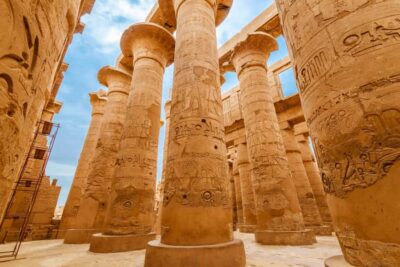
3-Night Nile Cruise to Aswan and Hot Air Balloon
Read our review →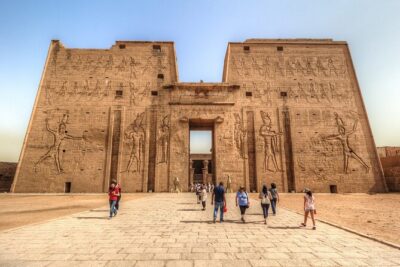
Private 04 Days Days Nile Cruise from Aswan to Luxor
Read our review →Browse the lists this tour appears in