Reviewed · TOURS IN CAIRO
Private Tour 3-Days in Cairo, Giza & Luxor
The best thing about this three-day Egypt tour is its reach. In a short visit, you move from Snefru’s early pyramid experiments at Dahshur to the Great Pyramid, then on to ancient churches, Islamic Cairo, and the temples and tombs of Luxor. I especially like the private format and the flight to Luxor, which saves you from a long overland journey.
I also like that the tour gives equal weight to famous sights and less predictable stops, including Kagemni’s tomb, Coptic Cairo, and the Egyptian Museum’s animal mummies. The main drawback is the pace: Luxor is a very long day, and Cairo’s first day packs three major pyramid areas into a tight schedule.
Key points to know before booking
- Dahshur comes first: See the Red Pyramid and the restored Bent Pyramid, both linked to King Snefru.
- Saqqara is more than one pyramid: The Step Pyramid, pyramid texts, Unas’s causeway, and Old Kingdom tombs give this stop real depth.
- Giza follows two major sites: You visit the three main pyramids, the Valley Temple, and the Great Sphinx on the same day.
- Cairo’s second day changes the subject: The Egyptian Museum, Coptic Cairo, Saladin’s Citadel, and Khan Al-Khalili show several eras of the city.
- Luxor is a 12-hour sprint: Karnak, Hatshepsut’s temple, the Valley of the Kings, Luxor Temple, and the Colossi of Memnon are all included.
- The $1,000 price covers a lot: Private transport, guides, admission fees, three lunches, snacks, hotel transfers, and the Luxor flight are included, but accommodation is not.
Three days that connect Egypt’s major eras
This tour is designed for someone who wants the main story of Egypt without arranging several moving parts alone. You stay based in Cairo, use a private air-conditioned vehicle for the Cairo portion, and fly to Luxor for the final day.
The schedule begins at 7:00 a.m. That early start matters. Cairo’s pyramid sites are spread out, and the day includes several hours in the car as well as time on foot. You should think of this as an efficient introduction to Egypt, not a slow archaeological study.
The private setup is a real advantage. Only your group participates, so you can ask questions, spend longer at a site that catches your attention, or ask for a little less time at one that does not. Guides named in the feedback include Hala, also called Sugar Queen, Muhammad, Muhammad Raki, Dr. Mo, and Mark. The guide assigned to you may differ, but the company’s strongest theme is personal explanation, with some guides using sketches and clear visual aids to explain how the pyramids were built and how the sites relate to one another.
A few more things to do in Cairo worth a look
- Cairo: Pyramids & Great Sphinx Private Tour with Camel Ride
★ 4.9 · 6,335 reviews - Cairo 8 Hour Private Tour of Pyramids, Egyptian Museum and Bazaar
★ 5.0 · 2,931 reviews - Private ViP all-inclusive Giza Pyramids,Sphinx,Inside Pyramid
★ 5.0 · 2,448 reviews
Dahshur and Saqqara: the morning that explains the pyramids
Dahshur is an excellent first stop because it shows that the Great Pyramid did not appear fully formed. The Red Pyramid is described as the first true pyramid, while the Bent Pyramid records an earlier attempt to solve the same engineering problem. Both are tied to Snefru, father of Khufu and founder of Egypt’s Fourth Dynasty.
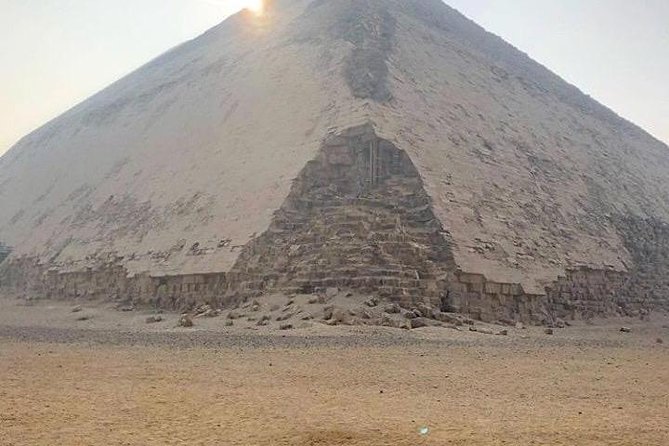
The Bent Pyramid has an unusual story of its own. It was closed for restoration for many years and reopened to visitors in 2019. That makes it more than a quick photo stop. Your Egyptologist guide can help you read the change in angle as evidence of an evolving building plan rather than a decorative choice.
You have about two hours at Dahshur, with admission included. The practical benefit is simple: you do not need to sort out separate tickets or transport between the two pyramids. Still, this is a site where comfortable shoes, water, and a willingness to handle heat matter. The tour includes snacks, but the day will be easier if you use every chance to drink.
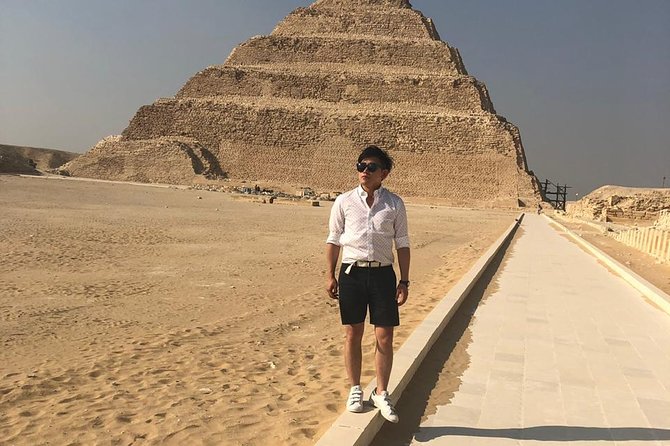
At Saqqara, the focus shifts from pyramid design to the wider funerary complex. The Step Pyramid of King Djoser is presented as the oldest complete stone building. Its stepped form gives you a useful bridge between earlier burial structures and the smooth-sided pyramids that followed.
The itinerary also includes the Pyramid of Unas, known for the pyramid texts inside, along with the causeway of Unas, the Pyramid of Userkaf, and the Pyramid of Teti. Teti’s pyramid is accessible and contains pyramid texts, so this portion rewards a guide who can explain what you are seeing rather than simply point out the entrance.
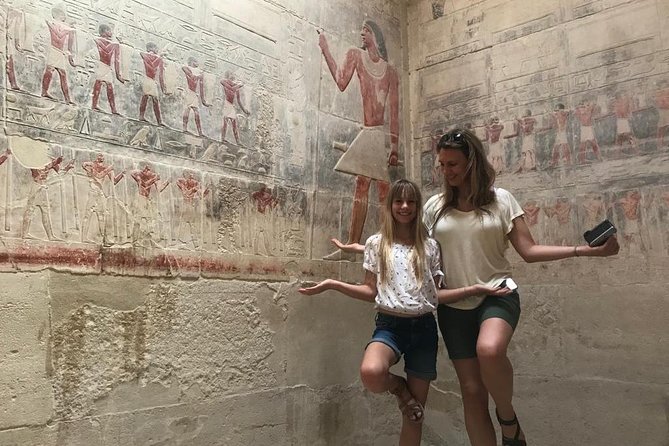
Kagemni’s tomb adds a more personal view of Old Kingdom life. Kagemni was a nobleman, and tomb scenes can bring daily activities, social roles, and ritual ideas closer to eye level than a giant royal monument does. Saqqara is therefore one of the most valuable parts of the first day for anyone who wants more than the standard pyramid photograph.
Giza and the Great Sphinx after lunch
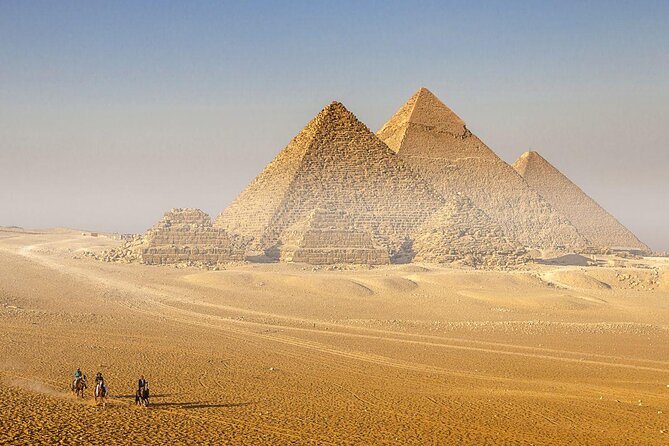
After Dahshur and Saqqara, you continue to Giza. This order has a clear benefit: you see the pyramids after learning how earlier builders tested their ideas. The three principal monuments are the pyramids of Cheops, Chephren, and Mycerinus.
The Great Pyramid of Cheops is the star, but do not treat the other two as background scenery. Chephren’s pyramid retains some of its original casing near the top, which helps you picture how these monuments once looked. Mycerinus is smaller, yet its place in the royal group makes the scale of the Giza project easier to understand.
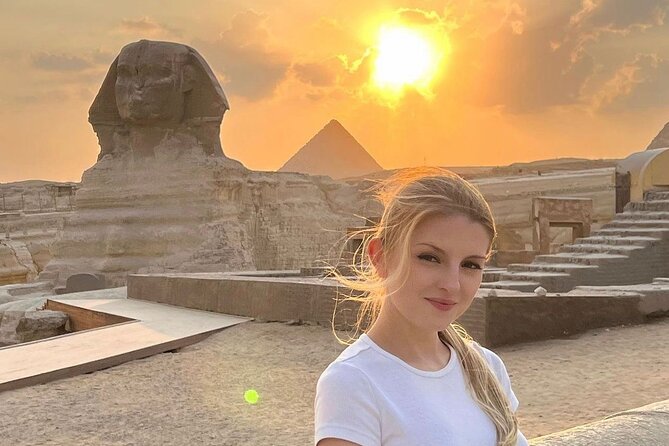
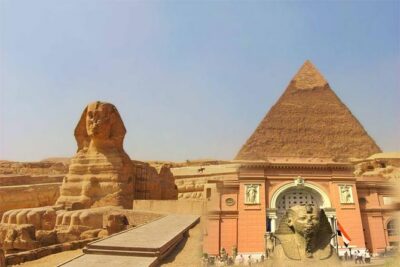
The Valley Temple is included, too. This is where the king’s body was prepared for burial, and it gives you a closer look at the working and ritual side of the complex. Then you reach the Great Sphinx, identified here with the reign of Chephren and dated to around 2550 BC.
You get roughly two hours at Giza, followed by lunch at a local restaurant. That is enough for the major sights, but not enough for a leisurely wander across every part of the plateau. If your top priority is entering a pyramid or taking extended photographs, ask your guide how that fits into the available time. The stated inclusions cover entrance fees, but the schedule does not promise every optional interior visit.
The Egyptian Museum and four faiths in Old Cairo
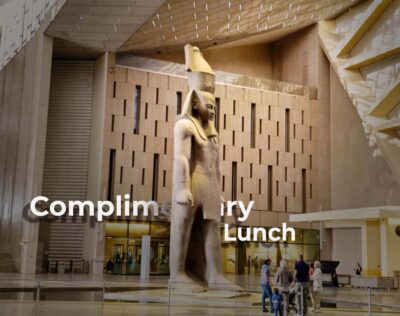
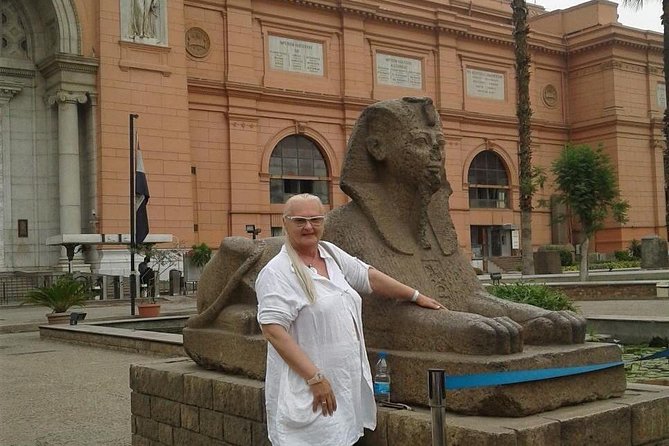
Day two begins at the Egyptian Museum, with about two hours inside. The listed highlights include the animal mummy room, mummy portraits, and the jewelry of King Tutankhamun. Those choices give you three different ways to see ancient Egypt: sacred animals, human faces, and royal wealth.
Two hours is useful for a focused visit, but it is not enough to absorb every gallery. I would ask your guide to set priorities at the start. If you want Tutankhamun above all else, say so. If you prefer everyday religion and burial customs, spend more time with the mummies and portraits.
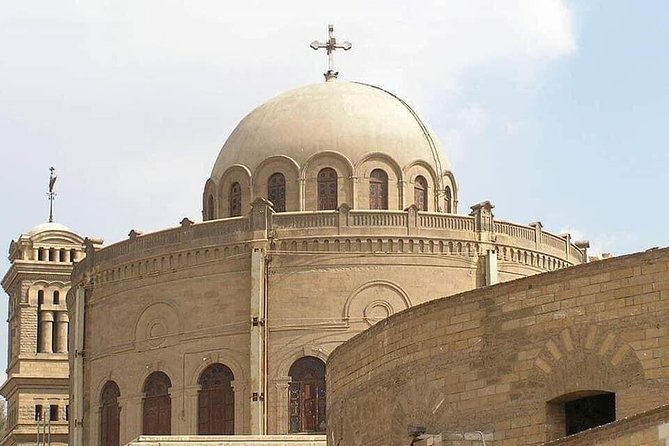
The next stop is Coptic Cairo, where the subject changes from pharaohs to the city’s later religious layers. You see the Roman Fortress of Babylon, the Hanging Church, Abu Serga, Saint George Church, and the Ben Ezra Synagogue. The route also includes the cave associated with the Holy Family’s shelter during its time in Cairo.
This is a strong part of the tour because it shows that Cairo’s story did not end with the ancient temples. The buildings are close enough in theme to make a useful walking sequence, yet each represents a different religious community and period. You should dress respectfully for the churches, synagogue, and mosque visited during the trip.
Same base, a different sort of day:
- Tour to Giza Pyramids and The Egyptian Museum
★ 5.0 · 6,016 reviews - VIP All inclusive Best of the best Giza Pyramids,Sakkara,Memphis
★ 5.0 · 3,164 reviews - From Cairo: Pyramids of Giza, Sphinx, Saqqara & Memphis Tour
★ 4.7 · 3,110 reviews - Cairo: Pyramids, Sakkara & Memphis Tour with Lunch
★ 4.6 · 2,493 reviews
Saladin’s Citadel and the lanes of Khan Al-Khalili
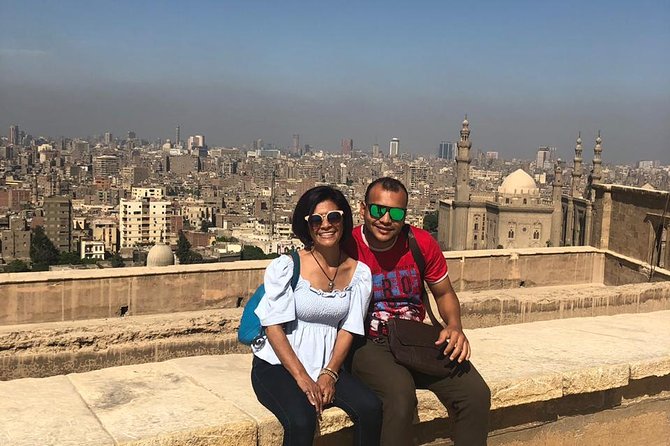
The Citadel of Saladin provides a change of scale and a chance to look across Cairo from above. The visit lasts about an hour and includes time for panoramic photographs before you enter the Mosque of Muhammad Ali Pasha.
The mosque was built in 1848 and is noted for its large size and high position inside the Citadel. Its design is described as a copy of Hagia Sophia in Istanbul. This stop works best when your guide explains both the building and its role in the city, rather than treating it as just another grand interior.
From the Citadel, the tour continues to Khan Al-Khalili, Cairo’s major market. Its origins are linked to the Mamluk sultan Barquq and the fourteenth century. You have about two hours to walk through the bazaar before returning to your hotel.
This is the part of the tour where you can slow down a little, browse, and enjoy the city at street level. The market is a place for souvenirs and atmosphere, but you should keep your expectations practical. It is still a shopping area, so compare prices and do not feel obliged to buy. The private guide can make the visit more comfortable by helping you understand where you are and how long you have.
Luxor in one very full day
Day three begins with a hotel pickup and a flight from Cairo to Luxor. The flight is the key logistical choice in this package. It lets you see Luxor without spending much of the day on a road transfer, but the trade-off is an intense schedule from airport pickup to the return flight.
Once in Luxor, your guide takes you to Karnak Temple, the largest temple complex named in the itinerary. The Temple of Amun, the Hypostyle Hall, and the Avenue of Sphinxes are included. The Hypostyle Hall is especially important because its forest of columns shows the scale and ambition of New Kingdom religious architecture.
The route then moves to the west bank for Queen Hatshepsut’s temple, also called Deir el-Bahari. Hatshepsut’s reign is one of the most interesting royal stories in ancient Egypt, and the temple’s terraces make it visually different from Karnak.
The Valley of the Kings follows. This is where royal tombs were cut into the rock rather than built as huge freestanding pyramids. The package includes the Valley of the Kings, though it does not specify which individual tombs or whether special tomb tickets are included. Ask your guide about the day’s available tomb access before you arrive.
You also visit Luxor Temple and the two statues of Memnon, commonly known as the Colossi of Memnon. Lunch is included before the transfer back to Luxor airport and the flight to Cairo.
The Luxor day lasts about 12 hours. That figure tells you what to expect: major highlights, frequent movement, and limited spare time. You will want light clothing, sturdy shoes, sun protection, and a willingness to board another vehicle soon after leaving a monument. If Luxor is the main reason you came to Egypt, a separate overnight stay would allow a calmer visit. If you have only three days, this flight-based plan makes the most of your time.
What the $1,000 price really covers
At $1,000 per person, this is not a budget sightseeing day. It is a private, multi-day package with a flight, several sets of admission fees, daily lunches, snacks, hotel pickup and drop-off, air-conditioned road transport, and an Egyptologist guide.
The value depends on what you would otherwise have to arrange. You are paying for coordination as well as sightseeing. Cairo’s sites are spread across different parts of the city and its outskirts, while Luxor requires a separate flight and airport transfers. Handling those pieces yourself may lower the sticker price, but it also creates more chances for delays, ticket problems, or missed connections.
Accommodation is not included, so add your Cairo hotel cost to the total. The package also does not list drinks beyond the supplied snacks and lunches, optional extras, or any special tomb access at Luxor. Ask for a clear list of what your admission tickets cover before confirming.
The private format is most useful for couples, families, and solo visitors who want direct access to a guide. It also suits people who value hotel pickup and do not want to bargain for every taxi or organize a domestic flight. Group discounts are offered, which may improve the per-person value for a larger party.
Who should book this Egypt itinerary?
I would choose this tour if you have only three days, want both Cairo and Luxor, and prefer a guide to handle the movement between sites. It is also a good fit if your group has different interests, since a private guide can explain architecture, religion, royal history, and daily life in the same trip.
The tour is less suited to you if you dislike early starts, long days, or quick transitions. The first day covers three pyramid areas, the second moves through four major Cairo subjects, and the third is a full-day flight excursion. You see a great deal, but you do not get much unscheduled time.
The guide can make or break the experience. Hala is repeatedly identified as energetic, flexible, and good at explaining difficult material in clear English. Muhammad and Muhammad Raki are praised for strong historical explanations, while Dr. Mo and Mark are associated with engaging Luxor or Cairo guiding. You cannot assume a specific person unless the company confirms it, so ask when booking if a particular guide matters to you.
Practical details before you commit
Hotel pickup and drop-off are included, and the stated start time is 7:00 a.m. Confirmation is provided at booking, and the activity is private for your group only. Most people can participate, though the schedule includes walking, monuments, market streets, and a very long Luxor day.
Lunch is included on all three days, along with snacks. Entrance fees, the Luxor flight, road transport, and the Egyptologist guide are also included. Accommodation is the main large omission.
The cancellation policy is generous if your plans change early: you can receive a full refund by canceling at least 24 hours before the start time. Cancellations or changes inside that window are not refunded or accepted. The experience also depends on suitable weather, and a weather cancellation leads to another date or a full refund.
Should you book it?
Book this tour if your goal is maximum coverage in a short stay. You will see the principal pyramids, several important sites at Saqqara and Dahshur, Cairo’s museum and religious quarters, and Luxor’s biggest monuments without arranging the transport yourself.
Think twice if you want quiet mornings, long museum visits, or time to explore each temple at length. For everyone else, the private guide, included flight, daily lunches, and broad range of sites make this a practical way to connect ancient Egypt with medieval and modern Cairo in just three days.
FAQ
How long is the tour?
The experience lasts approximately three days.
What time does the tour start?
The stated start time is 7:00 a.m.
Is hotel pickup included?
Yes. Hotel pickup and drop-off are included.
Is this a private tour?
Yes. Only your group participates in the activity.
Is an Egyptologist guide included?
Yes. A qualified Egyptologist guide is included. Guides associated with this company include Hala, Muhammad, Muhammad Raki, Dr. Mo, and Mark, though a specific guide is not guaranteed in the tour details.
Is the flight to Luxor included?
Yes. The Luxor flight ticket is included.
Are meals included?
Yes. Lunch is included on all three days, and snacks are also included.
Is accommodation included?
No. You must arrange and pay for your own accommodation.
Can I cancel for a full refund?
Yes, if you cancel at least 24 hours before the experience start time. Cancellations within 24 hours are not refunded, and weather cancellations offer a different date or a full refund.
Just added in Cairo
- White Desert Overnight Camping Sharing Tour in Egypt★ 5.0 · 15 reviews
- Cairo Best 2Days tour Pyramids, Saqqara & Old Cairo★ 5.0 · 15 reviews
- Giza Pyramids with (GEM) Grand Egyptian Museum★ 5.0 · 42 reviews
- visit the pyramids of Giza + the necropolis of Saqqara + the Memphis site.★ 4.5 · 20 reviews
- Tour to Giza pyramids Memphis Sakkara and Felucca on the Nile★ 5.0 · 16 reviews
- Monastery St Simon with Cave Church and Garbage City Private Tour★ 5.0 · 15 reviews
- sunset at Giza pyramids by camels★ 5.0 · 31 reviews
- Private Giza pyramid,sphinx, Mummification temple& inside pyramid★ 5.0 · 32 reviews
Tours in Cairo, compared.
Pyramids & Great Sphinx Private Tour with Camel Ride
Read our review →
Tour to Giza Pyramids and The Egyptian Museum
Read our review →
VIP All inclusive Best of the best Giza Pyramids,Sakkara,Memphis
Read our review →
Pyramids of Giza, Sphinx, Saqqara & Memphis Tour
Read our review →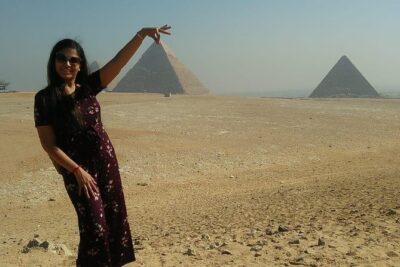
Cairo 8 Hour Private Tour of Pyramids, Egyptian Museum and Bazaar
Read our review →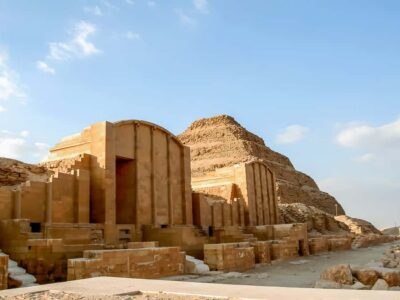
Private ViP all-inclusive Giza Pyramids,Sphinx,Inside Pyramid
Read our review →