
Reviewed · EGYPTIAN MUSEUM TOURS
Private Tour: Egyptian Museum, Alabaster Mosque, Khan el-Khalili
The best part of this Cairo tour is the mix: King Tutankhamun’s death mask, a mosque high above the city, and a medieval-style bazaar all fit into one private half-day. It gives you a useful second chapter after the pyramids, shifting the focus from ancient monuments to Cairo’s art, faith, and daily commerce.
I like the private guide, since you can ask questions, linger over the museum pieces that interest you, and leave the market early if shopping is not your thing. I also like the compact timing: about six hours, with pickup offered, means you can see major central Cairo sights and still have much of the day left.
The main drawback is value. At $158.34 per person, the price is easier to justify for a couple or small group that wants private attention than for a solo visitor. The bazaar can also feel familiar if you have visited other Middle Eastern markets, and some schedules include shopping stops that you may prefer to skip.
Key points to know before booking
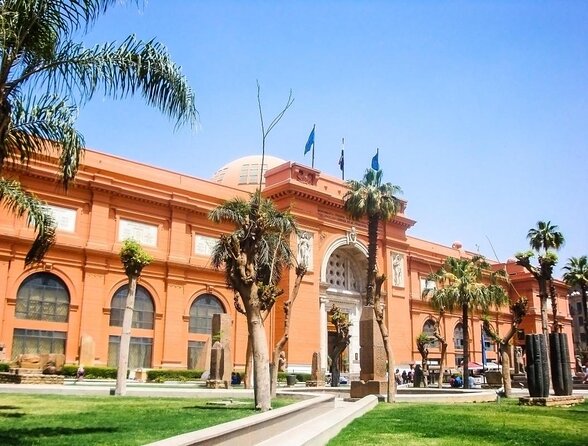
- King Tutankhamun is the museum centerpiece: Expect the famous death mask, six gold coffins, jewelry, and plenty of other objects among roughly 165,000 artifacts.
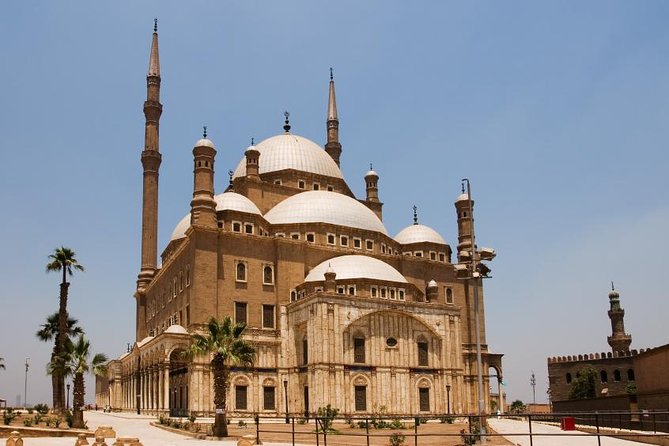
- The Alabaster Mosque offers Cairo views: It sits on the Citadel’s limestone hill and welcomes visitors of all faiths.
- Your schedule is flexible: You can decide how much time to give the museum, mosque, and bazaar.
- Private guiding makes a difference: Guides such as Mohamed Osama, Mohammed Atef, Sayed, Ossama, Morad, Hammad, Henry, and Ahmed have led versions of this experience.
- Shopping stops may be added: A Papyrus Institute visit is possible, and some schedules also include a perfume shop.
- Extra charges matter: English is included, while other languages and some pickup areas cost more.
Why this makes a good second Cairo day
If you have already seen the Great Pyramids and the Sphinx, this tour fills in the parts of Cairo that the Giza plateau cannot show you. You move from pharaonic treasures to Islamic architecture and then into a market where bargaining, tea, souvenirs, and sales pitches are part of the scene.
The route also gives you three different kinds of sightseeing. The Egyptian Museum rewards patient looking. The mosque gives you a quiet architectural stop and a lesson in Islam. Khan el-Khalili is less about major monuments and more about atmosphere, browsing, and deciding what you want to take home.
A private format is especially useful in Cairo. The city is crowded, traffic can be slow, and large groups often spend time waiting for one another. With your own guide, you can ask for a slower museum visit, move quickly through the bazaar, or spend more time on the Citadel’s views.
The advertised start time is 9 a.m., and the full experience takes about six hours. That is a sensible length for a city tour. You get a substantial morning and afternoon without trying to cram in every possible museum, mosque, and market.
Other museum visits people book in Cairo:
- Tour to Giza Pyramids and The Egyptian Museum
★ 5.0 · 6,016 reviews - Cairo 8 Hour Private Tour of Pyramids, Egyptian Museum and Bazaar
★ 5.0 · 2,931 reviews - Cairo: Grand Egyptian Museum, Pyramids, Sphinx Tour & Lunch
★ 4.7 · 2,282 reviews
Two hours among Egypt’s greatest treasures
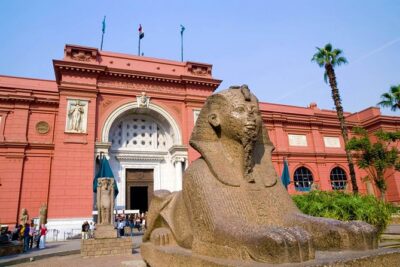
The Egyptian Museum is the anchor of the day. Its collection contains about 165,000 Egyptian artifacts, so you should not expect to see everything in one visit. That is where the guide matters most. A good guide can point out the important objects, explain what you are seeing, and keep the visit from becoming a tiring march past display cases.
The main attraction for many people is the King Tutankhamun collection. The six gilded coffins are displayed in the main hall, while the famous death mask and related treasures are a major focus upstairs. You can also see jewelry and other objects connected with the young pharaoh.
I would plan to spend most of your museum time around the Tutankhamun displays, then use the remaining time for the general galleries. The museum is large enough to overwhelm you, especially if you try to examine every room. Your guide is expected to introduce the key pieces first, then give you free time to look around at your own pace.
The private arrangement works well here. You can ask why a particular object mattered, compare ancient religious ideas with later Egyptian traditions, or pause for photographs where permitted. One visitor noted that indoor photography requires a separate small fee and ticket. The death mask room may also have stricter photography rules, so ask your guide before taking out your phone.
An additional Royal Mummy Room may require a separate fee. It is not part of the basic admission described for the tour, so confirm the current cost if you want to add it. The tour itself already gives you a substantial museum visit, but people with a strong interest in ancient Egypt may want extra time.
The museum can easily take more than two hours. If you care most about ancient art and archaeology, tell your guide at the start. The flexibility is one of the strongest reasons to choose this tour over a fixed group itinerary.
The Alabaster Mosque and Cairo from the Citadel
After the museum, the tour continues to the Citadel of Salah el-Din and the Mosque of Muhammad Ali, commonly called the Alabaster Mosque. The mosque sits on a limestone hill above Cairo, giving you a broad view across the city.
The building gets its familiar name from the alabaster cladding on the lower interior and exterior walls. The upper section uses limestone, including stone said to have been removed from the Giza pyramids. The result is a bright, imposing building with a very different feel from the crowded museum.
This stop lasts about an hour, though the private format lets you adjust the pace. You can spend time looking at the interior, listen to an explanation of the building, and step outside for the skyline views. The Citadel setting is important because the mosque is not an isolated monument. It is part of a historic defensive complex positioned above the city.
Your guide is also expected to explain basic Islamic beliefs and translate some common prayers. That makes the visit more useful than a quick architectural photo stop. You can ask respectful questions about worship, mosque customs, and the role of the building today. The mosque remains an active place of worship, but it is open to people of all faiths.
Dress and behavior should be respectful because this is a religious site. The supplied information does not list a detailed dress code, so ask your guide what is appropriate on the day. You should also expect to remove shoes if required inside the mosque and follow local instructions.
One consideration is that the mosque visit may feel short compared with the museum. Some people find the architecture and city views memorable, while others mainly want more time with the ancient collections. Tell your guide if you would rather shorten the mosque stop or give it the full hour.
Khan el-Khalili: browsing, bargaining, and busy lanes
The final main stop is Khan el-Khalili, Cairo’s famous bazaar. You get about an hour and a half to walk through its maze of lanes, look at crafts and paper products, and bargain for souvenirs.
This is not a quiet historical site with a neat beginning and end. It is a working market where shopkeepers invite you inside and prices may be open to negotiation. Go with a clear idea of what you want, ask the price before committing, and do not feel obliged to buy.
The bazaar can be fun even if you purchase nothing. You can watch the sales rhythm, stop for tea, or sit for shisha if that interests you. One account described the market as similar to other souks, with many goods that may be imported rather than locally made. That is a fair warning if you are looking for handmade Egyptian work.
The private format helps here. If you enjoy markets, you can spend the full time browsing. If you find the sales pressure tiring, you can leave sooner and return to your hotel. You are not stuck waiting for a large group to finish shopping.
The tour may also include a Papyrus Institute, where you can see how papyrus artwork is made and buy genuine pieces if you wish. Treat this as an optional shopping and demonstration stop, not a required part of the core sightseeing. Some versions also include a perfume shop. That can be interesting, especially if you want to learn about scented oils, but it may feel sales-focused if you are not shopping.
The description says the market may have inspired Christopher Columbus to search for America. That is an intriguing claim, but your guide should explain the story clearly rather than presenting it as a simple fact. Focus on the market itself, its lanes, trade traditions, and the chance to practice your bargaining skills.
Other trips through the old bazaars in Cairo:
- Cairo: Private Pyramids, Museum & Bazaar Tour with Lunch
★ 4.6 · 744 reviews - Cairo Citadel, Old Cairo and Khan El Khalili: Private Tour
★ 4.6 · 741 reviews - Cairo: Local Markets & Khan el Khalili Private Shopping Tour
★ 4.6 · 614 reviews - Day Tour to Giza Pyramids Complex, Egyptian Museum & Bazaar
★ 5.0 · 530 reviews
What private guiding adds
The strongest feature here is not simply having a guide. It is having a guide who can shape the day around your interests.
An Egyptologist guide can make the museum more understandable, especially when a room contains dozens of statues, coffins, and objects with no obvious order to a first-time visitor. Guides named Mohamed Osama and Mohammed Atef have led tours praised for clear explanations and polite, personal service. Other assigned guides have included Sayed, Ossama, Morad, Hammad, Henry, and Ahmed.
You should not assume you can request a specific guide unless the booking service confirms it. Still, you can use those names as examples of the type of guide assigned on this tour. The useful thing is the role: someone who can connect objects, religion, architecture, and modern Cairo in plain language.
Private guiding also helps families. A guide can slow down for a child, answer a history enthusiast’s detailed questions, or give a solo visitor room to explore independently. One particularly positive account described a guide who was patient with a young nephew, while another praised a guide’s ability to keep explanations at the right level.
The experience is conducted in English at the listed price. A 1,000 Egyptian pound supplement applies to languages other than English. Confirm the language fee before booking if you need French, Spanish, German, or another language.
Transport, lunch, and added costs
Pickup is offered, and the tour begins at 9 a.m. The supplied information lists extra round-trip car charges of 1,000 Egyptian pounds for the 6th of October, North Coast Capital, and New Cairo Settlement areas. Check your hotel location carefully before assuming the advertised price covers every pickup point.
Traffic is a real part of Cairo sightseeing. One account described a pickup arriving about 30 minutes late because of heavy traffic, even though the vehicle itself was clean, air-conditioned, and comfortable. Build some tolerance into your schedule, especially if you have a flight, train, or Nile cruise later that day.
Lunch is included only if you select the lunch option. It is not automatically part of the base experience. Some meals have been considered good but overpriced, so compare the option cost with your own plans before adding it.
The price is $158.34 per person. That is not the cheapest way to see these sites, but it covers a private tour, an English-speaking Egyptologist, and admission to the Egyptian Museum and Alabaster Mosque. The value improves when two or more people share the private experience and use the flexible timing.
For one person, the price is harder to defend unless you strongly value private transport, personal questions, and help navigating Cairo. A group discount is offered, so check the final price for your party rather than judging only by the individual rate.
How to shape the six-hour schedule
A sensible version of the day looks like this:
- Start around 9 a.m. with the Egyptian Museum and give it the full two hours.
- Continue to the Citadel and spend about one hour at the Alabaster Mosque.
- Finish with roughly 90 minutes at Khan el-Khalili.
- Use remaining time for driving, photos, or an optional papyrus or perfume stop.
If ancient Egypt is your priority, ask for more museum time and a shorter market visit. If this is your first exposure to Islamic Cairo, keep the full mosque stop and ask for context about the Citadel.
If you have already spent several days shopping in Cairo, you can shorten Khan el-Khalili. The market is included because it is famous, but it is not the strongest stop for everyone. The private format lets you make that call.
The tour can also work well before an evening departure because it is scheduled to finish in roughly half a day. Still, do not plan a tight connection. Traffic can alter the return time, and Cairo roads are not predictable enough for a narrow airport schedule.
Who should book this experience?
I would recommend this tour to a first-time Cairo visitor who has already seen Giza and wants a guided introduction to the city center. It also suits couples, families, and small groups who prefer their own car and guide instead of joining a large bus.
History fans will get the most from the Egyptian Museum, especially if they want to ask detailed questions. People interested in religion and architecture will appreciate the mosque explanation. Shoppers and souvenir hunters will enjoy the bazaar more than someone who has already visited several similar souks.
I would be cautious if you want a full-day archaeology program. Two hours at the museum is useful, but the collection is large enough to deserve more. I would also look elsewhere if your main goal is Al-Azhar Mosque or a wider Islamic Cairo walking tour, since neither is part of this route.
Free cancellation is available up to 24 hours before the 9 a.m. start for a full refund. Changes or cancellations inside that window are not accepted for a refund.
Should you book it?
Book this private tour if you want a well-organized introduction to Cairo beyond the pyramids, with the freedom to control the pace. The Egyptian Museum and Citadel are the real reasons to go, while Khan el-Khalili adds a lively, optional shopping finish.
The $158.34 price makes the most sense for a pair or small group. Before paying, confirm your pickup area, language, lunch choice, and whether you want optional papyrus or perfume stops. If you do that and tell your guide to protect your museum time, this is a practical way to see three major Cairo sights in one manageable day.
FAQ
How long does the private Cairo tour last?
The tour lasts approximately six hours. The listed stops take about two hours at the Egyptian Museum, one hour at the Alabaster Mosque, and one hour and 30 minutes at Khan el-Khalili, with additional time for transportation and optional stops.
What time does the tour start?
The listed start time is 9 a.m.
Is this a private tour?
Yes. Only your group participates, and you can decide how much time to spend at each main destination.
Is an Egyptologist guide included?
Yes. The experience includes a private, qualified Egyptologist guide. English is included in the listed price.
Are admission tickets included?
Admission is included for the Egyptian Museum and the Mosque of Muhammad Ali. Khan el-Khalili has no admission ticket listed.
Is lunch included?
Lunch is included only if you select the lunch option. It is not automatically included in every booking.
Are other languages available?
Yes, but a supplement of 1,000 Egyptian pounds applies to languages other than English.
Can I cancel for a refund?
You can cancel at least 24 hours before the experience start time for a full refund. Cancellations or changes made less than 24 hours before the start are not accepted for a refund.
More museums in Cairo
- Cairo: Female-Guided Pyramids, Sphinx & Museum City Tour
★ 4.8 · 1,614 reviews - Private tour to Giza Pyramids,Sphinx,Egyptian Museum with Local Lunch
★ 5.0 · 1,530 reviews - Best Private Giza Pyramids,Sphinx, New Grand Egyptian Museum
★ 4.5 · 1,056 reviews - Hurghada Day Trip to Giza Pyramids, Sphinx, Museum and lunch
★ 4.4 · 820 reviews
More old-quarter tours in Cairo
- Cairo: Egyptian Museum, Citadel, and Old Cairo Guided Tour
★ 4.7 · 853 reviews - Old Cairo: Full-Day Islamic and Coptic Cairo Tour with Lunch
★ 4.6 · 688 reviews - Old Cairo Guided Walk Tour: History, Culture & Street Bites
★ 4.6 · 633 reviews - Museum of Egyptian Civilization, Citadel & Old Cairo Tour
★ 4.7 · 530 reviews
Just added in Cairo
- White Desert Overnight Camping Sharing Tour in Egypt★ 5.0 · 15 reviews
- Cairo Best 2Days tour Pyramids, Saqqara & Old Cairo★ 5.0 · 15 reviews
- Tour to Giza pyramids Memphis Sakkara and Felucca on the Nile★ 5.0 · 16 reviews
- Giza Pyramids with (GEM) Grand Egyptian Museum★ 5.0 · 42 reviews
- visit the pyramids of Giza + the necropolis of Saqqara + the Memphis site.★ 4.5 · 20 reviews
- Private Giza pyramid,sphinx, Mummification temple& inside pyramid★ 5.0 · 32 reviews
- Monastery St Simon with Cave Church and Garbage City Private Tour★ 5.0 · 15 reviews
- sunset at Giza pyramids by camels★ 5.0 · 31 reviews
Egyptian Museum Tours, compared.
Tour to Giza Pyramids and The Egyptian Museum
Read our review →
Cairo 8 Hour Private Tour of Pyramids, Egyptian Museum and Bazaar
Read our review →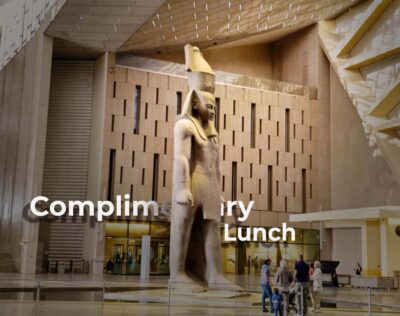
Grand Egyptian Museum, Pyramids, Sphinx Tour & Lunch
Read our review →
Cairo Pyramids, Sphinx & Egyptian Museum Day Trip
Read our review →
Private tour to Giza Pyramids,Sphinx,Egyptian Museum with Local Lunch
Read our review →
Best Private Giza Pyramids,Sphinx, New Grand Egyptian Museum
Read our review →
Egyptian Museum, Citadel, and Old Cairo Guided Tour
Read our review →
Egyptian Museum of Antiquities online QR Ticket
Read our review →Browse the lists this tour appears in