
Reviewed · VALLEY OF THE KINGS & LUXOR WEST BANK
Marsa Alam: Valley of the Kings & Karnak Temples Luxor Tour
Luxor packs Egypt’s grandest ancient sights into one long day. From Marsa Alam, you cross the Eastern Desert, reach the Nile Valley, then move from royal tombs and a female pharaoh’s temple to the huge columns of Karnak. The payoff is enormous, but the road trip is not short.
I like the three-tomb visit in the Valley of the Kings, since it gives you more than a quick look at one decorated burial chamber. I also like the clear structure: West Bank sights before lunch, Karnak on the East Bank, then a cool vehicle for the ride home.
The main drawback is time. You leave before sunrise, spend many hours on the road, and return to Marsa Alam in the evening. This is a strong choice for a first Luxor visit, but it is not a relaxed day.
Key points to know before booking
- The Valley of the Kings includes three tombs, while Tutankhamun’s tomb costs extra if you choose to add it.
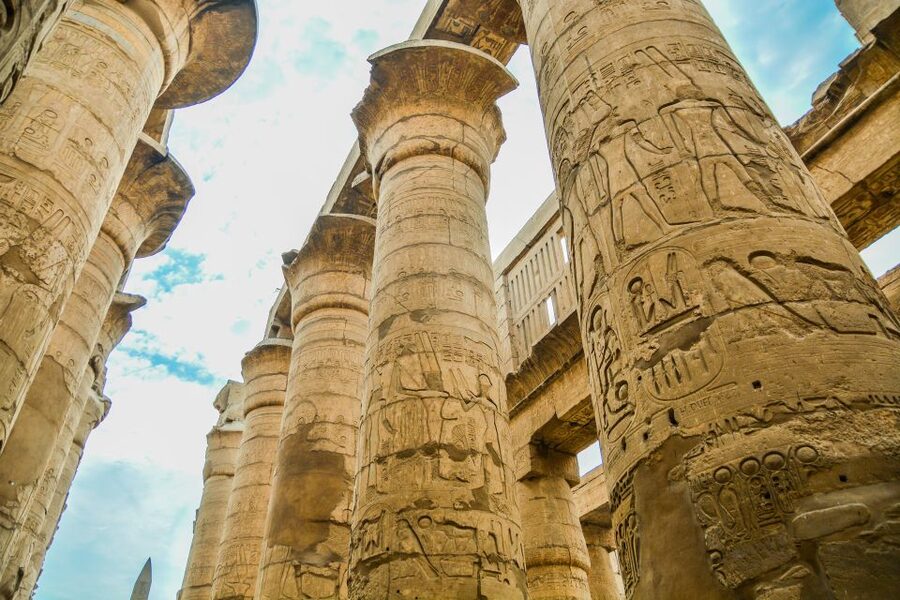
- Karnak’s Great Hypostyle Hall has 134 columns, one of the day’s most impressive sights.
- Lunch at a local Luxor restaurant is included, but restaurant drinks are not.
- The West Bank route is well planned, with Hatshepsut, the Colossi of Memnon, and the royal tombs grouped together.
- Guides such as Shaban, Ragab, and Doa have led departures, with language options including English, Arabic, French, and German.
- The optional Nile cruise costs 10 EUR in cash, and the short boat ride is not part of the basic price.
Why this Marsa Alam to Luxor trip is worth the long road
At $306 per person, this is not a cheap day trip. The price makes more sense once you add up the hotel pickup, return transport, site entry fees, lunch, soft drinks or water on board, and an Egyptologist guide. You are also covering a great deal of ground without arranging separate drivers, tickets, or local transport in Luxor.
The real question is not simply cost. It is how much you value seeing Luxor in one day from a Red Sea base. If your holiday is mainly about the beach and you have no spare overnight in Luxor, this trip gives you access to the places most visitors want to see. If you can stay in Luxor for two nights, you could see the monuments at a slower pace and avoid the long return drive.
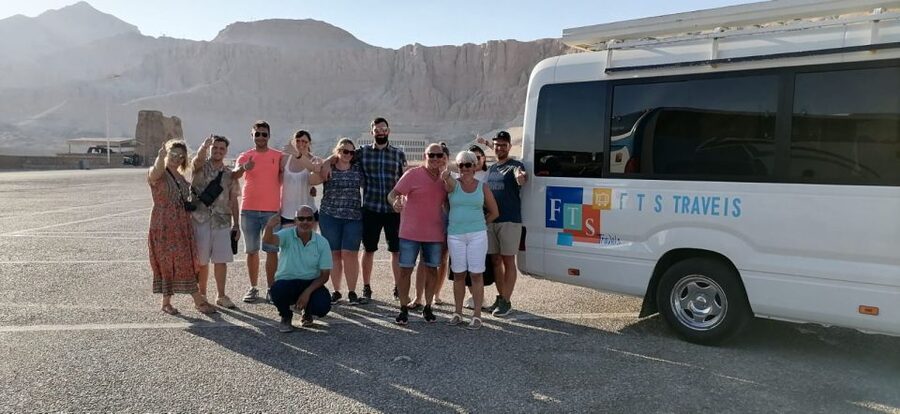
The vehicle is air-conditioned, which matters in Egypt. The ride through the Eastern Desert is long, so bring a small cushion if you find extended sitting uncomfortable. Water or soft drinks are supplied on board, and you should ask your Marsa Alam hotel for a packed breakfast the day before.
Other west bank days out of Luxor:
- Hurghada: Luxor Valley of the Kings & Tutankhamun Tomb Trip
★ 4.7 · 13,208 reviews - Luxor Day Trip from Hurghada Small Group & Tutankhamun Tomb
★ 4.8 · 5,366 reviews - Luxor Day Tour: Valley of Kings & Queens & Hatchepsut Temples
★ 5.0 · 1,496 reviews
The early departure and the Eastern Desert crossing
Pickup is available from hotels in Marsa Alam and El Quseir. Your exact pickup time is arranged after booking, and you should provide each person’s name, passport number, and preferred hotel pickup time to the local partner.
This is an early start. The sensible move is to request a packed breakfast from your hotel reception at least one day ahead. Do not count on a leisurely meal before departure, and remember that restaurant drinks later in the day are extra.
The drive gives you a useful change of scenery. Marsa Alam is a Red Sea resort area, while Luxor sits along the Nile and is surrounded by Egypt’s major ancient sites. The road crosses the dry Eastern Desert before reaching the river valley, so the journey is part of the day’s geography, not just dead time.
Still, keep expectations realistic. You will spend a large part of the day in the vehicle. The free water and cooling system help, but this outing suits people who accept the road as the price of reaching Luxor.
Valley of the Kings: three tombs below the Theban hills
Your first major stop is the Valley of the Kings on Luxor’s West Bank. The pharaohs chose this area for royal burials, moving away from the older pyramid tradition. Inside the tombs, the focus is not on grand buildings above ground but on painted passages and chambers cut into the rock.
Three tombs are included. The specific selection can vary, but the ancient rulers associated with the valley include Tutankhamun, Seti I, and Ramses II. Your guide explains the burial customs, religious scenes, and hieroglyphic decoration as you move through the chambers.
This is where a good Egyptologist guide earns the fee. Without context, a tomb can look like a series of narrow corridors covered in signs and figures. With clear explanations, you begin to understand why the walls show gods, protective texts, and scenes connected with the pharaoh’s journey after death.
The tomb interiors can be tight, warm, and reached by walking over uneven ground. Comfortable shoes are important. Sunglasses help outside, but you will want to remove them inside so you can see the painted details more clearly.
Tutankhamun’s tomb is not included in the standard visit unless you select the add-on. The famous young king’s burial chamber is smaller than many people expect, so decide in advance if seeing it matters to you. You can still visit three other tombs without paying that extra charge.
A practical point: the Valley of the Kings is a place where time disappears quickly. You may want to pause over every painted wall, but the day also includes Hatshepsut and Karnak. Listen to the guide’s priorities, then use your free moments for the details that catch your eye.
Hatshepsut’s temple and the story of a female pharaoh
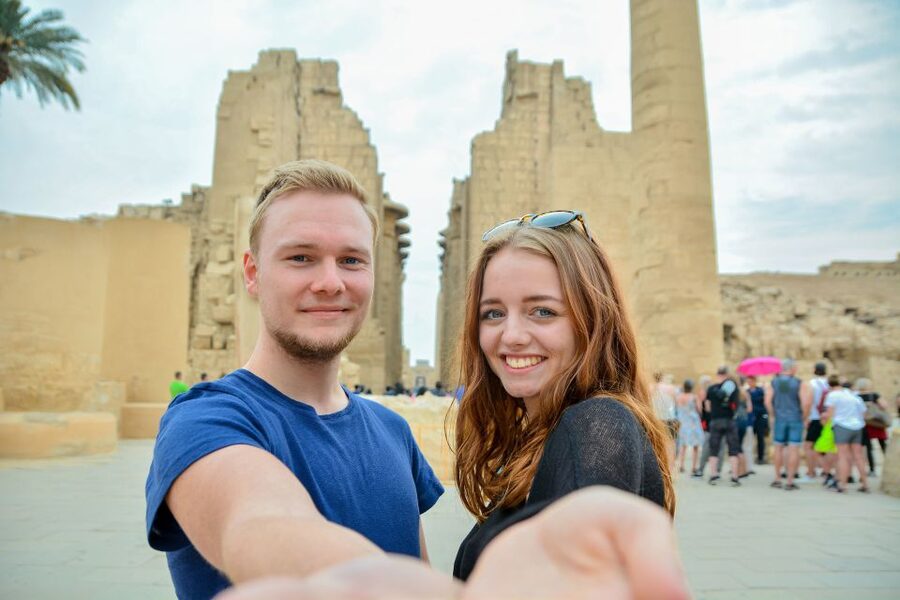
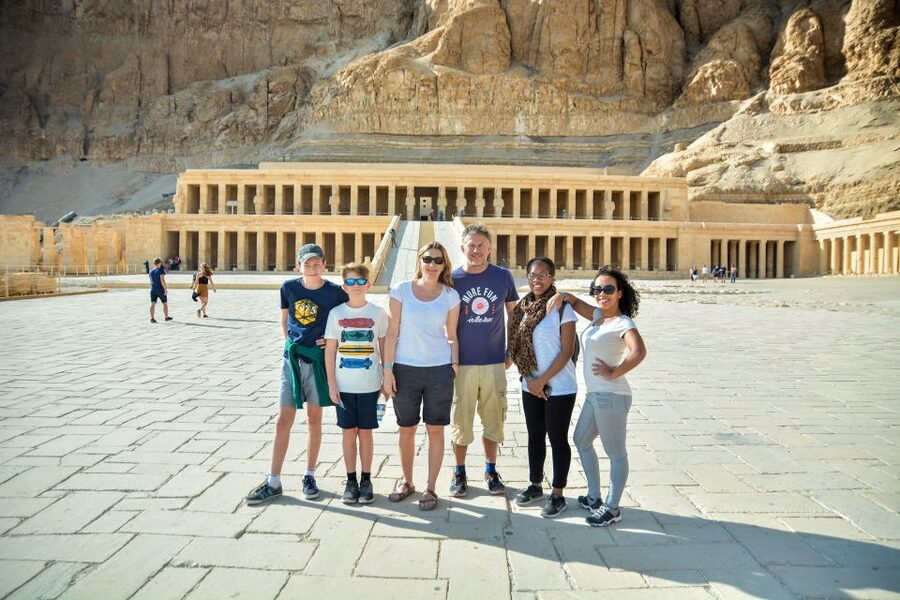
The Mortuary Temple of Hatshepsut sits against the cliffs at Deir el-Bahari. Its broad terraces and long colonnades create a very different impression from the underground tombs. Instead of entering a hidden burial place, you walk toward a formal monument built into the rock.
Hatshepsut ruled as pharaoh at a time when that role was usually held by men. The carvings and layout help explain how she presented her authority. Your guide can point out the scenes and symbols connected with her reign, giving the site more meaning than a quick photo stop.
The temple is exposed, so bring water, wear comfortable shoes, and use sun protection. There is little reason to rush through the open terraces, but the overall schedule is tight. You will have enough time to see the main structure and hear the story, not the leisurely half-day you might enjoy on a dedicated West Bank visit.
I like the contrast between this stop and the Valley of the Kings. One shows royal power through decorated underground chambers. The other puts that power into wide terraces, columns, and a dramatic setting beneath the cliffs.
Other temple visits around Luxor:
- Luxor: Shared Full-Day Tour to Luxor West and East Banks
★ 4.5 · 1,812 reviews - Hurghada: Luxor Tour with Valley of Kings, Karnak & Tut Tomb
★ 4.6 · 1,082 reviews - Luxor : Full Day Tour to Luxor West and East Banks & Lunch
★ 5.0 · 870 reviews - Luxor: Valley of Kings, Hatchepsut Temple ,Karnak & Luxor-DayTour
★ 5.0 · 735 reviews
Colossi of Memnon: a quick stop with a big scale
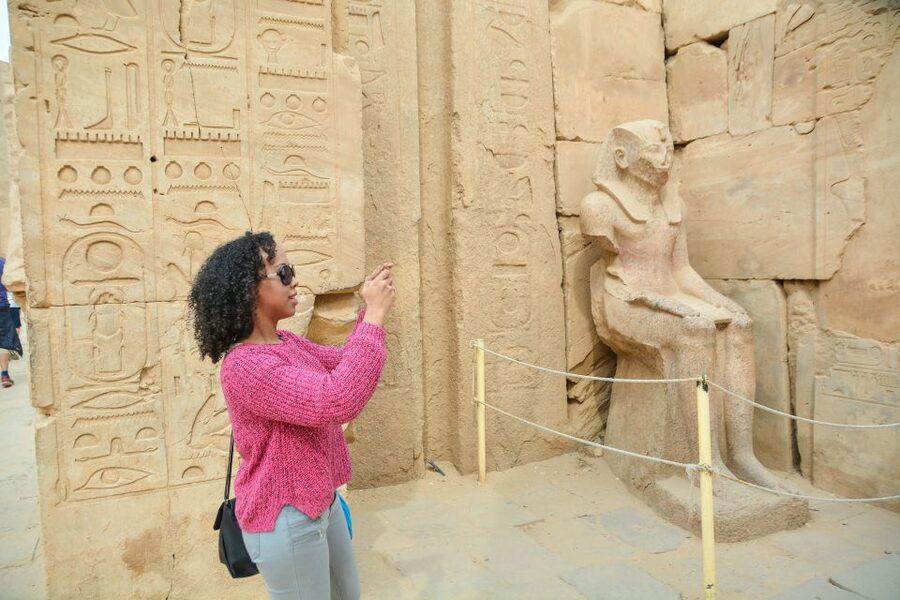
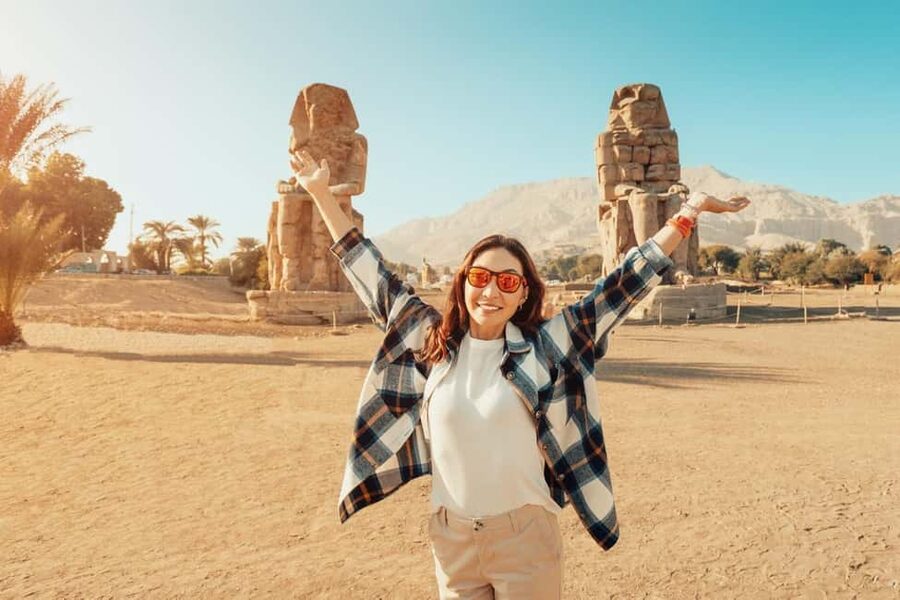
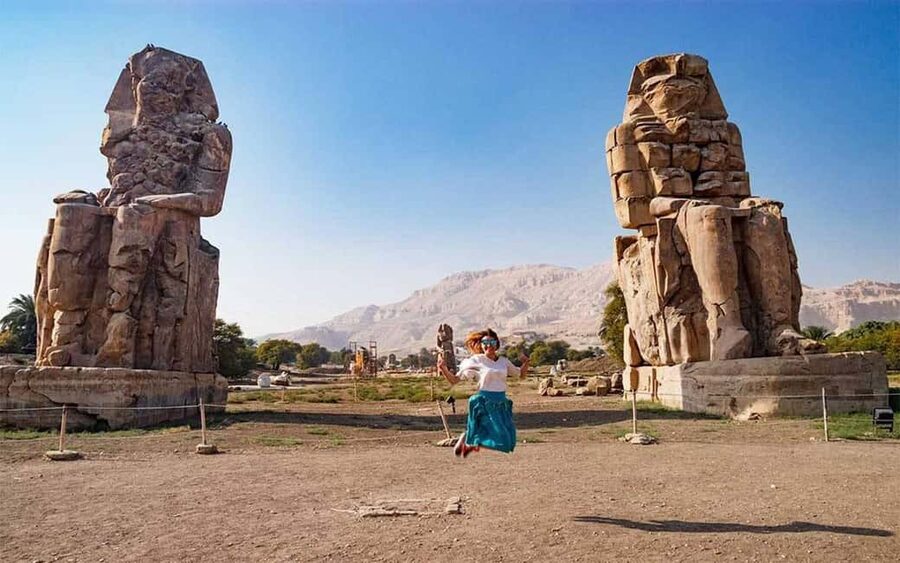
Before leaving the West Bank, the route pauses at the Colossi of Memnon. These two huge statues once formed part of the mortuary temple of Amenhotep III. The temple itself has largely disappeared, leaving the seated figures as the last major remains of the complex.
This is usually a shorter stop than the Valley of the Kings or Karnak, but it earns its place. The statues are a useful reminder of how much ancient Luxor has vanished. Even damaged monuments can give you a strong sense of scale when you stand near them.
Your guide shares the stories linked to these guardians of the Theban Necropolis. Bring your camera, but pay attention to the proportions of the figures and the carved surfaces. This is not just a photo opportunity. It is a lesson in how time can reduce a vast royal project to two surviving statues.
Lunch in Luxor before the East Bank
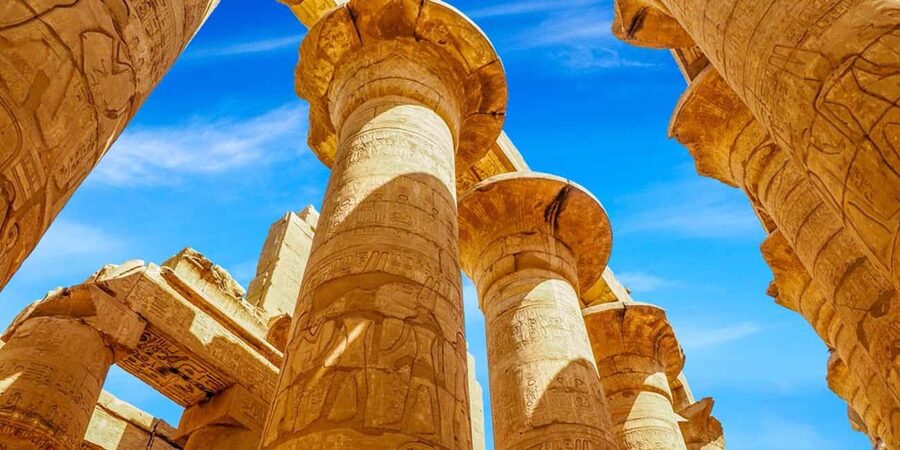
Lunch is served at a local restaurant in Luxor and is included in the tour price. The meal is described as Egyptian-style, with a buffet served on some departures. Drinks at the restaurant are not included, so carry some Egyptian pounds or another accepted form of payment if you want something beyond the supplied water and soft drinks.
The lunch break gives you a needed reset. By this point, you have already walked through tombs, climbed around a large temple site, and made several stops. A sit-down meal is more useful here than another quick roadside snack.
Food preferences and exact dishes are not specified, so do not book this outing expecting a particular menu. If you have dietary needs, tell the local partner when arranging the trip rather than waiting until the restaurant.
Karnak Temple: Egypt’s grandest architectural stop
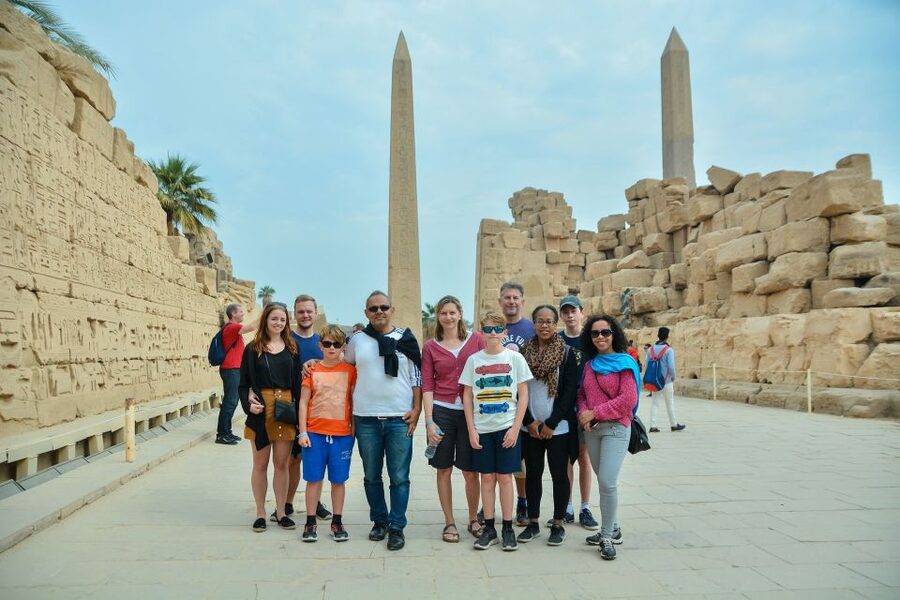
Karnak is the day’s biggest site and, for many people, the visual high point. It is not one single temple built by one ruler. Pharaohs expanded the religious complex over nearly 2,000 years, adding halls, sanctuaries, gateways, statues, and other structures.
The Great Hypostyle Hall is the part you are most likely to remember. Its 134 towering columns create a forest of stone, with carved surfaces rising above you. Your guide can explain how this space functioned and why the scale mattered to ancient Egyptian worship and royal power.
You also see the sacred lake and the Avenue of Sphinxes. The site is large, so a guide helps you connect separate areas rather than treating each gate or column as an isolated object. Pay attention when your guide points out reused blocks, carved names, or changes made by different pharaohs.
Karnak is also where the schedule can feel most compressed. The complex rewards slow looking, yet this is the final major stop before the long drive back. If you want every corner, every inscription, and every photograph, a separate Luxor stay would serve you better.
Even with limited time, the visit works because the key sights are so powerful. The hall, the scale of the complex, and the sense of many rulers adding to one sacred place give you a clear picture of why Luxor matters.
The optional Nile boat ride and shopping stops
A 20-minute Nile cruise may be offered for 10 EUR, payable in cash on site. It is optional, so you can skip it if you prefer more time on land or want to keep the day’s cost under control.
Shopping is also part of the broader experience. The program includes a stop connected with oils and scarves, and optional purchases include FTS organic black seed, peppermint, French basil, rosemary, and geranium oils. Traditional Egyptian scarves from Travel-Inspired Elegance by FTS are also available as an add-on.
Treat these stops as shopping opportunities, not core archaeological visits. If you are interested in oils, ask what each product is intended for and check the size and price before buying. The listed uses include skin care, relaxation, digestion, focus, hair growth, and muscle comfort, but you should not treat these products as medical treatment.
One departure also included a stop at a souvenir shop selling hand-made figures. If you like Egyptian crafts, this can be a pleasant addition. If shopping is not your priority, keep your attention on the monuments and ask your guide how much time is available.
Guides, languages, and the human side of the day
The guide can make or break a packed Luxor schedule. Guides named Shaban, Ragab, and Doa have led departures, and Shaban is noted for German explanations and careful attention to the group. Other departures have included strong Italian-language guiding, while the listed service languages are Arabic, English, French, and German.
The practical benefit is clear: you get explanations at the site instead of trying to decode every symbol alone. Shaban has been described as especially attentive, and Ragab as helpful and focused on the group’s needs. Doa has also been singled out for strong guiding.
You should still tell the operator your preferred language when booking. Language availability can depend on the departure, and the published options do not promise that every language will be available every day.
Who should book this Luxor day trip
This tour suits you if you are staying in Marsa Alam or El Quseir, want to see the essential Luxor sights, and do not have time for an overnight stay. It is also a good fit if you prefer having transport, entrance fees, lunch, and guiding arranged in one package.
It is less suitable if you dislike long road journeys, need a slow pace, or want extensive time inside each monument. Families and older visitors should consider the early start, walking, heat, and long return drive before booking.
Pack your passport or ID card, comfortable shoes, sunglasses, and extra money for restaurant drinks, the optional boat ride, and shopping. A small snack for the ride home is sensible, even after lunch.
Cancellation is available up to 24 hours before departure for a full refund, and you can reserve now and pay later. Those terms help if your Red Sea plans are still moving around, but the bigger decision remains your tolerance for a very full day.
Should you book it?
Book this Marsa Alam to Luxor trip if Luxor is a priority and you want the Valley of the Kings, Hatshepsut, the Colossi of Memnon, and Karnak in one organized outing. The guide support, included entries, lunch, and return transport give the $306 price practical value for a single-day visit.
Skip it if you can spend several nights in Luxor or if the thought of a long desert drive outweighs the appeal of ancient monuments. For most first-time visitors based in Marsa Alam, this is a demanding but worthwhile way to reach Egypt’s great pharaonic sites.
FAQ
Where does the tour depart from?
Pickup is available from hotels in Marsa Alam and El Quseir. Your pickup time is arranged after booking.
How much does the tour cost?
The listed price is $306 per person.
What sites are included?
The tour includes the Valley of the Kings, three royal tombs, the Temple of Hatshepsut, the Colossi of Memnon, Karnak Temples, and a Luxor city tour.
Is Tutankhamun’s tomb included?
No. Tutankhamun’s tomb is an optional add-on that you can choose separately.
Is lunch included?
Yes. Lunch at a restaurant in Luxor is included. Drinks at the restaurant are not included.
Is hotel transportation included?
Hotel pickup and drop-off in an air-conditioned vehicle are included if you select that option. Transfers are available from Marsa Alam or Safaga according to the available arrangement.
Is the Nile cruise included?
No. The optional 20-minute cruise costs 10 EUR and is paid in cash on site.
What should I bring?
Bring your passport or ID card, comfortable shoes, and sunglasses. Ask your hotel for a packed breakfast the day before departure.
Can I cancel or pay later?
You can reserve and pay later, and cancellation up to 24 hours in advance qualifies for a full refund.
Just added in Luxor
- Book online Sound and Light Show at Karnk Temple in Luxor★ 4.2 · 61 reviews
- From Luxor: 5-Day Nile Cruise to Aswan with Balloon Ride★ 4.2 · 168 reviews
- Luxor Day Tour Visit Dendara And Abydos Temples★ 4.6 · 151 reviews
- Dendara and Abydos Temples Day Tour from Luxor★ 4.5 · 133 reviews
- Private Half-day: Dendera Temple From Luxor★ 5.0 · 132 reviews
- Luxor: West Bank Hot Air Balloon Ride with Hotel Pickup★ 4.9 · 169 reviews
- 2-Day Top Attractions and Adventures Package in Luxor with Accommodation★ 5.0 · 178 reviews
- Luxor: West & East Banks & Tut’s Tomb Private Full-Day Tour★ 4.8 · 173 reviews
Valley of the Kings & Luxor West Bank, compared.
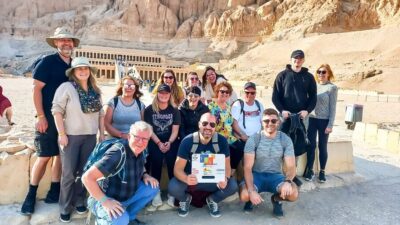
Luxor Valley of the Kings & Tutankhamun Tomb Trip
Read our review →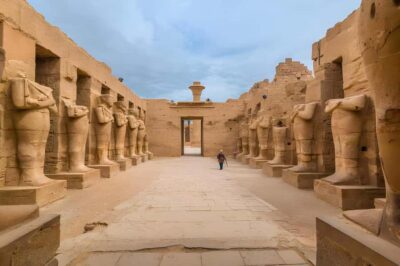
Luxor Day Trip from Hurghada Small Group & Tutankhamun Tomb
Read our review →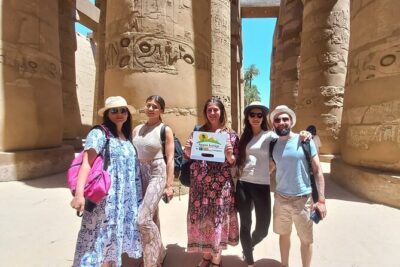
Small group Hurghada to Luxor, Valley of the Kings by Van
Read our review →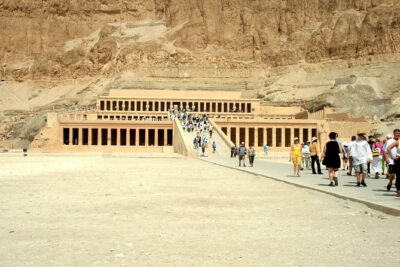
Luxor Day Tour: Valley of Kings & Queens & Hatchepsut Temples
Read our review →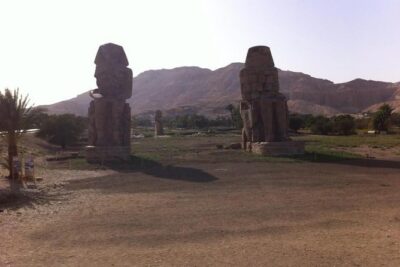
Full Day Tour to East and West Banks of Luxor
Read our review →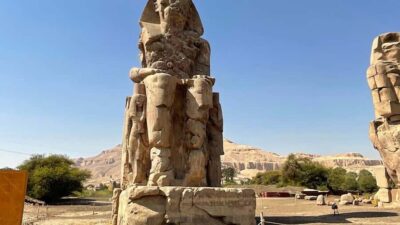
Valley of the Kings and Hatshepsut Temple Day Tour
Read our review →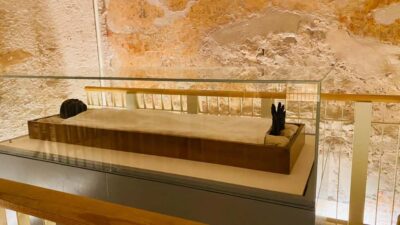
Luxor Tour with Valley of Kings, Karnak & Tut Tomb
Read our review →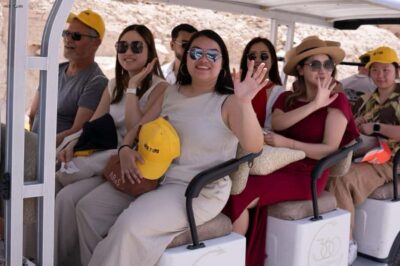
Small-Group Luxor Highlights & Tut Tomb Day Tour
Read our review →Browse the lists this tour appears in